Physical Address
304 North Cardinal St.
Dorchester Center, MA 02124
Physical Address
304 North Cardinal St.
Dorchester Center, MA 02124

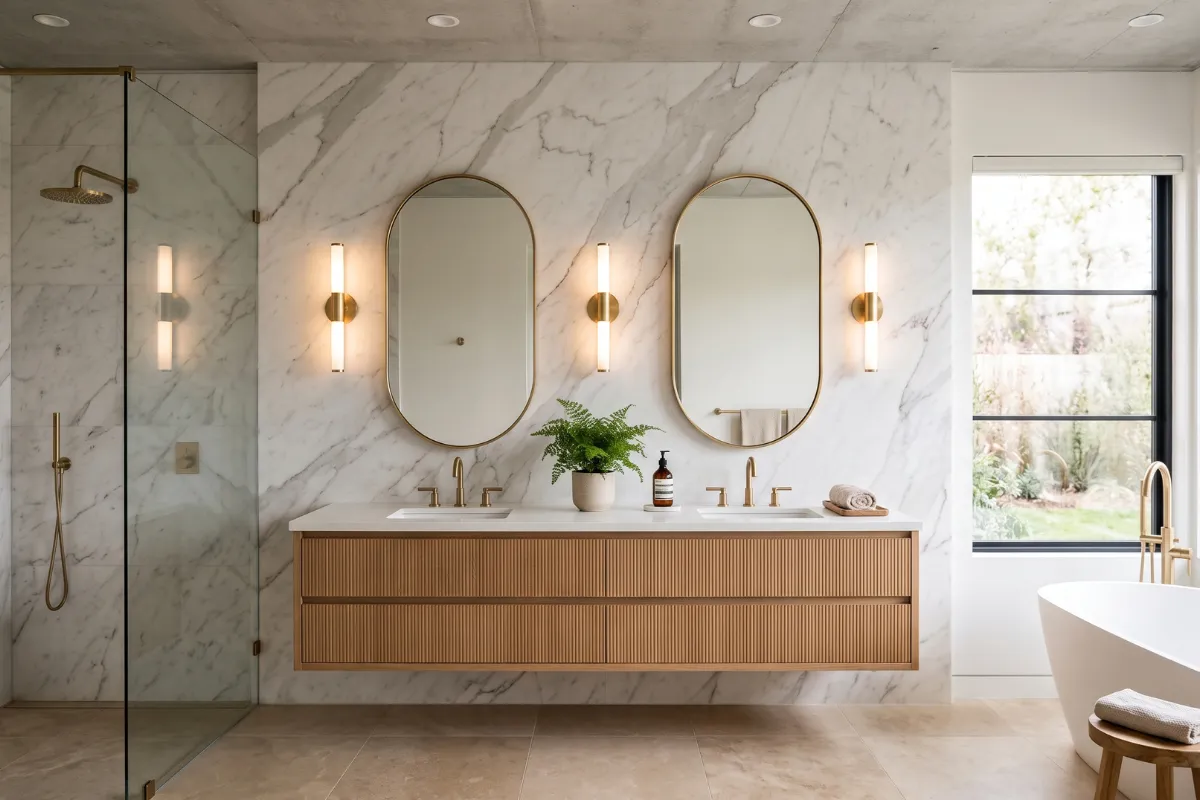
A bathroom can feel completely different with one well-designed focal point. These bathroom accent wall ideas can introduce color, texture, pattern, warmth, and personality without requiring a full renovation. From dramatic marble and geometric tile to botanical wallpaper and warm wood-look porcelain, there are plenty of ways to create a beautiful statement wall. Moreover, an accent wall can highlight the area you want people to notice first. You might emphasize a floating vanity, freestanding bathtub, walk-in shower, or even an overlooked wall behind the toilet. Therefore, choosing the right location matters just as much as selecting the material.
Whether you prefer a modern, minimalist, farmhouse, coastal, traditional, Japandi, or luxury bathroom, these bathroom accent wall ideas offer practical inspiration for different layouts, budgets, and decorating styles.
A bathroom accent wall is a wall that differs from the surrounding surfaces through color, material, texture, pattern, or architectural detail. Instead of making every wall identical, you create one area that immediately attracts attention. For example, a bathroom might have soft white walls with a deep green tile wall behind the vanity. Similarly, a neutral bathroom can gain character from a marble slab behind a freestanding bathtub. However, an accent wall does not always need to be dramatic. A subtle change in tone, vertical tile pattern, textured surface, or natural material can create enough contrast to make the room feel more interesting. Before choosing your design, consider moisture exposure, natural light, artificial lighting, existing flooring, vanity color, countertop material, fixtures, and the overall style of your home.
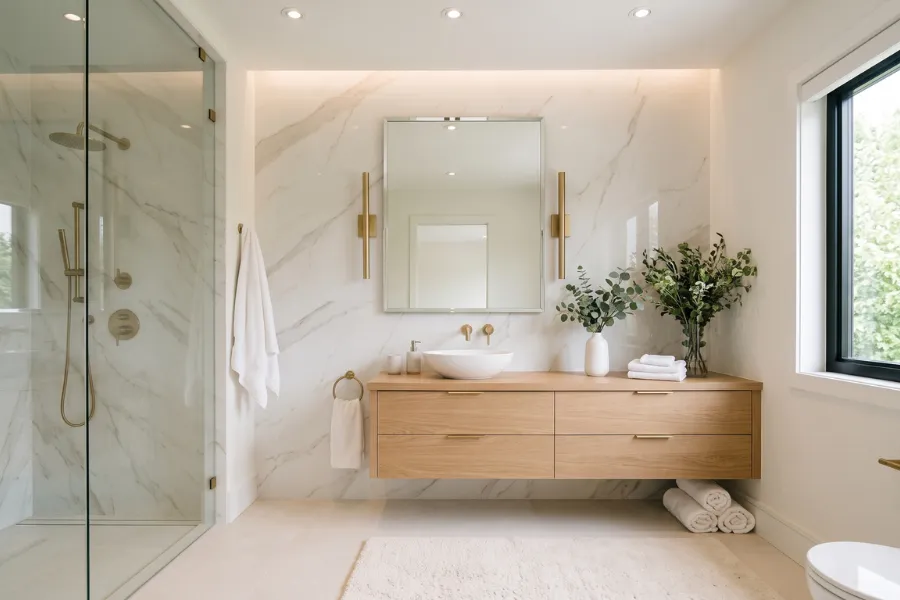
Large-format porcelain tile creates a clean and sophisticated appearance with fewer grout lines. Marble-look, concrete-look, and stone-look porcelain can all provide a high-end appearance. Additionally, large tiles work particularly well in contemporary bathrooms because their simple surfaces complement floating vanities and frameless mirrors.
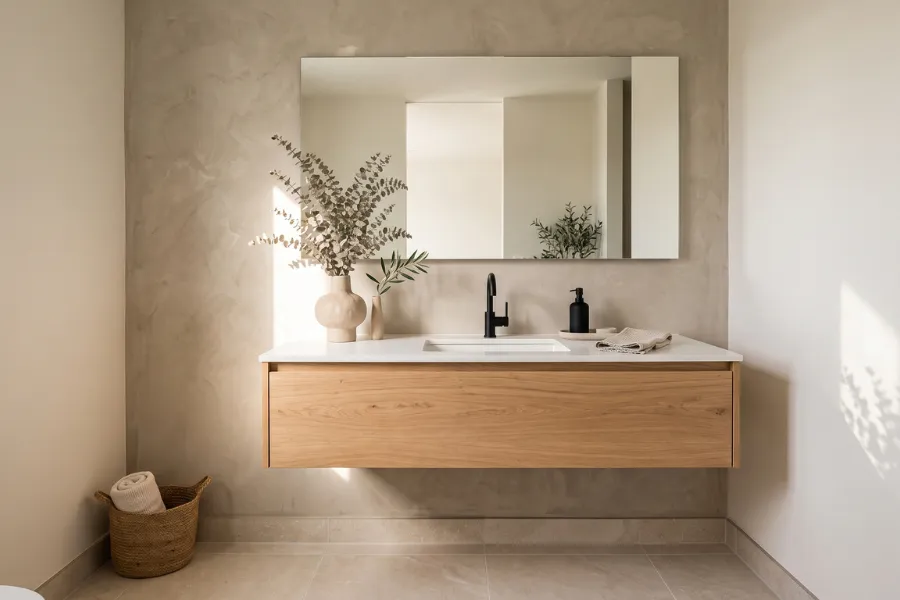
You do not need a bold color to create an attractive focal point. Beige, cream, taupe, greige, and soft gray can create subtle contrast. For instance, use a textured neutral tile behind the vanity while keeping the remaining walls lighter. As a result, the bathroom gains dimension without losing its calm appearance.
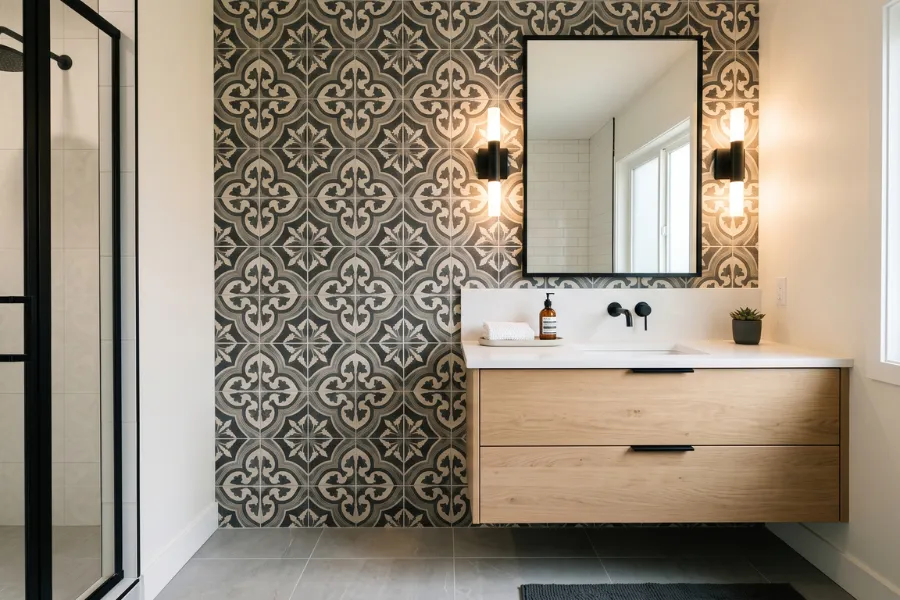
Geometric tile can instantly add structure and personality. Hexagons, diamonds, triangles, chevrons, and abstract shapes all work well. However, because geometric patterns already create visual movement, keep the surrounding finishes relatively simple.
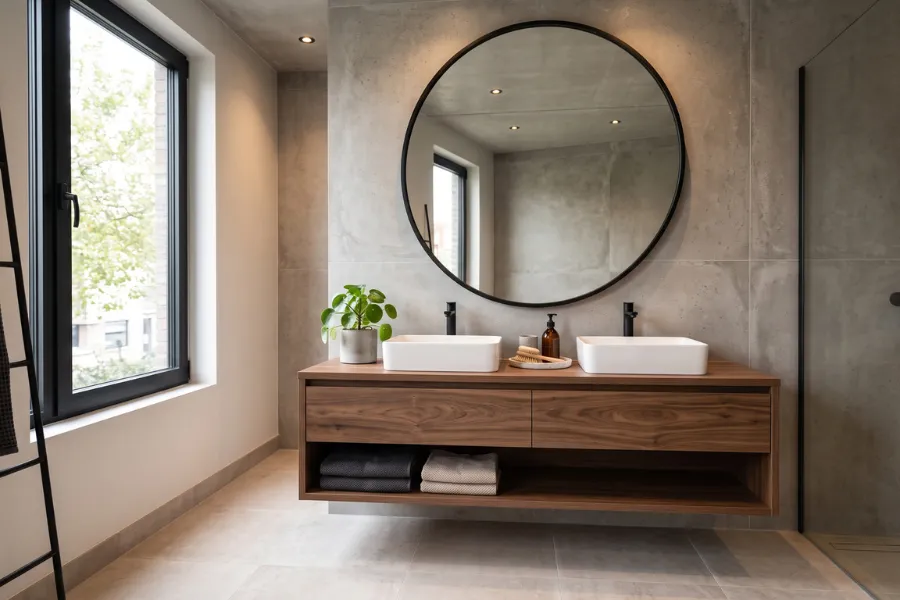
Concrete-inspired surfaces are ideal for industrial and modern bathrooms. A concrete-look porcelain tile or suitable wall finish can provide an understated architectural appearance. Furthermore, warm wood cabinetry and soft lighting can balance the cooler character of concrete.
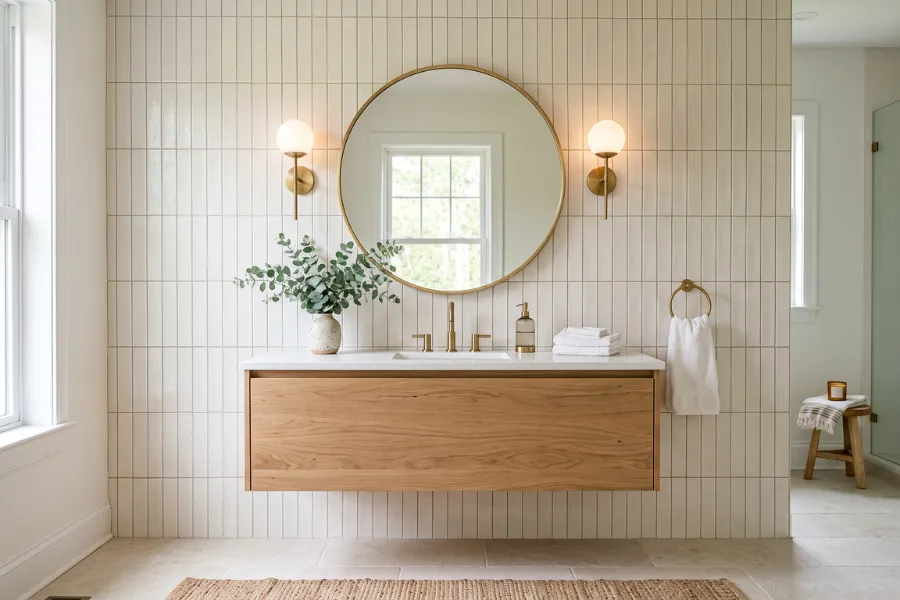
Vertical tile installation can make a bathroom appear taller. This approach works especially well in narrow bathrooms or spaces with low ceilings. Use long rectangular tiles, vertically stacked subway tiles, or narrow fluted surfaces for additional height.
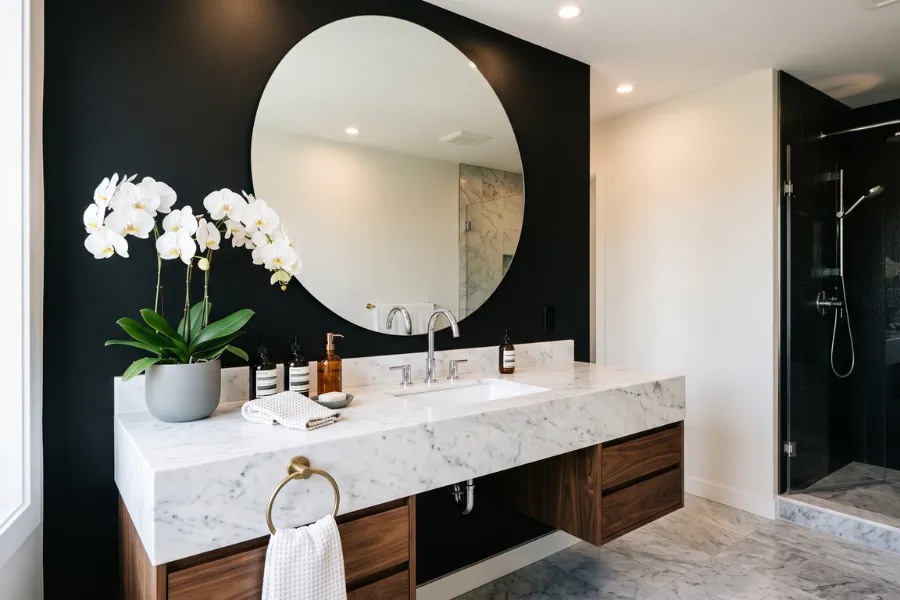
A matte black wall creates dramatic contrast against white, cream, beige, and light gray finishes. Place it behind a floating vanity or modern bathtub, then balance the dark surface with mirrors, layered lighting, and lighter flooring.
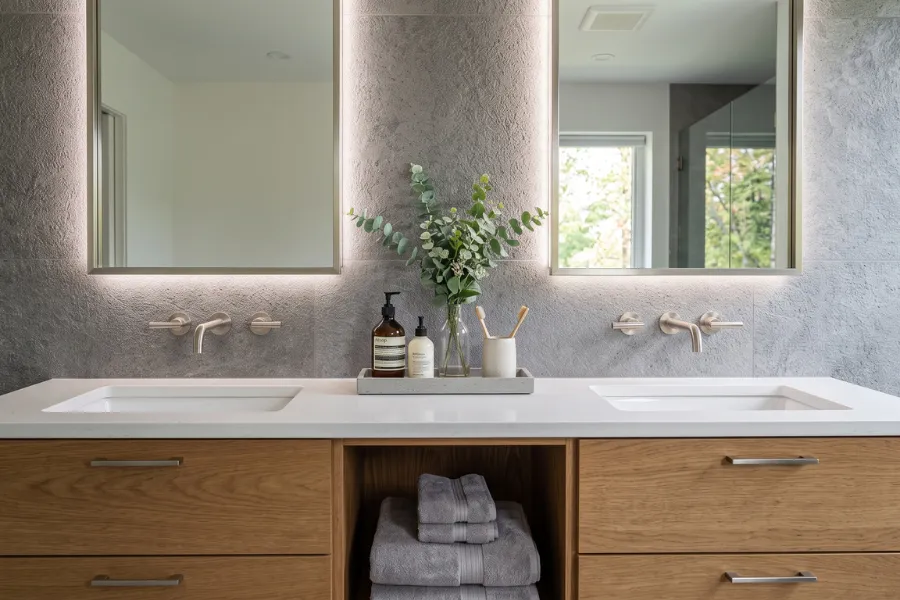
Gray remains one of the easiest colors to work with in bathroom design. Instead of flat gray paint, choose textured porcelain, stone-look tile, ribbed surfaces, or subtle decorative panels. Consequently, the bathroom remains neutral while gaining visual depth.
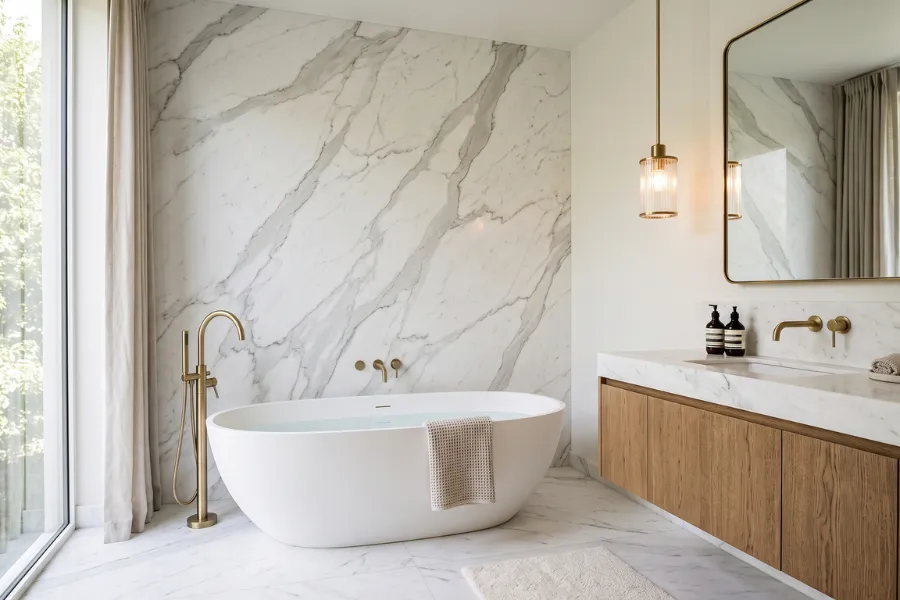
A floor-to-ceiling marble wall can become the centerpiece of a modern luxury bathroom. Strong veining creates a natural artwork effect, while softer marble produces a more peaceful appearance. Pair it with brushed brass, chrome, or matte black fixtures depending on your preferred style.
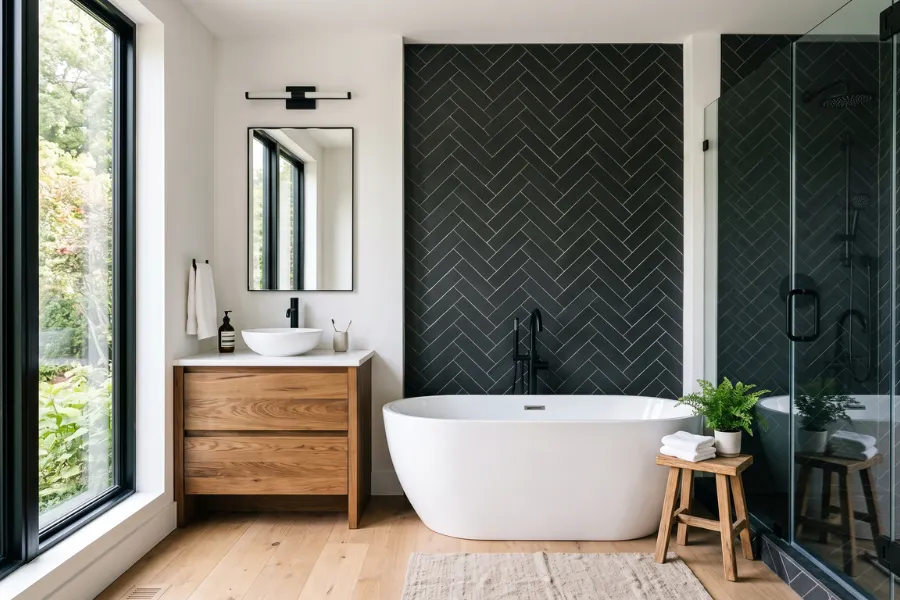
Herringbone tile introduces movement while maintaining a classic appearance. White, gray, beige, navy, and charcoal are all versatile choices. Use the pattern behind the bathtub, vanity, or shower. Meanwhile, simple surrounding walls will keep the design balanced.
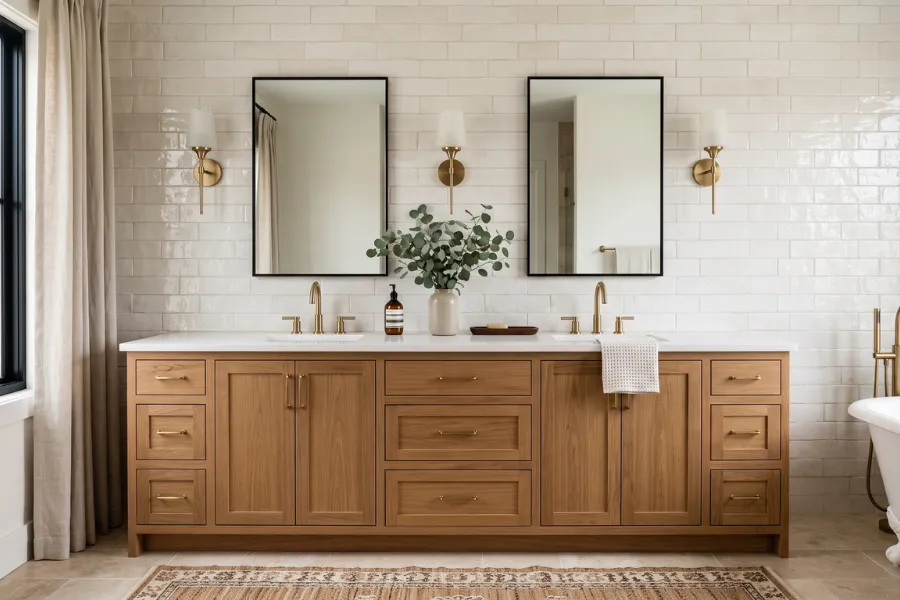
Subway tile remains popular because it works with many interior styles. Traditional white subway tile creates a timeless look, while colored or handmade versions add personality. For stronger contrast, choose dark grout. On the other hand, matching grout creates a softer, seamless effect.
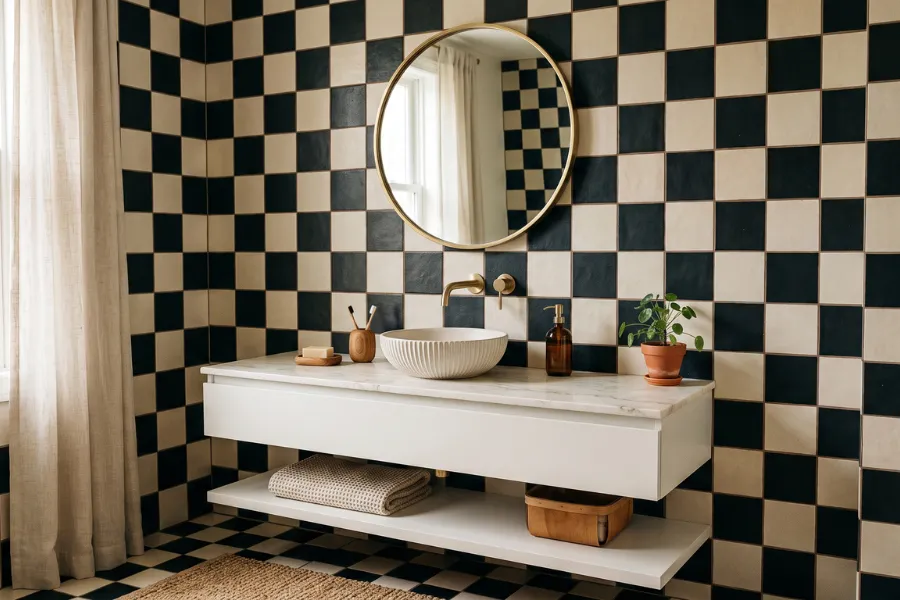
Checkerboard tile adds a vintage-inspired character to the bathroom. Black and white create the strongest contrast, while charcoal and ivory offer a softer interpretation. This design works particularly well with vintage mirrors, chrome fixtures, and traditional vanities.
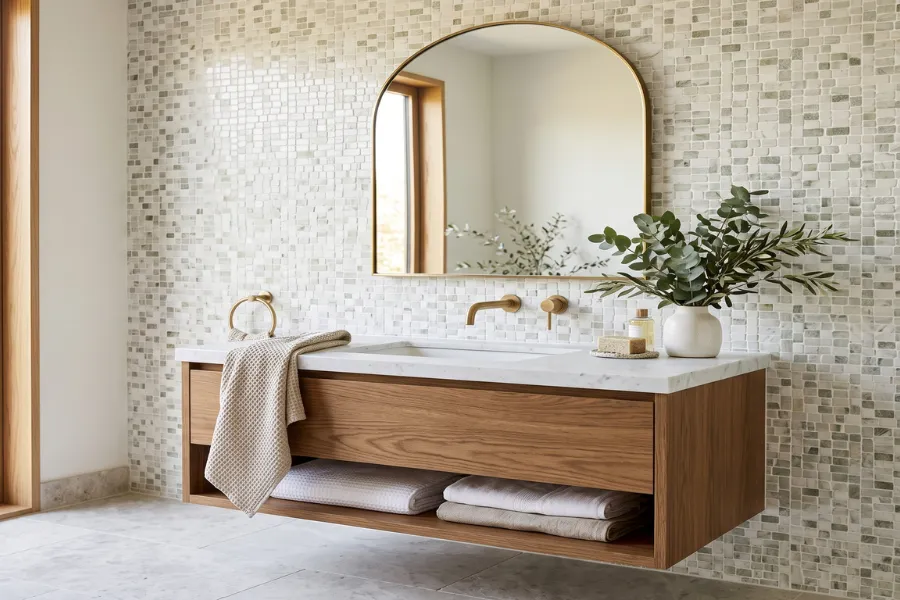
Mosaic tile allows you to introduce detailed patterns without covering the room in a large-scale design. Glass, ceramic, marble, and stone mosaics can all create attractive focal points. In particular, mosaic works beautifully behind a vanity or inside a shower feature area.
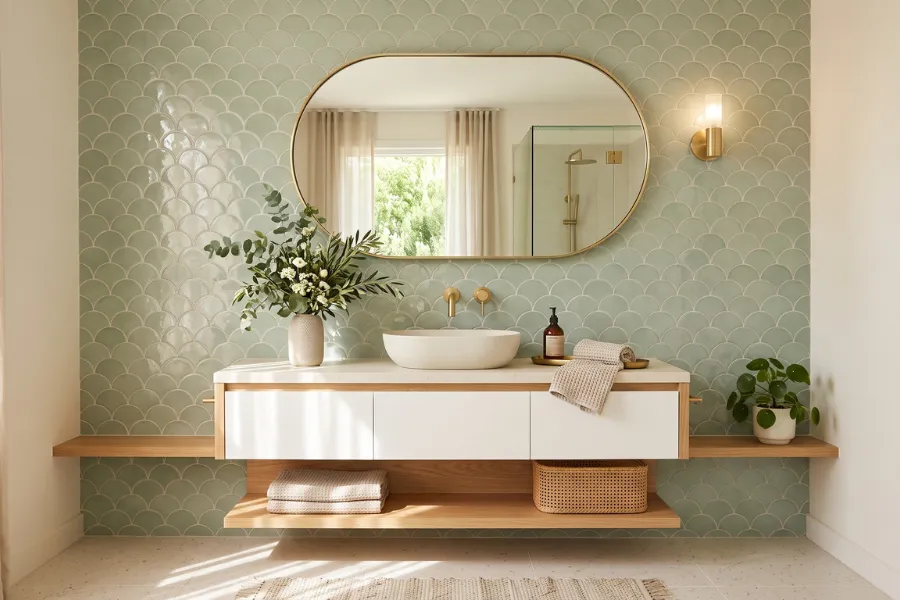
Fish-scale and scallop tiles introduce curved shapes into the bathroom. Soft blue, white, sage, and sandy tones work beautifully for coastal or spa-inspired interiors. The curved edges create movement while keeping the design softer than sharp geometric tile.
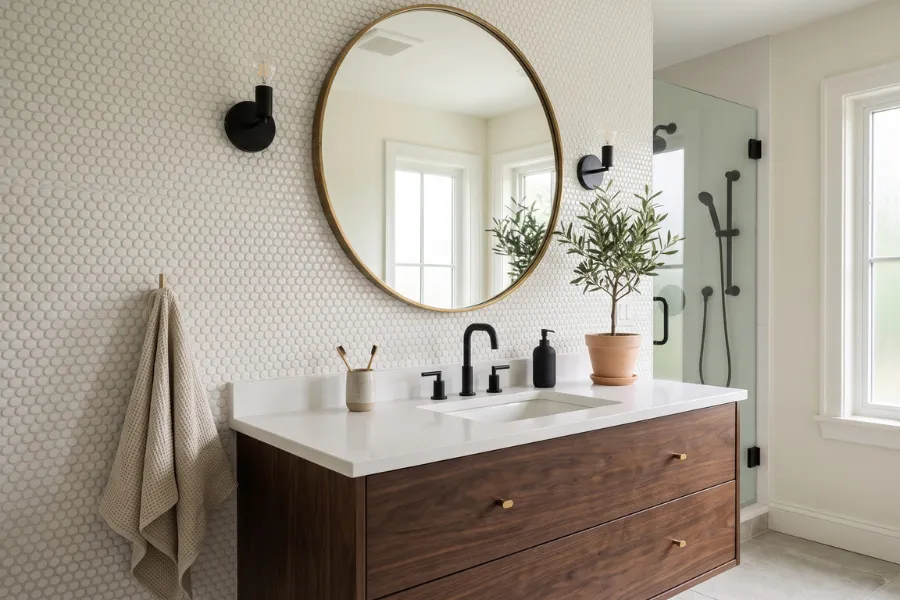
Penny tile creates texture through hundreds of small circular pieces. It suits vintage, eclectic, and playful bathrooms particularly well. Use one color for a sophisticated finish, or combine two complementary shades for a more decorative look.
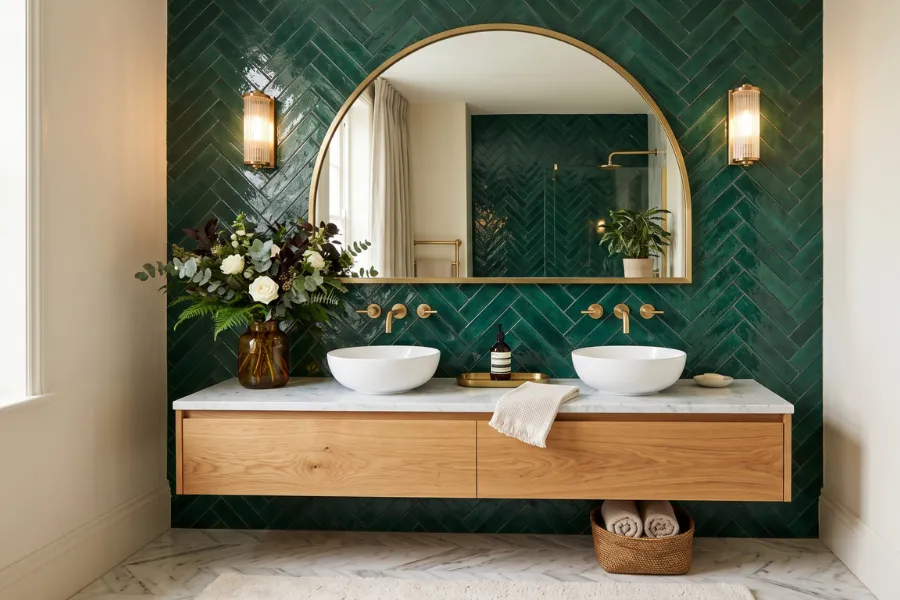
Emerald green, sapphire blue, deep teal, and other jewel tones can create an instantly luxurious atmosphere. Pair a rich tile color with brass hardware, cream surfaces, natural stone, or dark wood. This combination can make even a simple bathroom feel more sophisticated.
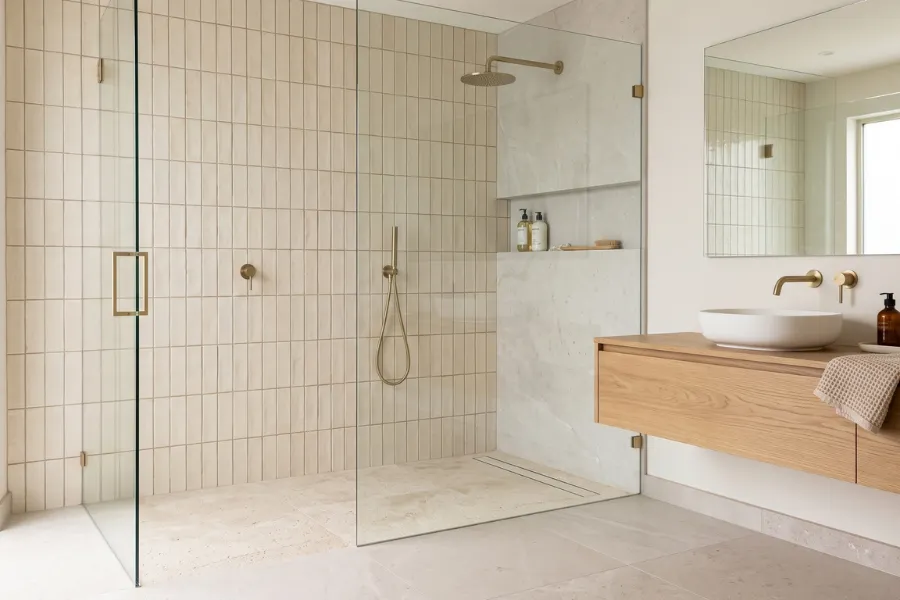
Stacked tile gives traditional rectangular tile a more contemporary appearance. A horizontal arrangement can emphasize width, while vertical stacking draws attention upward. Therefore, choose the direction according to the proportions of your bathroom.
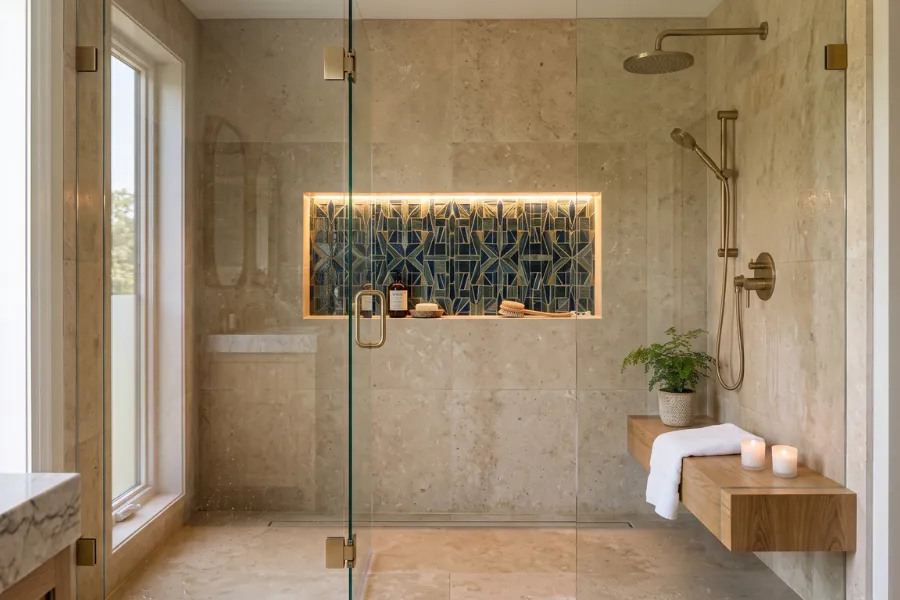
A shower niche can become a small focal point instead of simply serving as storage. Use contrasting mosaic tile, patterned ceramic, stone, or a different shade inside the niche. As a result, your practical storage area also becomes part of the bathroom design.
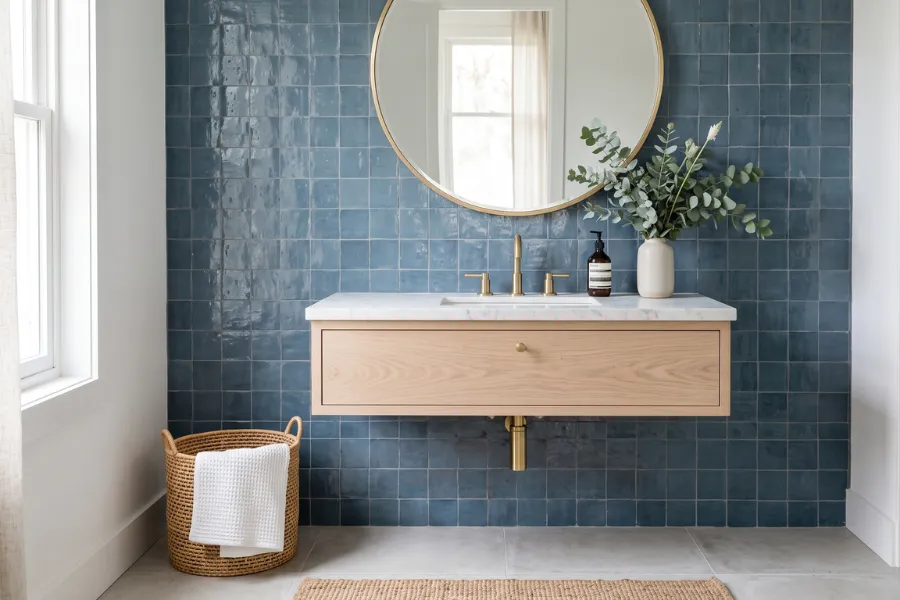
Blue is a natural choice for bathrooms because it creates a calm and refreshing atmosphere. Pale blue works well with white and light wood, while navy and deep teal create more dramatic contrast. Additionally, blue tile pairs beautifully with brushed brass.
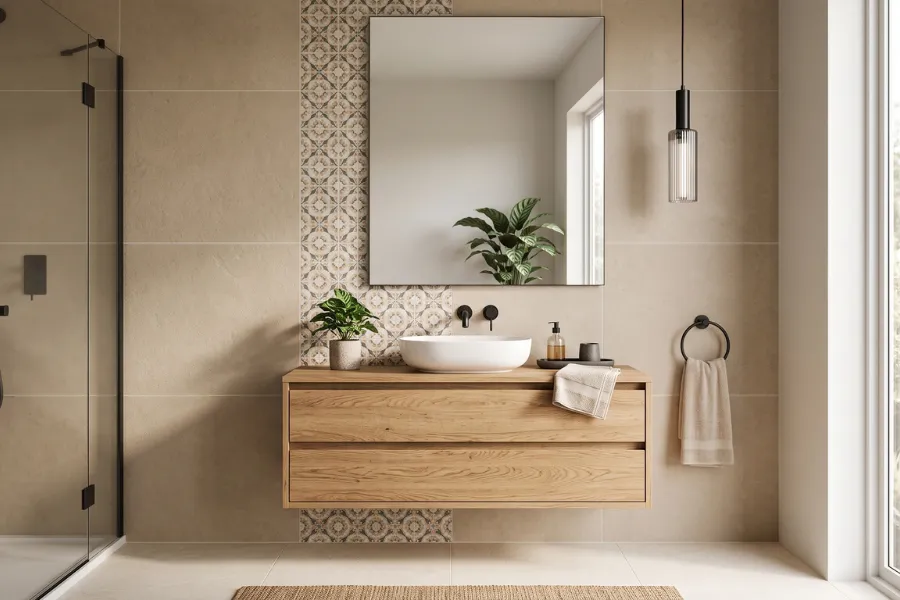
Combine two coordinated tile styles to create a layered effect. For example, use a large neutral tile on one portion of the wall and a smaller decorative tile on another. This approach provides detail without making every surface compete.
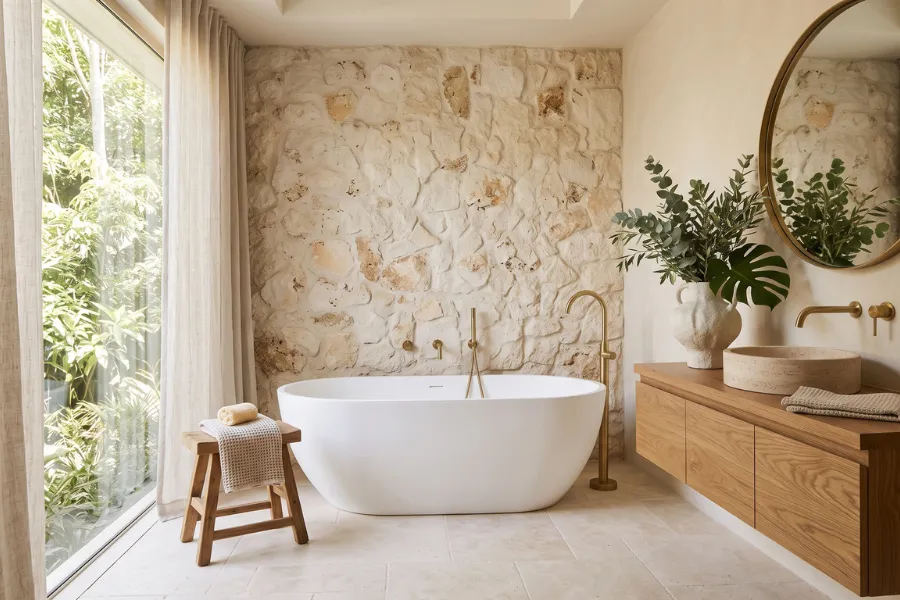
Natural stone adds organic texture and variation. Slate, travertine, limestone, and other stone finishes can create a relaxing spa-inspired atmosphere. However, always check the maintenance and moisture requirements of your selected stone before installation.
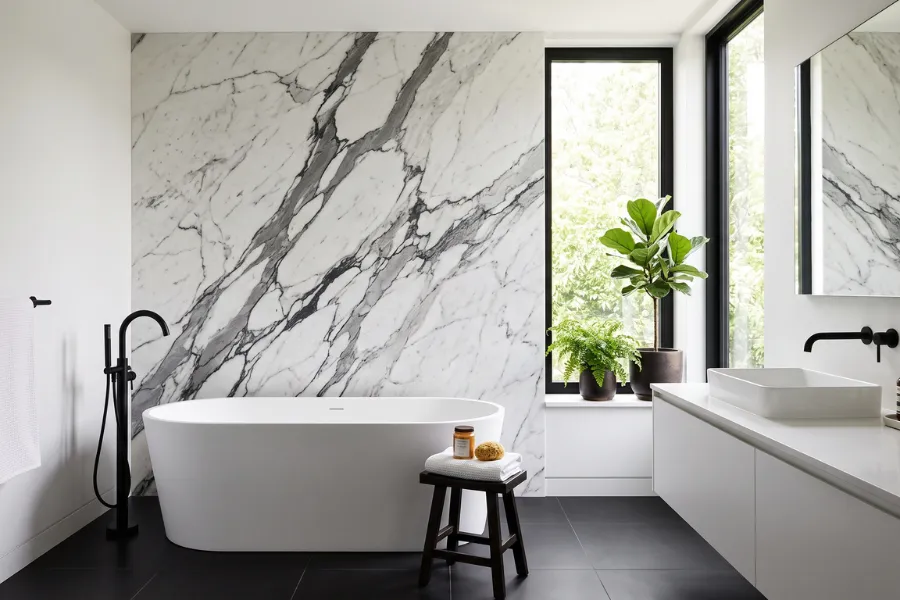
A marble slab can create one of the most luxurious bathroom accent wall ideas because the uninterrupted surface highlights the stone’s natural veining. Use it behind a freestanding bathtub or double vanity. Furthermore, repeat small marble details through the countertop or accessories for cohesion.
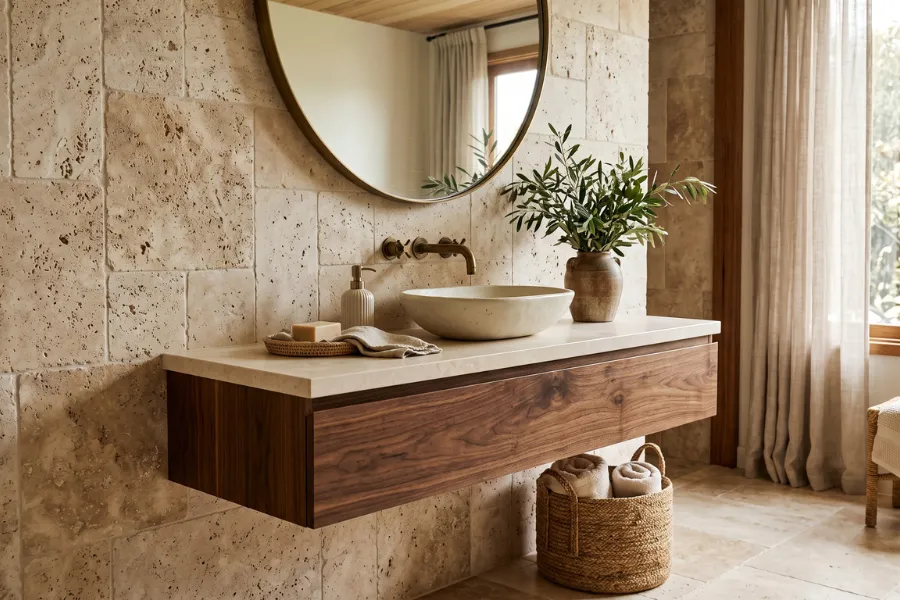
Travertine brings warm earthy tones into a bathroom. Its natural variation looks beautiful with cream, beige, walnut, oak, and bronze. For an organic modern look, combine travertine with simple cabinetry and warm lighting.
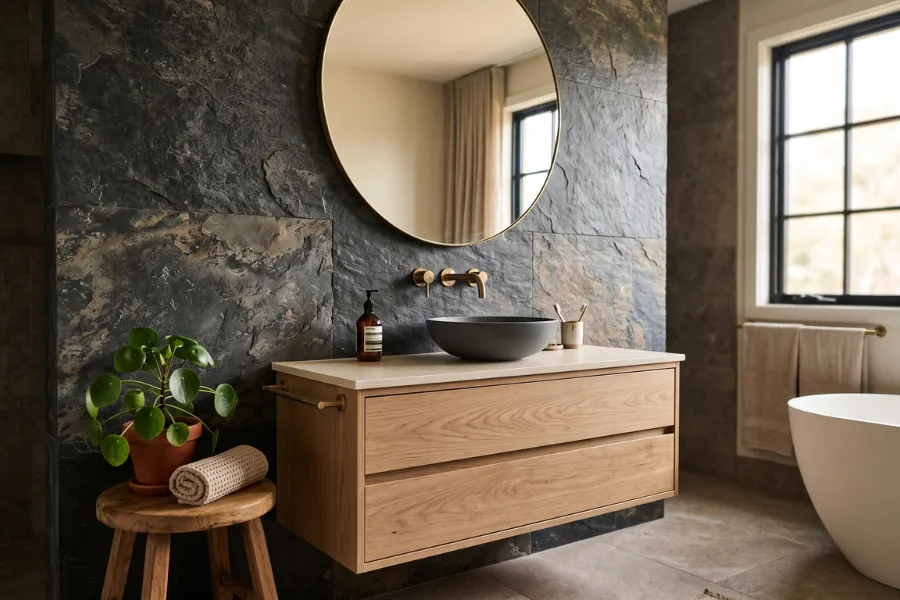
Slate provides dark texture without requiring a decorative pattern. Its natural variation gives the bathroom a rich architectural character. Pair it with light fixtures, pale flooring, and warm wood to prevent the room from feeling too dark.
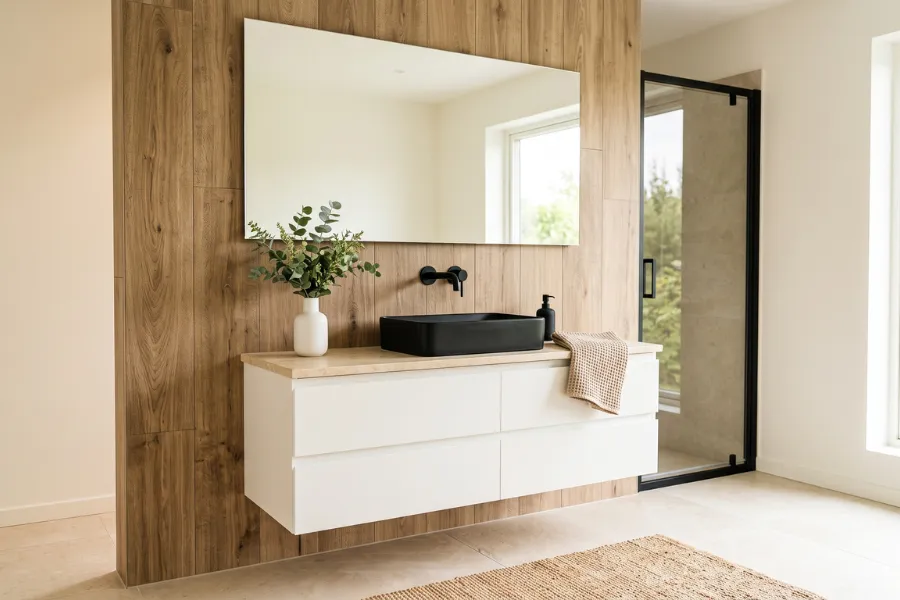
Wood-look porcelain is an excellent way to introduce warmth while maintaining a practical bathroom surface. Use long planks vertically to emphasize ceiling height or horizontally to create a relaxed appearance.
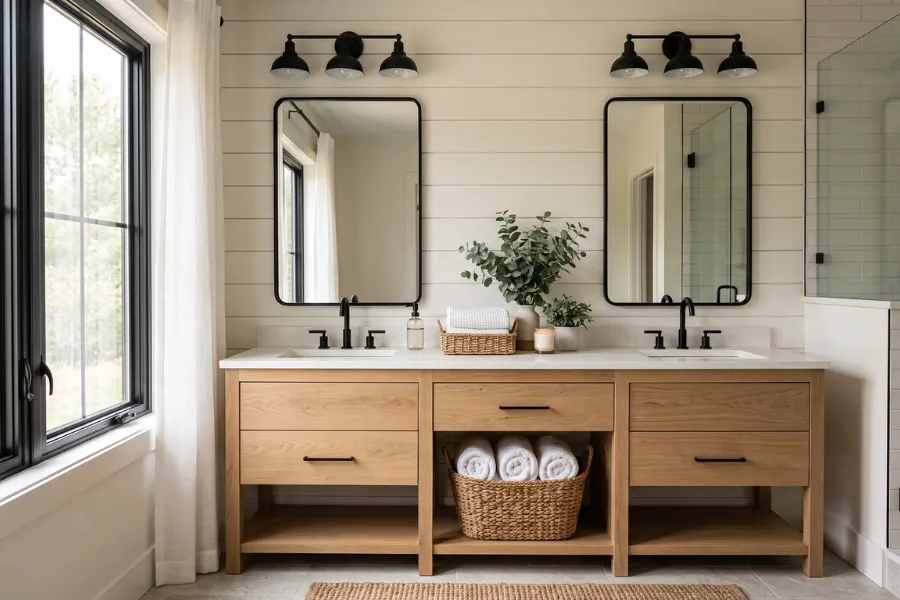
Shiplap can bring farmhouse and coastal character to a bathroom. Nevertheless, natural wood requires careful placement in humid environments. Keep it away from direct water exposure unless the product and installation system are specifically suitable for that location.
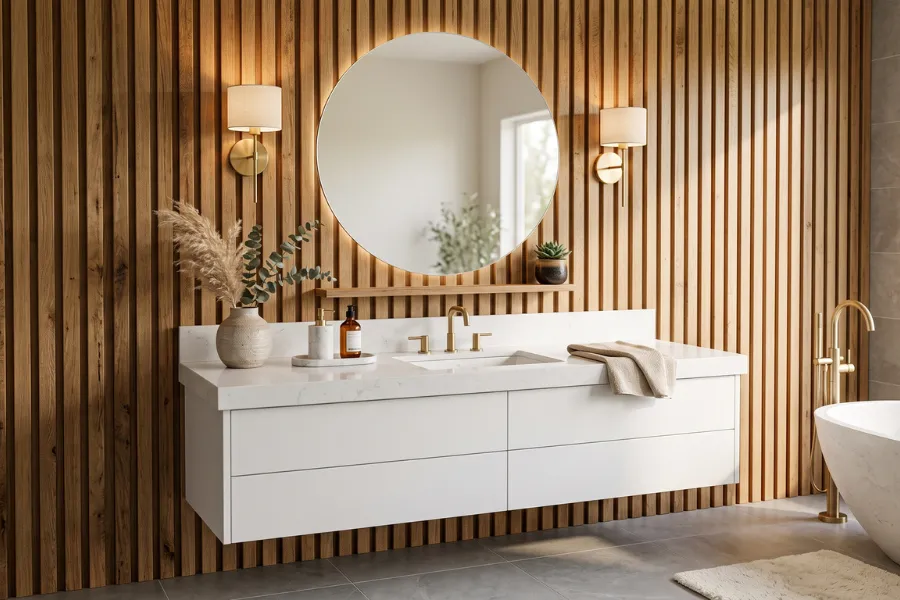
Vertical slats create rhythm and architectural texture. They also naturally draw the eye upward. A wood slat wall behind a floating vanity looks particularly attractive with cream tile, stone countertops, and warm wall sconces.
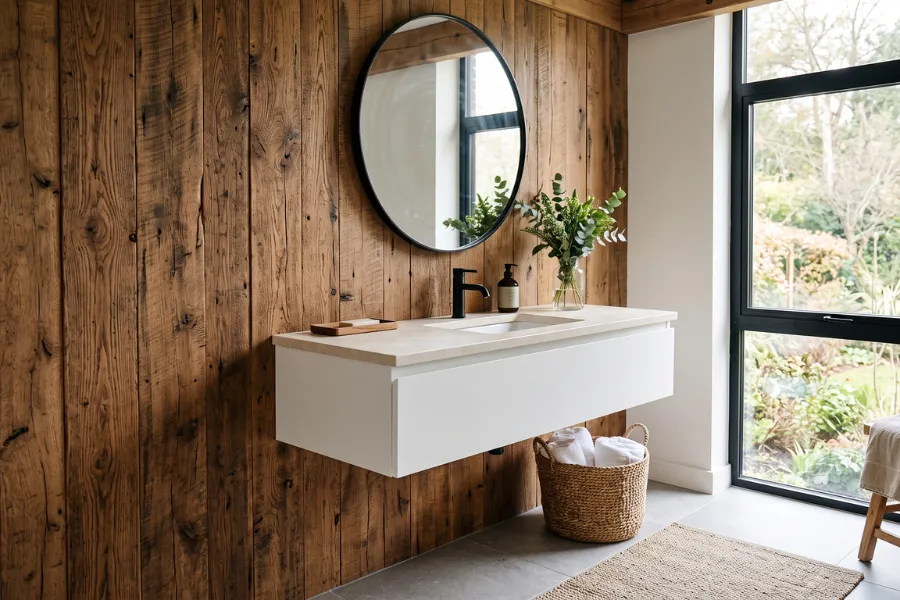
Reclaimed wood introduces rustic character and visual history. It works especially well in farmhouse, rustic, and industrial-inspired bathrooms. Use it selectively and balance the rough texture with clean modern fixtures.
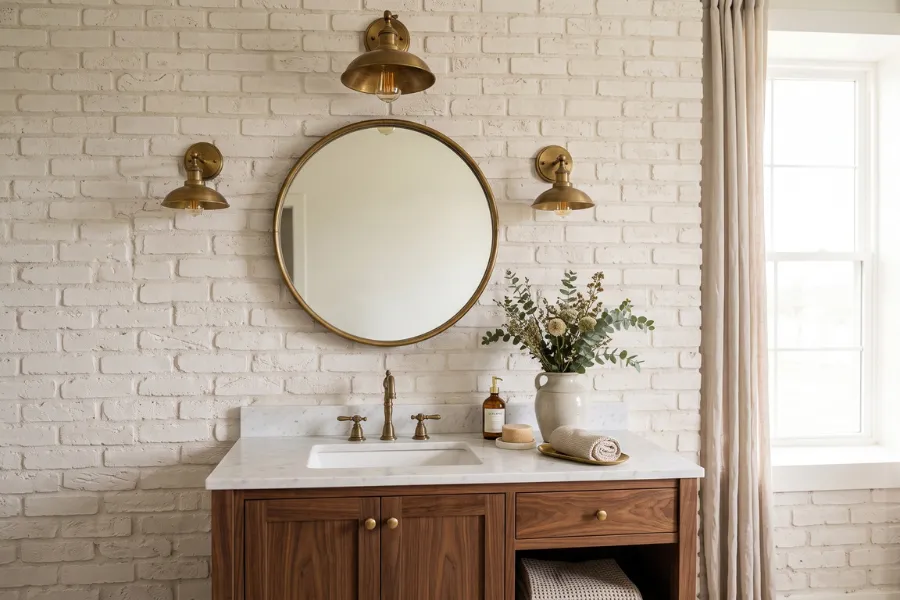
A limewashed brick wall creates an aged, textured appearance. This treatment can look beautiful in powder rooms and rustic European-inspired interiors. Pair the wall with aged brass, copper, vintage mirrors, or simple ceramic fixtures.
Wallpaper provides an easy way to introduce pattern and personality, particularly in powder rooms and low-splash areas. If you want more wallpaper inspiration, visit our Bathroom Wallpaper Ideas article.
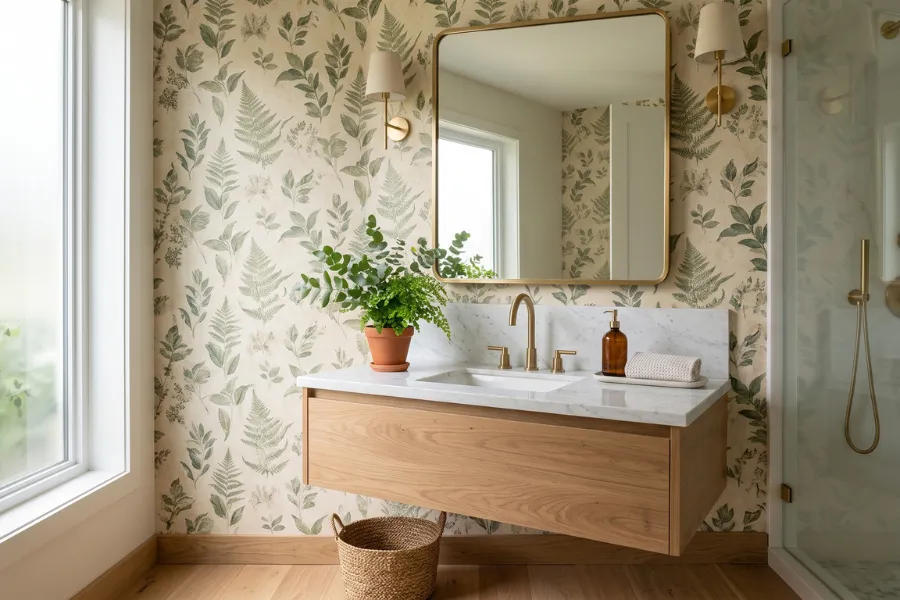
Botanical wallpaper brings leafy patterns and natural movement into the room. Green, cream, beige, and muted blue designs work especially well with natural wood and stone. Therefore, botanical wallpaper can create a relaxing connection with nature.
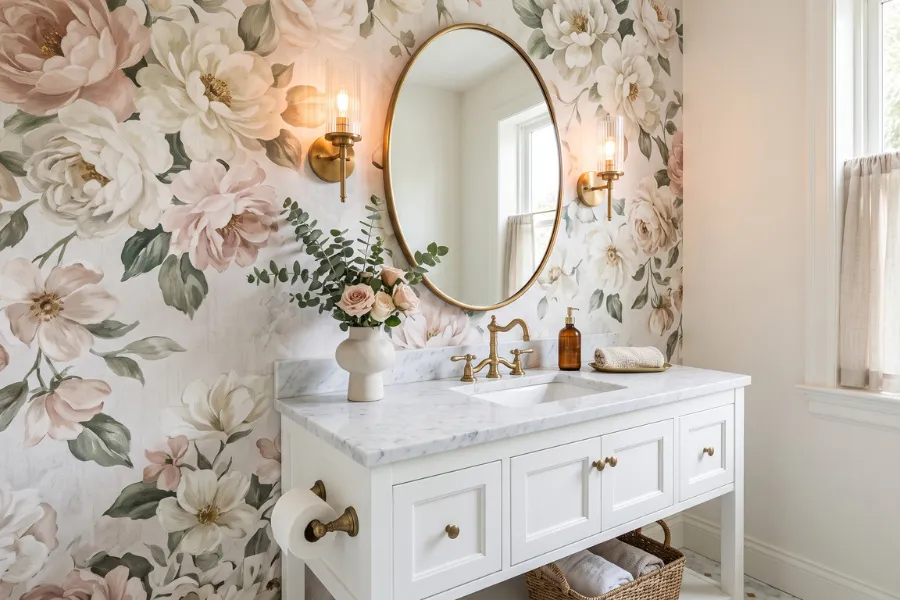
Floral wallpaper can create a romantic, traditional, cottage, or contemporary atmosphere depending on its scale and colors. For a modern bathroom, oversized floral designs often create a stronger statement. Meanwhile, smaller floral patterns can suit classic interiors.
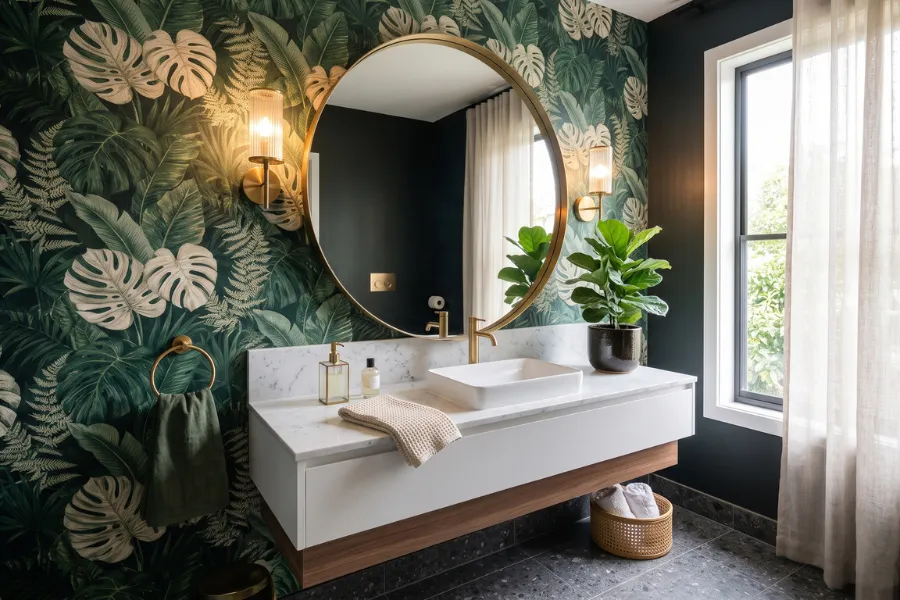
Palm leaves, tropical foliage, and exotic botanical prints can give a powder room a lively personality. Keep the remaining fixtures simple so the wallpaper remains the main attraction.
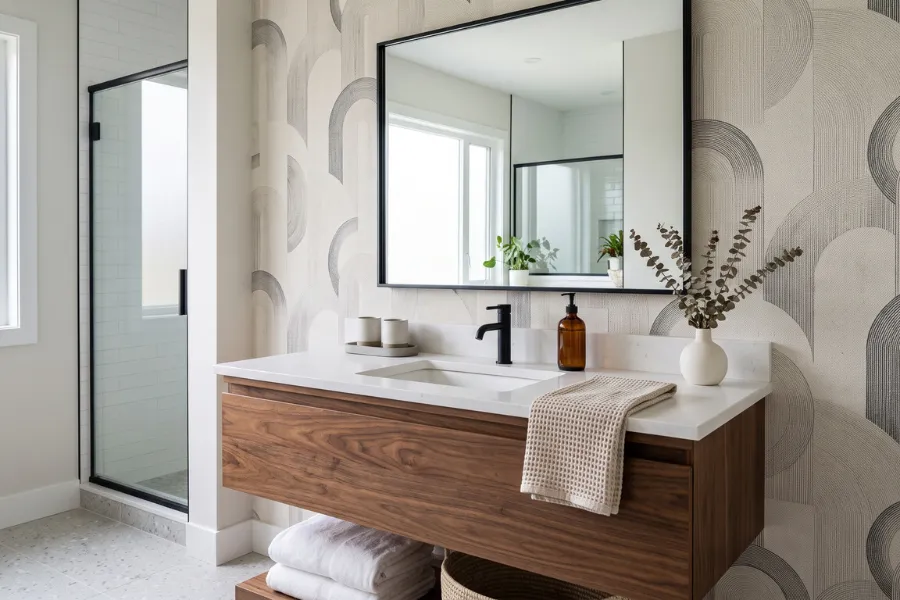
Geometric wallpaper offers pattern without relying on flowers or botanical imagery. Grids, arches, lines, diamonds, and abstract shapes can all complement contemporary bathrooms.
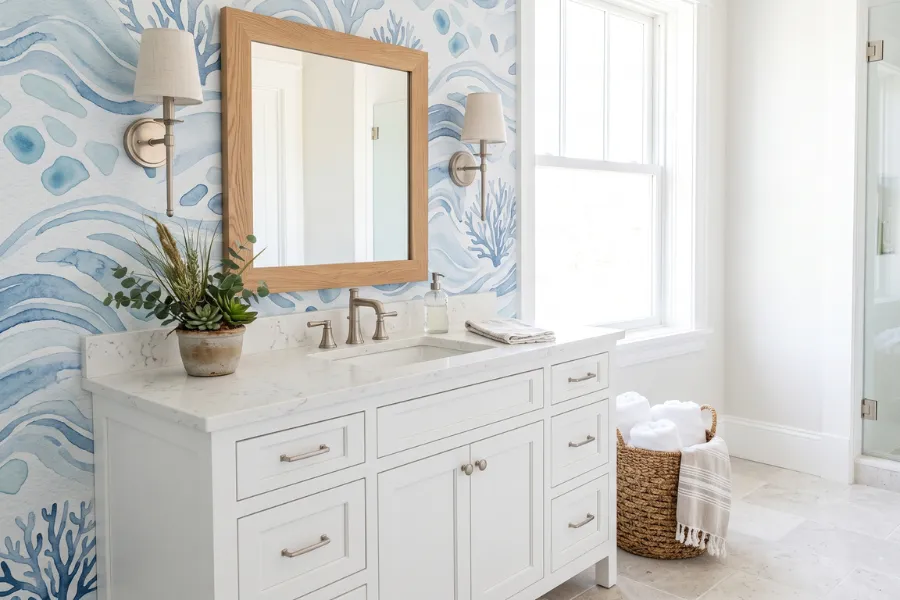
Soft blue wallpaper with watercolor patterns, waves, shells, or subtle coastal motifs can create a relaxed seaside feeling. Pair it with white fixtures, light oak, woven accessories, and natural textures.
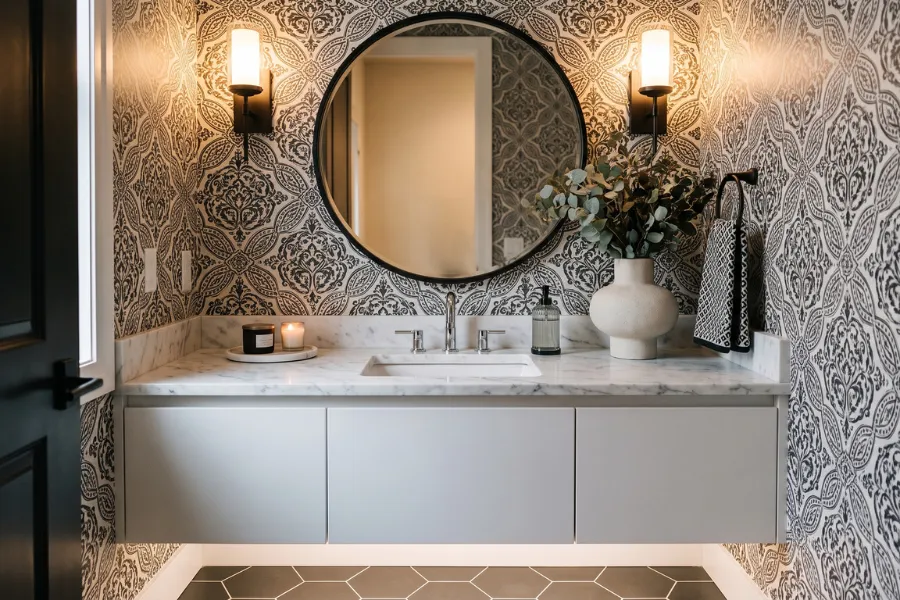
Black-and-white wallpaper creates dramatic contrast without introducing numerous colors. This design works particularly well in powder rooms where you can experiment with stronger patterns without overwhelming a large space.
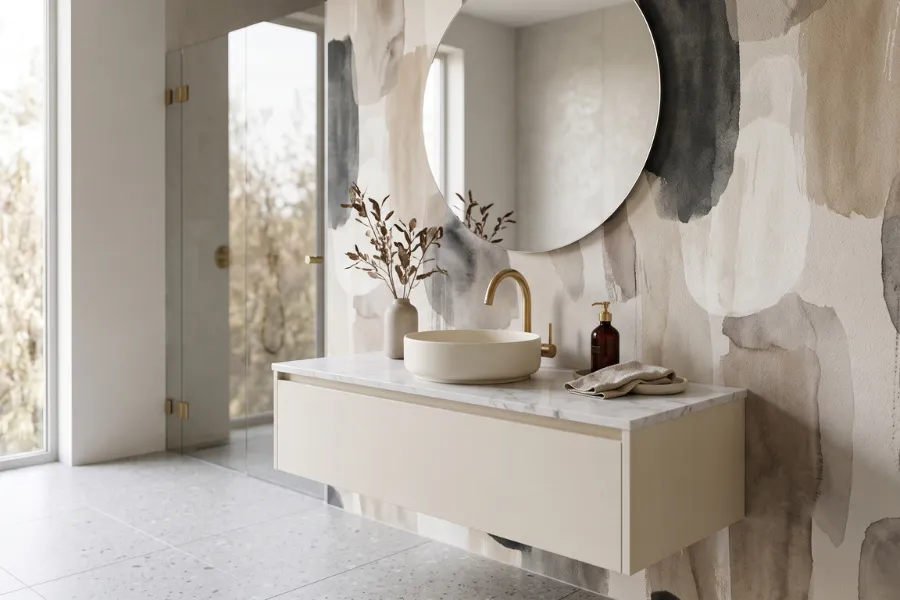
Abstract wallpaper can turn the bathroom wall into artwork. Painterly lines, organic shapes, brush effects, and contemporary compositions all provide creative possibilities. Choose one or two colors from the pattern and repeat them through towels or accessories.
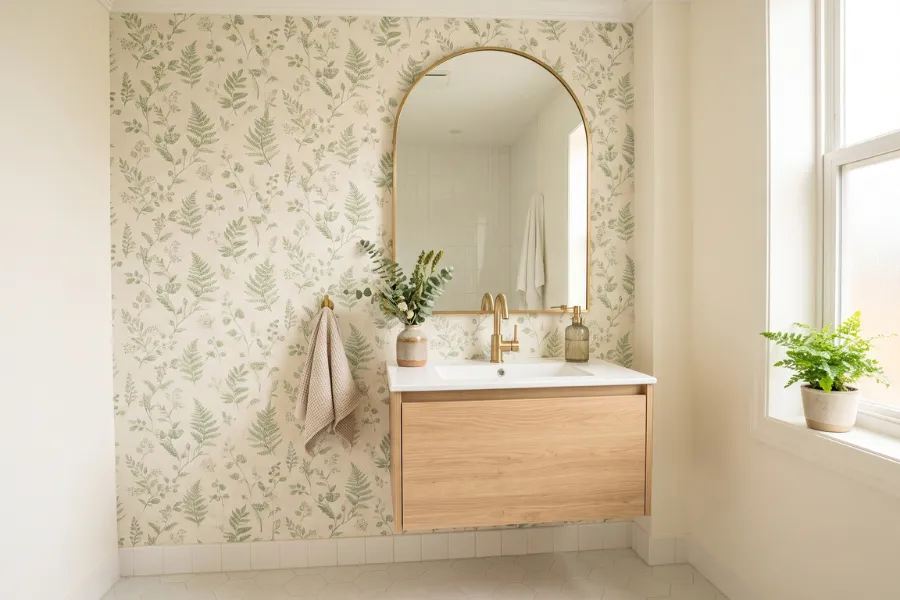
Peel-and-stick wallpaper can provide a temporary update for renters or homeowners who want to experiment. However, always check the manufacturer’s recommendations for humidity and bathroom use. Keep it away from direct splash areas unless the product specifically supports that application.
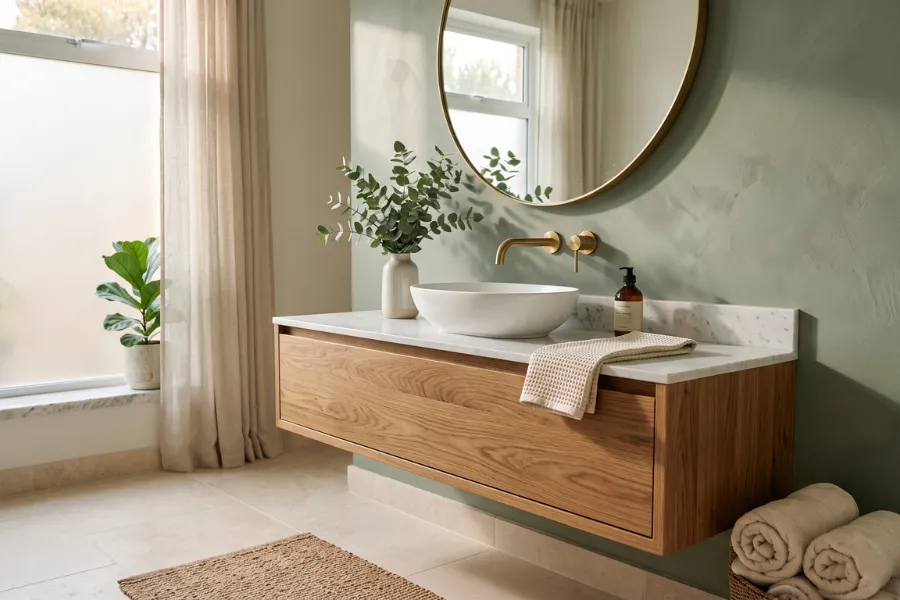
Sage green creates a calm, nature-inspired atmosphere. It works beautifully with white, cream, oak, natural stone, and brass. As a result, it suits organic modern, farmhouse, Scandinavian, and Japandi-inspired bathrooms.
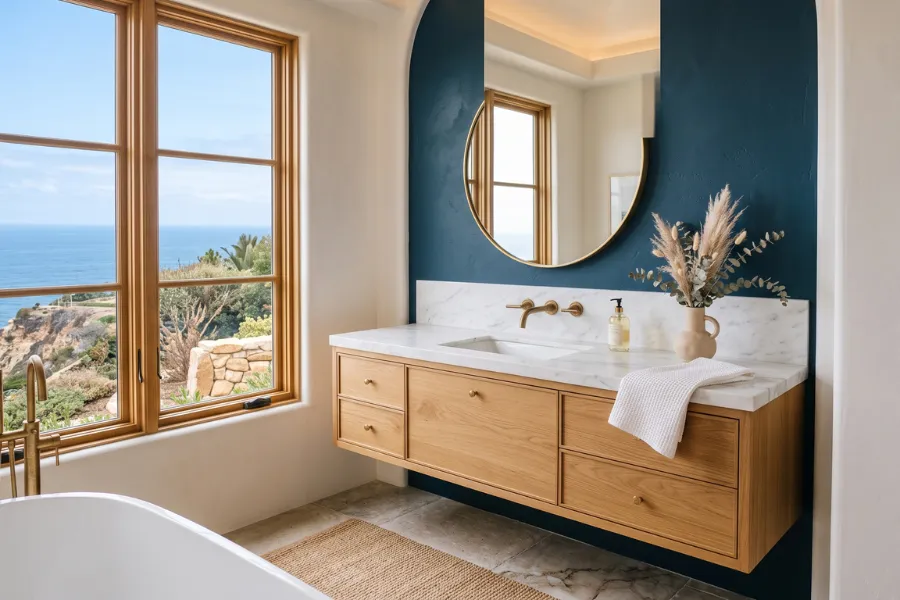
Navy creates depth without appearing as intense as pure black. Use it behind a vanity or bathtub and pair it with white tile, warm wood, brass fixtures, and soft lighting.
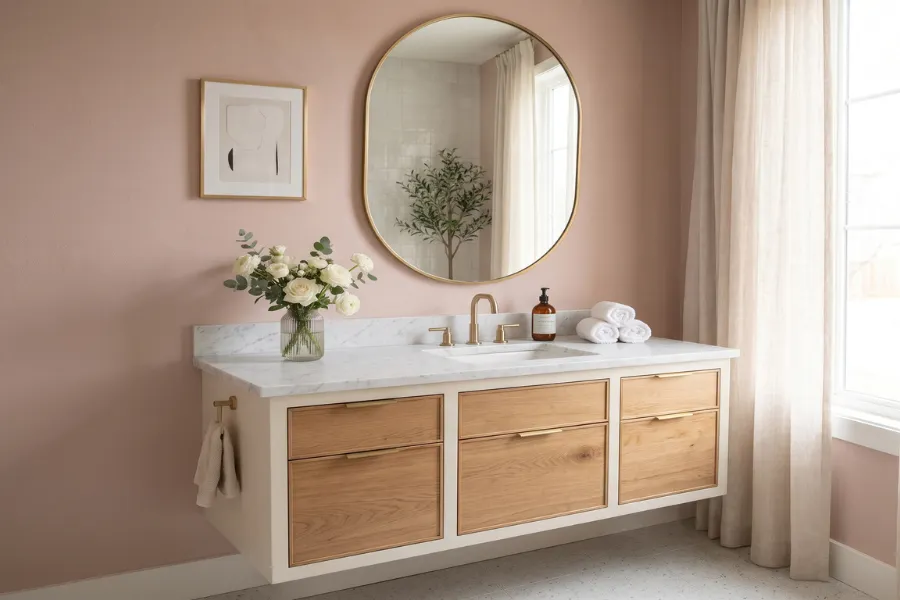
Blush and dusty pink can add warmth without overpowering the bathroom. Combine pink with white marble, cream, brass, or muted gray for an elegant appearance.
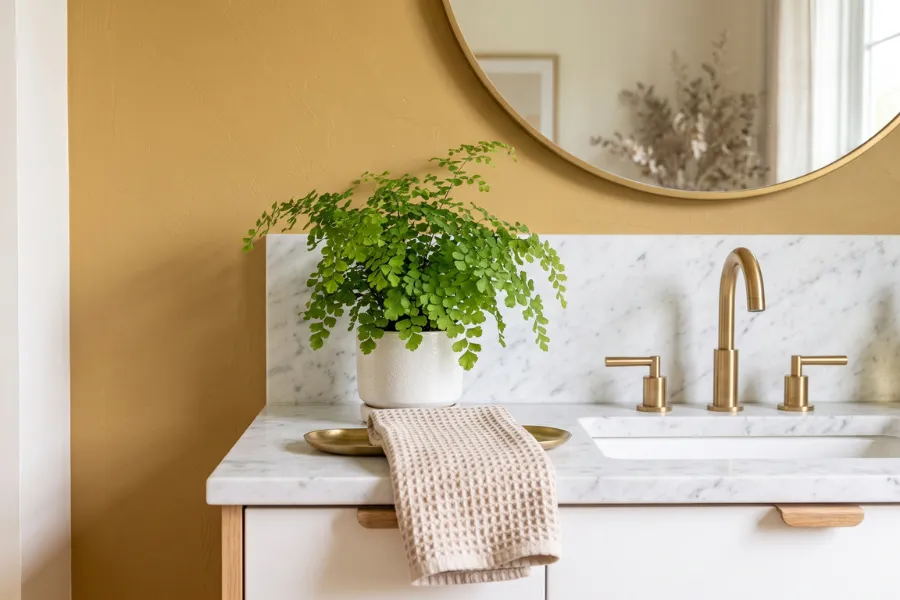
Yellow brings energy into the bathroom. Warm ochre and muted mustard usually provide a more sophisticated result than extremely bright shades. This idea works especially well in small powder rooms.
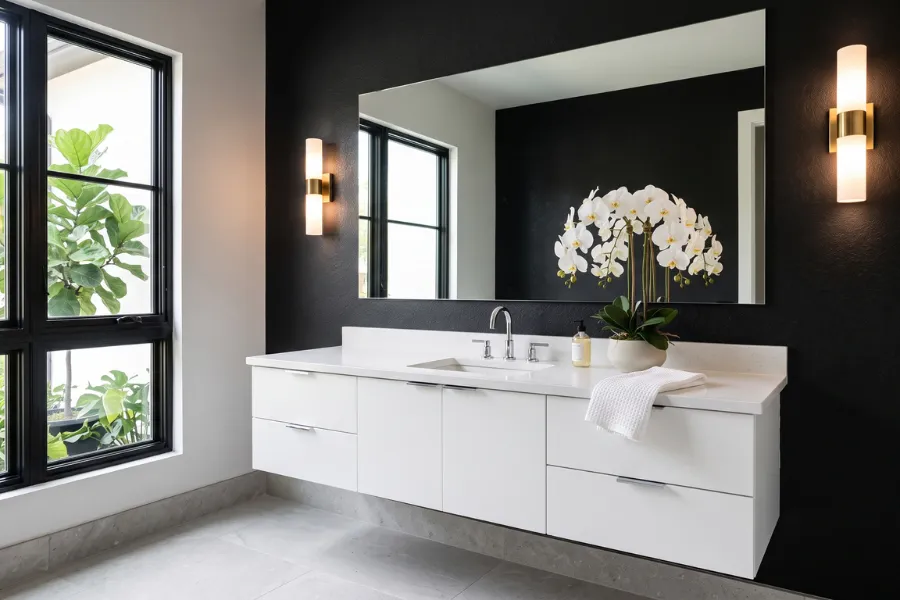
A matte black painted wall creates immediate drama. It works particularly well with white fixtures and light stone. Furthermore, layered lighting can soften the strong contrast.
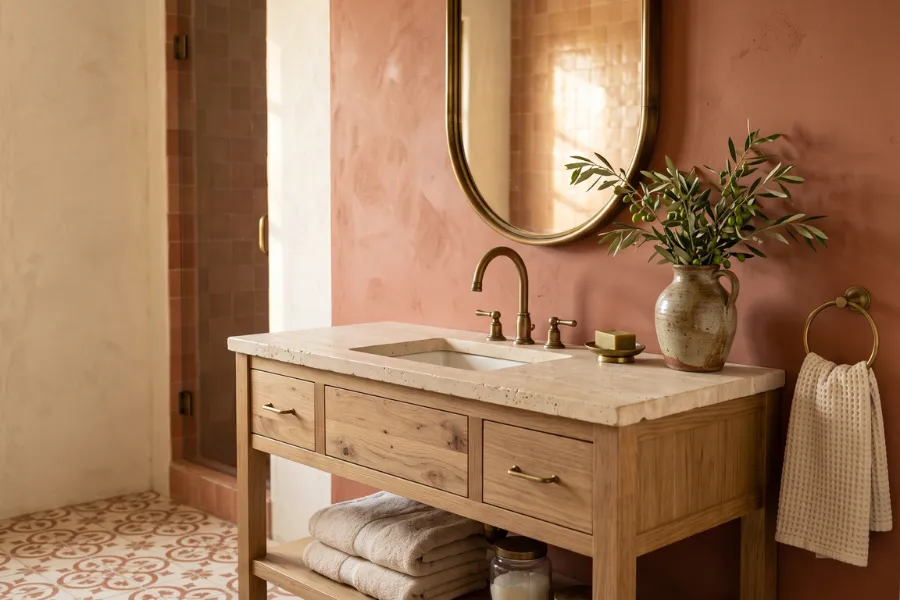
Terracotta adds earthy warmth and works beautifully with cream, walnut, natural stone, and brass. It can also complement Mediterranean and Spanish-inspired interiors. For additional inspiration, explore Spanish Style Interior Design.
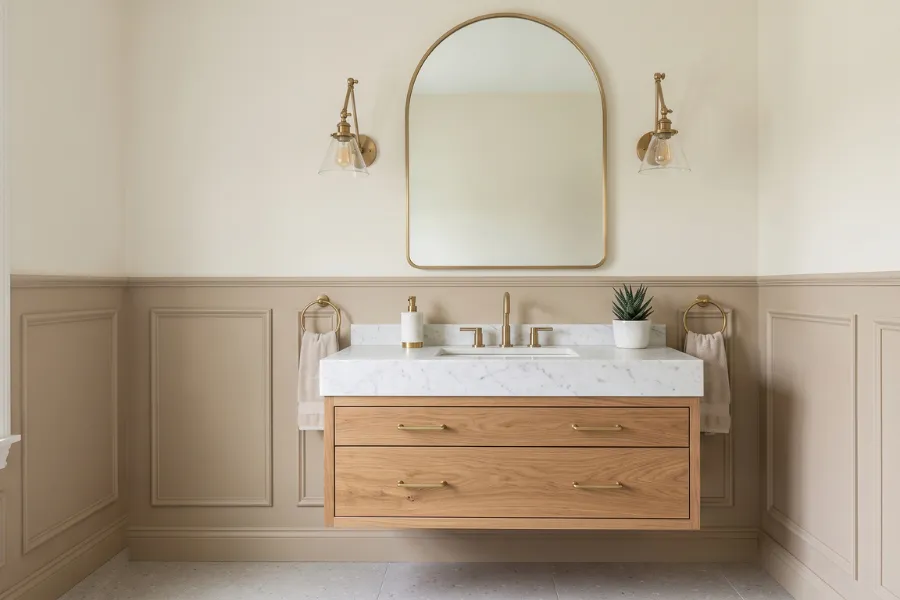
Use two complementary paint colors to create an architectural effect. For instance, place a darker shade below wainscoting and a lighter color above it. Similarly, a horizontal color division can visually alter the room’s proportions.
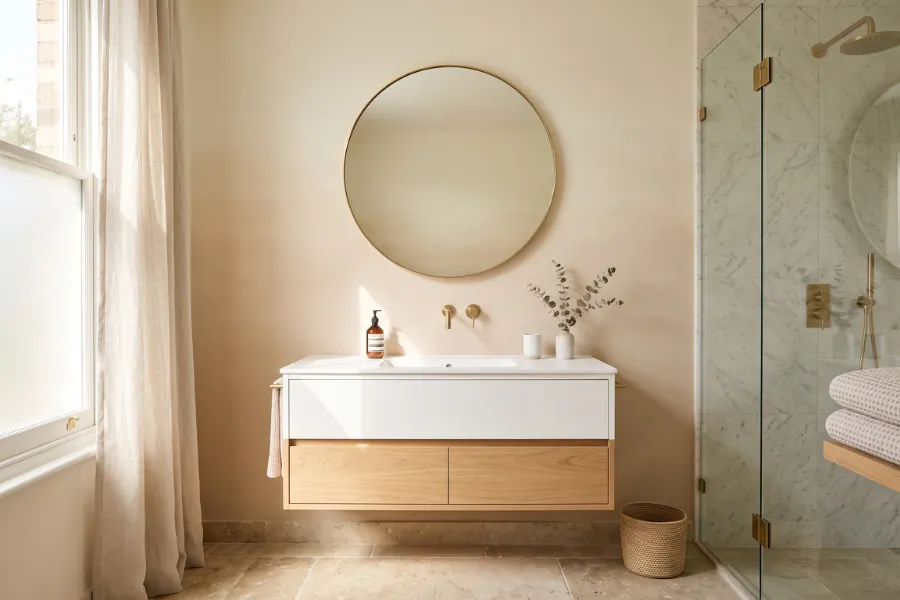
An ombre wall gradually transitions from one color to another. Soft blue, pink, beige, and green can all work beautifully. Keep the transition gentle if you want the bathroom to feel sophisticated and relaxing.
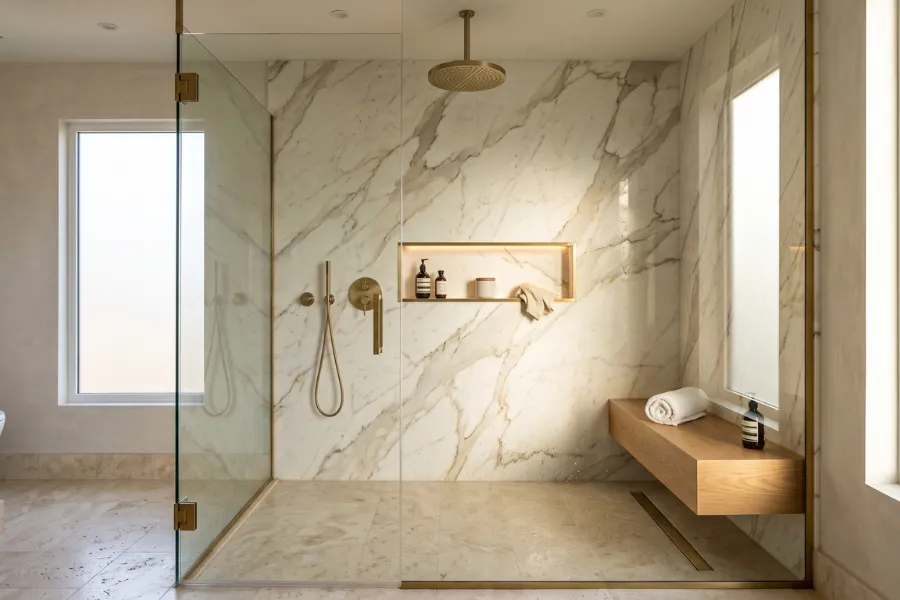
A walk-in shower offers a naturally large visual surface. Therefore, it is one of the best locations for a statement treatment. Use large-format porcelain, marble-look tile, mosaic, stone, or geometric tile to define the shower.
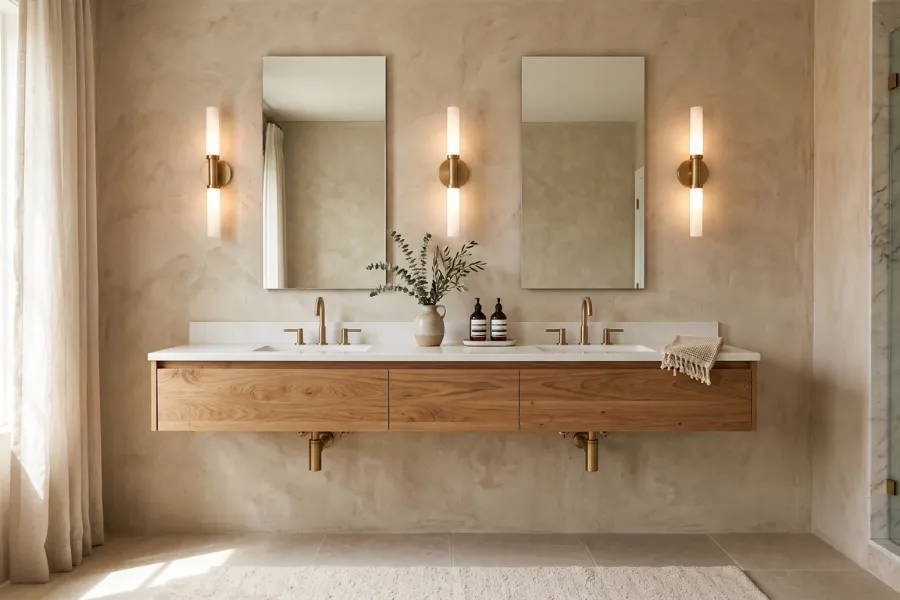
The vanity wall already attracts attention because it includes the mirror, sink, lighting, and cabinetry. Consequently, it is an excellent place for wallpaper, decorative tile, stone, fluted panels, or a contrasting paint color.
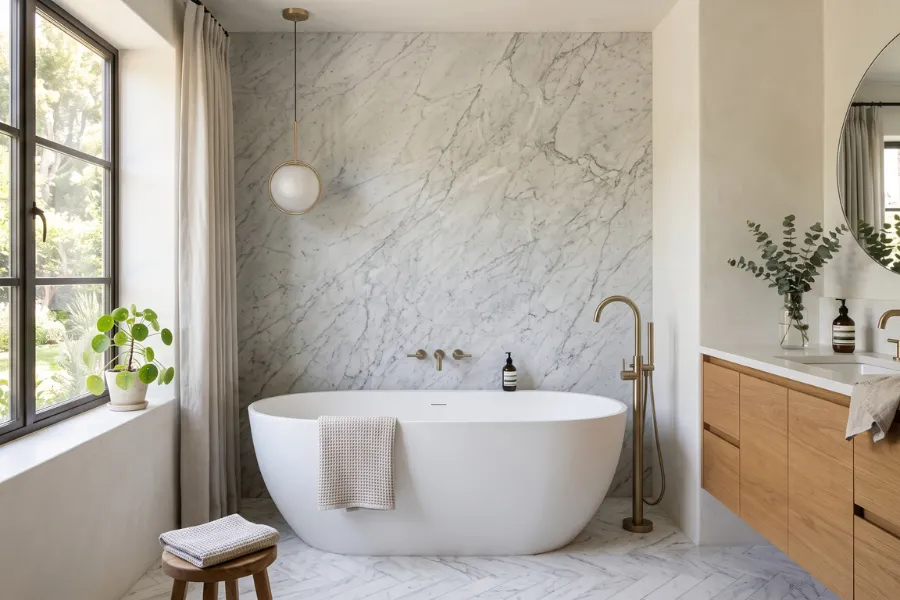
The wall behind a freestanding bathtub can become the centerpiece of the bathroom. Choose marble, stone-look tile, textured finishes, or a carefully selected wallpaper pattern to create a beautiful backdrop.
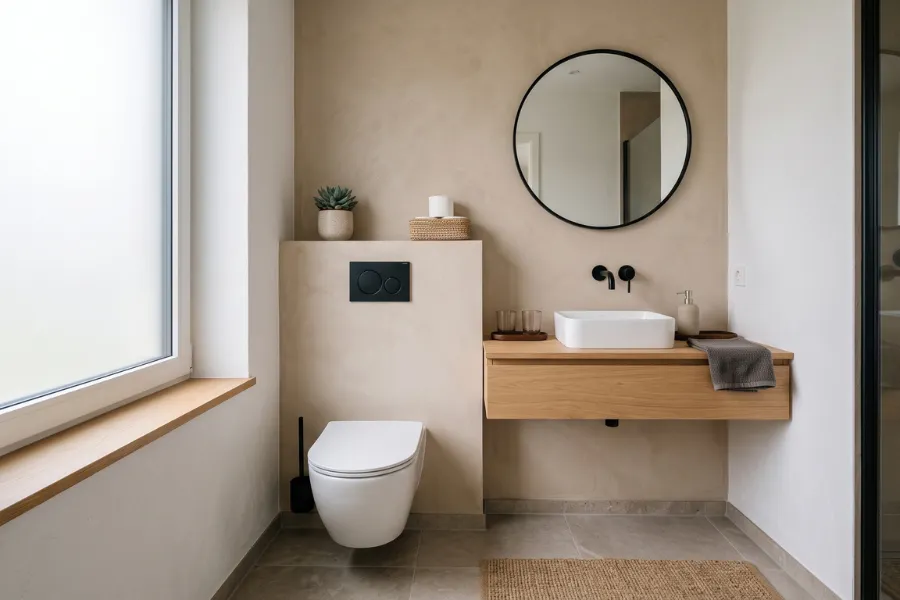
The wall behind the toilet is often ignored. However, it can become an excellent focal point in a compact bathroom or powder room. Try vertical paneling, patterned tile, wallpaper, or a contrasting paint shade.
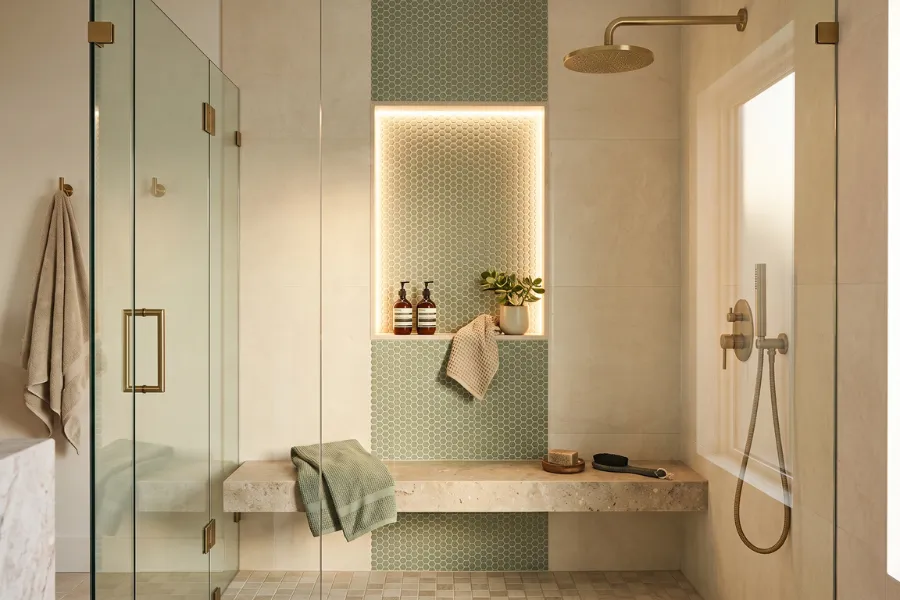
A shower niche creates a natural opportunity for decorative detail. Use mosaic, stone, or contrasting tile inside the niche. Meanwhile, keep the surrounding shower walls relatively simple.
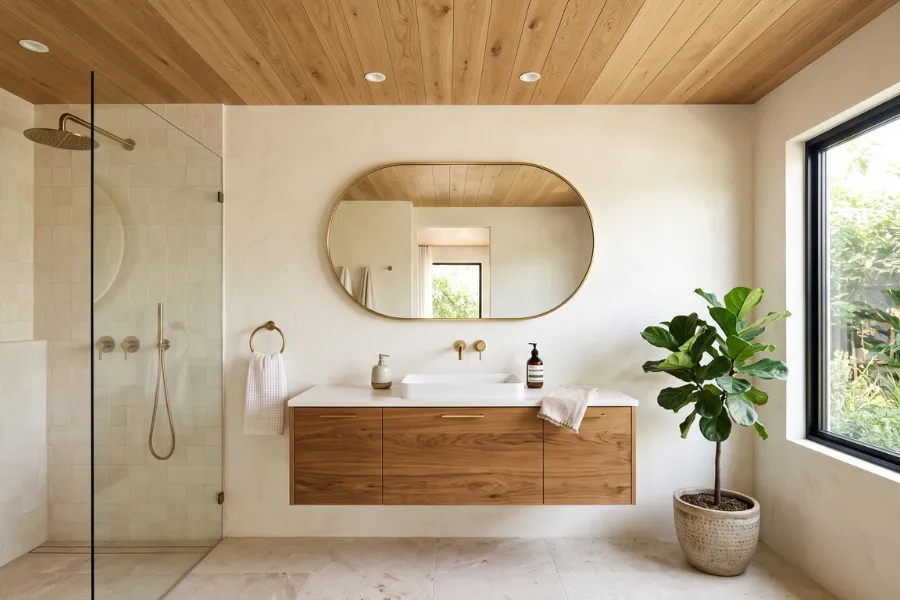
The ceiling can act as the fifth wall. Wallpaper, paint, wood-look panels, and architectural detailing can all create an unexpected focal point. This idea works particularly well in powder rooms where wall space is limited.
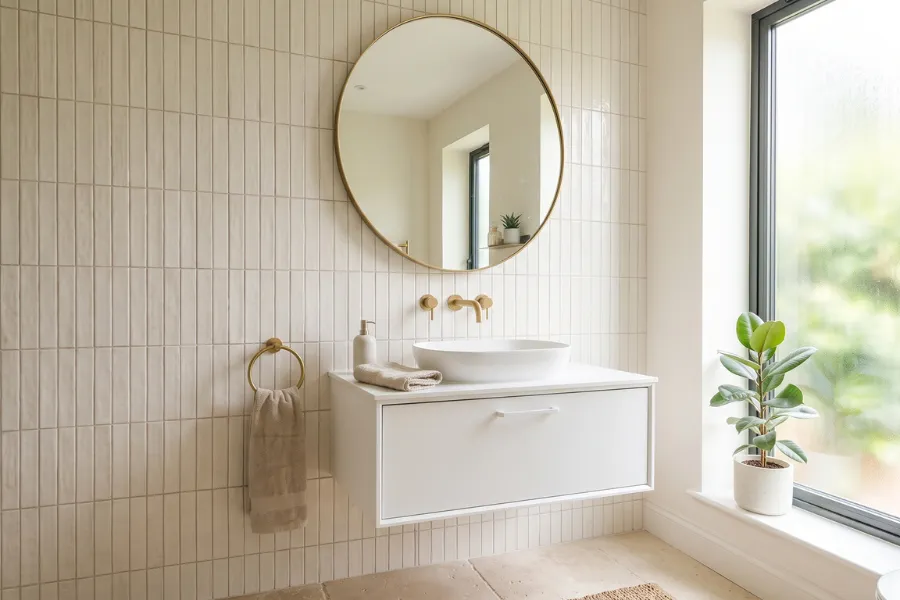
Vertical lines can make a compact bathroom feel taller. Use vertically arranged tile, fluted panels, narrow decorative strips, or wood-look porcelain. Furthermore, a lighter color palette can help maintain an airy appearance.
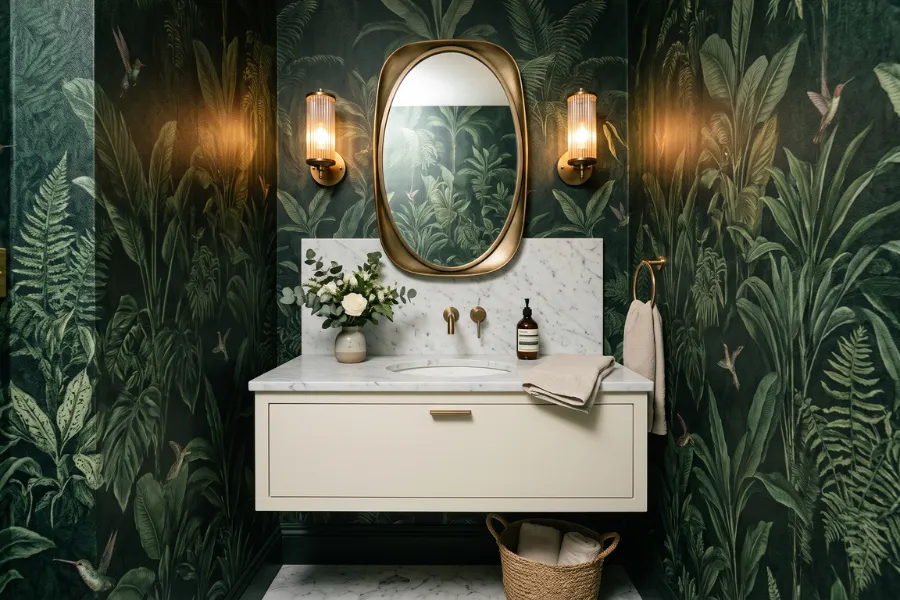
A powder room provides the perfect opportunity to experiment with bold wallpaper. Because the room is compact, a dramatic pattern can feel immersive rather than overwhelming. Add a statement mirror and attractive lighting to complete the design.
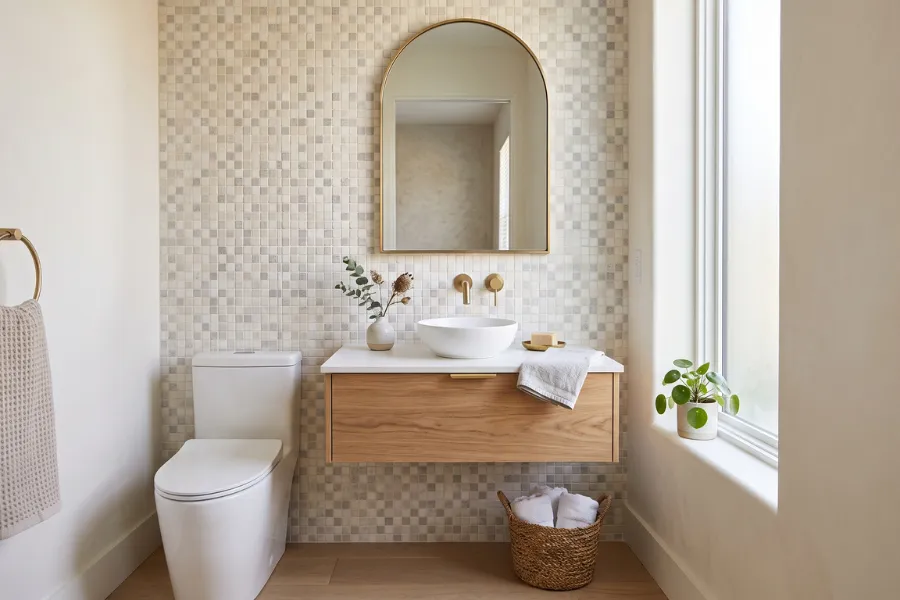
Mosaic tile works naturally in smaller bathrooms because its scale complements the room. Use it behind the vanity, within a niche, or on one selected wall. Keep other finishes simple so the mosaic remains visually effective.
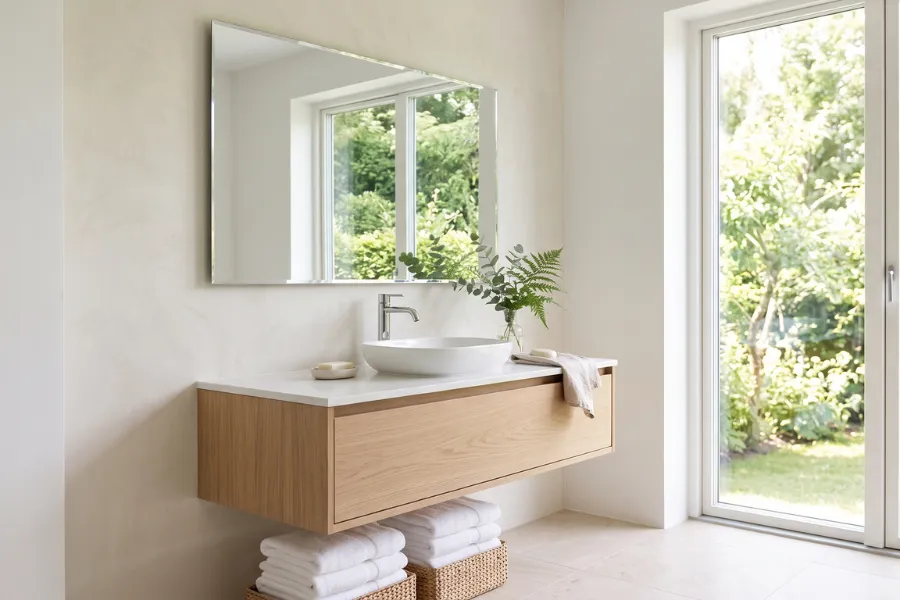
Light colors can help a small bathroom feel brighter and more open. White, cream, pale gray, soft blue, and light beige are all useful choices. Additionally, mirrors and reflective tile can help distribute available light.
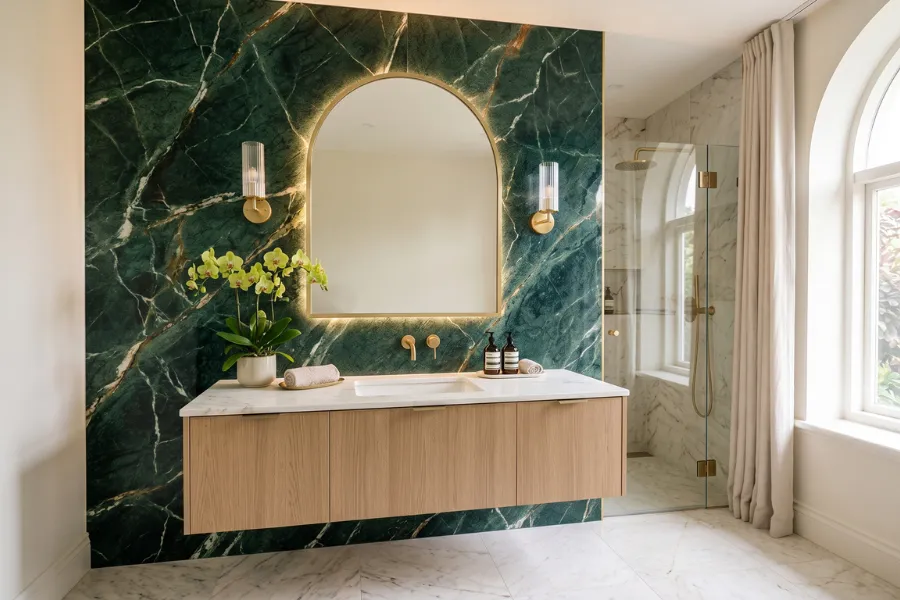
Emerald green creates a rich jewel-toned appearance. Pair it with marble, brass, cream, or dark wood for a sophisticated luxury bathroom. Warm lighting can further enhance the depth of the green surface.
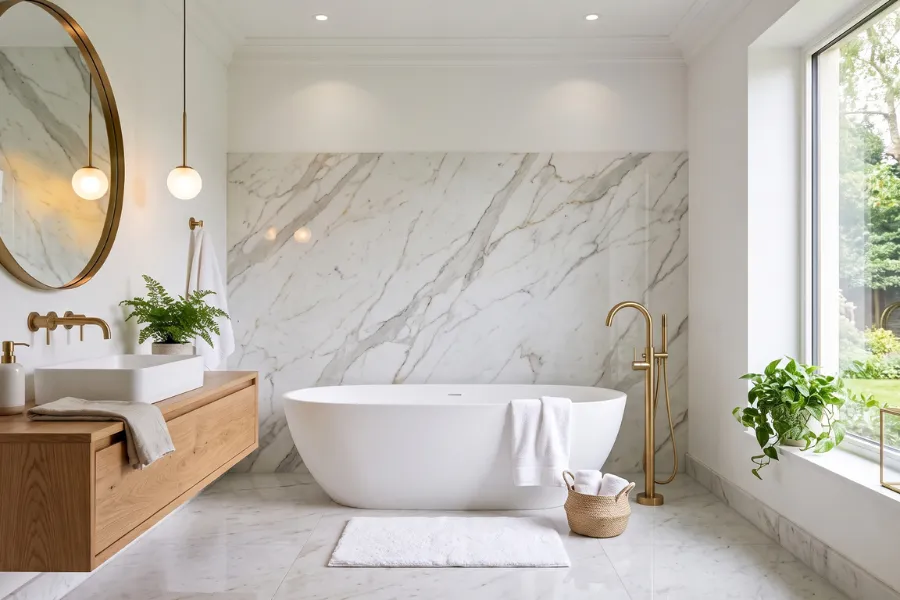
Calacatta-style marble with dramatic gray or gold veining can become the main focal point. Use it behind a freestanding bathtub or double vanity, then keep the remaining surfaces restrained.
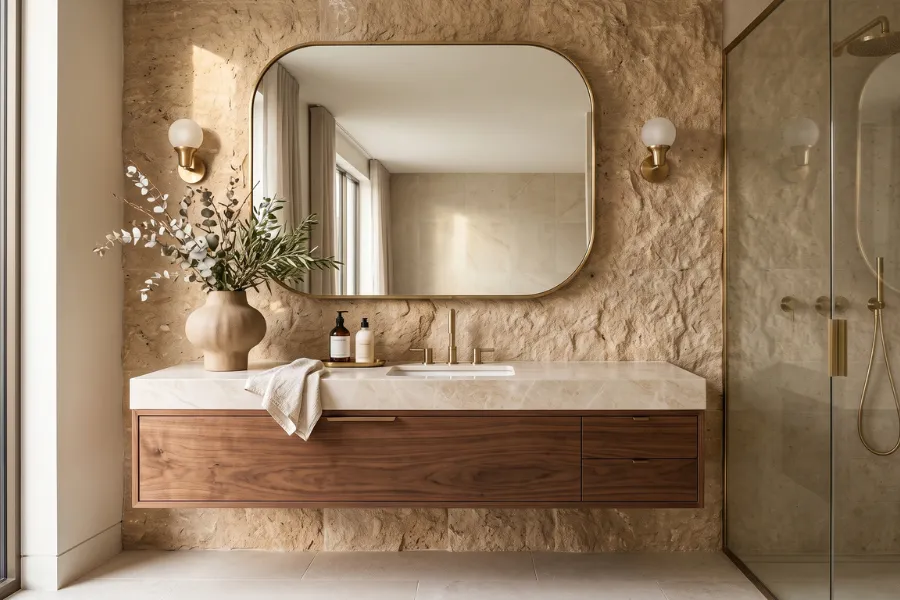
Warm brass and natural stone create an elegant combination. For example, pair a textured stone wall with brass faucets, sconces, cabinet hardware, and mirror framing. As a result, repeated metallic details create visual consistency.
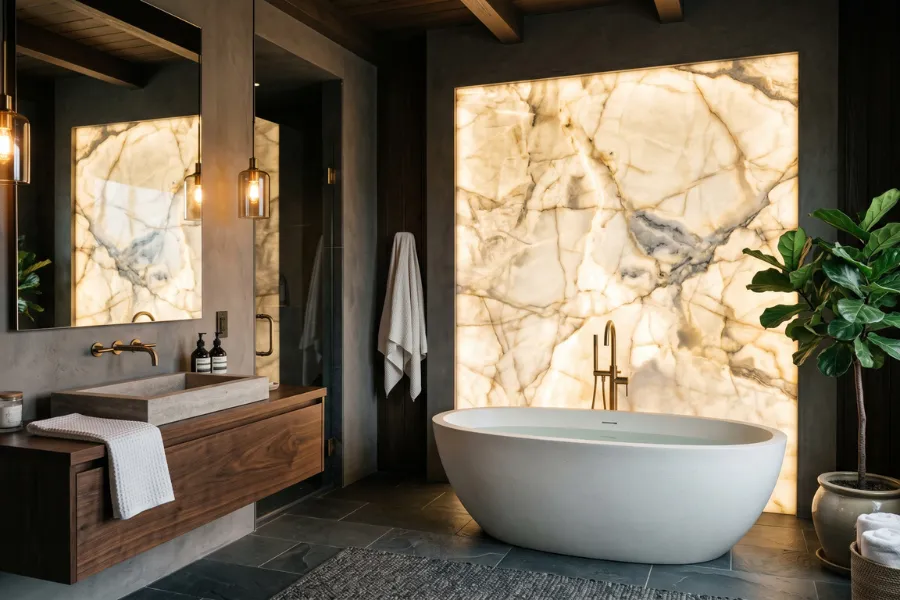
Backlighting can emphasize the natural variation of certain translucent stone surfaces. This technique works especially well in luxury bathrooms where architectural lighting forms an important part of the design.
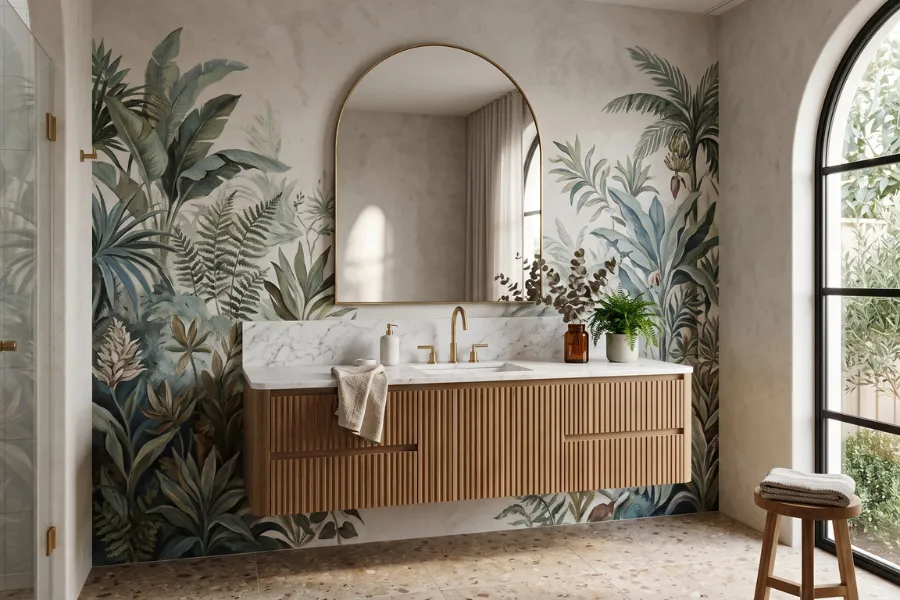
A mural can transform an ordinary bathroom into an artistic space. Botanical landscapes, abstract artwork, coastal scenes, and oversized illustrations can all work. Keep the surrounding décor relatively quiet so the mural remains the focal point.
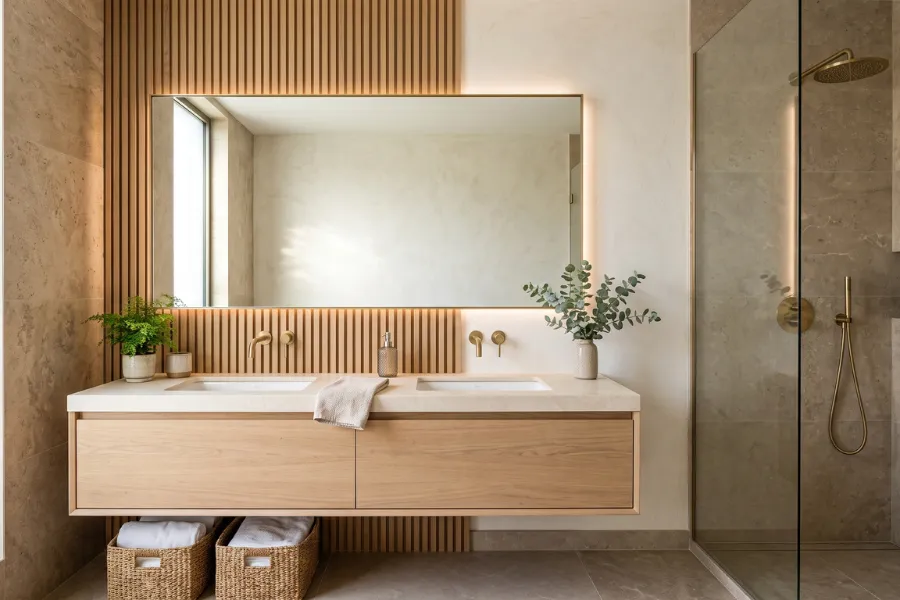
Combining materials can create additional depth. For example, pair wallpaper with wainscoting, stone with wood-look porcelain, or decorative tile with painted walls. However, keep the color palette connected so the materials feel intentional.
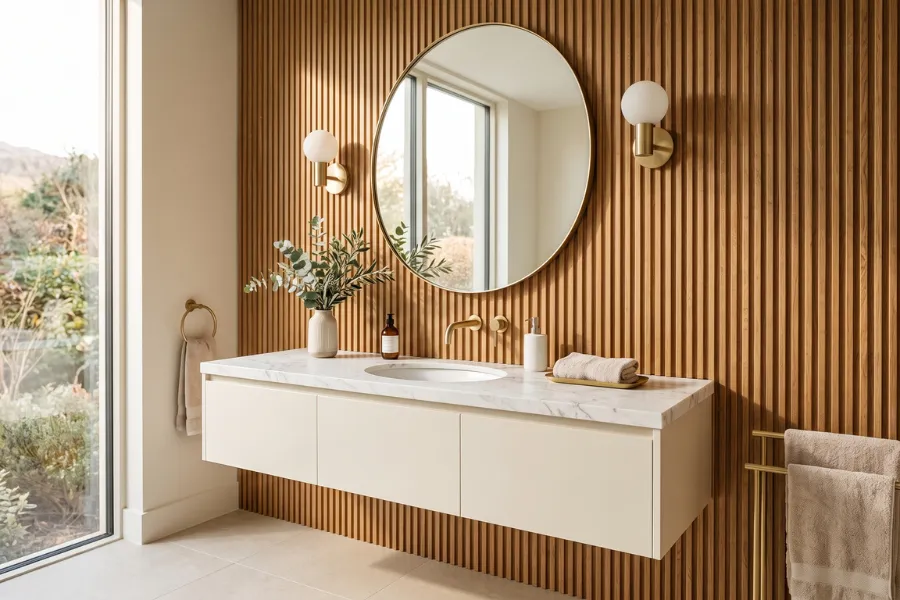
Fluted and ribbed panels create shadows, texture, and architectural interest. Place them behind a floating vanity or on another suitable dry wall. Then repeat the panel’s tone in the cabinetry or accessories for a cohesive appearance.
The material you choose should match both your design goals and the wall’s exposure to moisture.
Porcelain tile offers enormous flexibility. It can imitate marble, stone, concrete, and wood while providing many sizes, shapes, and finishes. Therefore, it works well in modern, luxury, farmhouse, coastal, and minimalist bathrooms.
Ceramic tile offers an extensive selection of colors, patterns, textures, and sizes. It can work particularly well for decorative walls, backsplashes, niches, and selected feature areas.
Marble, slate, travertine, and limestone bring natural variation and texture. However, maintenance requirements differ between stone types, so always follow the manufacturer’s care recommendations.
Wallpaper provides immediate visual impact. Botanical, floral, tropical, geometric, and abstract designs can completely change the atmosphere of a powder room.
Wood-look porcelain provides the warmth of timber-inspired design while offering a practical option for bathroom environments. It works particularly well with organic modern and contemporary interiors.
Paint remains one of the easiest ways to create a feature wall. Sage, navy, terracotta, pink, black, beige, and gray all offer attractive possibilities.
Fluted panels, beadboard, wainscoting, and other decorative systems can add architectural detail. Nevertheless, always check whether the selected product is suitable for the intended moisture conditions.
A luxury appearance does not always require expensive materials. First, select one strong focal point rather than making every surface compete. For example, if your marble wall has dramatic veining, keep the floor and surrounding walls relatively simple. Next, repeat colors throughout the bathroom. Brass hardware can echo warm tones in the tile, while wood cabinetry can connect with beige or stone. Large-format tile can also create a seamless appearance by reducing visible grout lines. Finally, invest in good lighting. Wall sconces, recessed lighting, pendant fixtures, and ambient illumination can dramatically change how your feature wall looks.
You can create a beautiful feature wall without completing a major renovation. Paint is usually the simplest option. A new color can transform an otherwise plain surface with minimal material costs. Alternatively, use decorative tile on only one wall instead of covering the entire bathroom. This reduces the quantity of material while preserving visual impact. Peel-and-stick wallpaper can also work in appropriate low-splash locations. Similarly, a small amount of mosaic tile inside a shower niche can add detail without covering a large area. Most importantly, spend your budget on the wall that receives the most attention.
Color strongly affects the mood of your bathroom.
White and cream create a bright, timeless appearance.
Beige and greige provide warm neutral sophistication.
Sage and olive green bring a natural atmosphere.
Navy and deep blue add depth and elegance.
Emerald green creates a luxurious jewel-toned effect.
Blush pink introduces softness and warmth.
Terracotta adds earthy character.
Black provides dramatic contrast.
Yellow brings energy and personality.
Before choosing a color, compare samples with the flooring, vanity, countertop, fixtures, and lighting. A color can look surprisingly different under warm and cool light.
A patterned floor, bold wallpaper, decorative tile, and statement vanity can compete for attention. Instead, select one dominant feature and allow the other surfaces to support it.
Not every decorative material belongs inside a shower. Always check the manufacturer’s installation requirements and moisture suitability before choosing a wall finish.
A feature wall should work with the architecture of the room. If a wall contains too many doors, fixtures, cabinets, or interruptions, the design may lose its visual impact.
Lighting affects both color and texture. Therefore, examine tile and paint samples under the actual lighting conditions of your bathroom whenever possible.
Your accent wall should connect with the vanity, countertop, flooring, hardware, mirror, and accessories. A coordinated color palette will make the final design feel intentional.
Yes. A well-planned accent wall can add color, texture, pattern, and personality without requiring a complete bathroom renovation. However, the material should suit the wall’s location and moisture exposure.
The best wall is usually the one that naturally attracts attention when you enter the room. Popular options include the vanity wall, bathtub wall, shower wall, far wall, and sometimes the ceiling.
Porcelain and ceramic tile offer versatility and durability. Natural stone provides luxury and texture, while paint and wallpaper can work well in appropriate dry or low-splash areas.
Vertical tile, light-colored stone, subtle mosaic, fluted panels, and carefully selected wallpaper can work particularly well. Additionally, mirrors and reflective surfaces can help make a compact bathroom feel brighter.
Yes, especially in powder rooms and lower-splash areas. However, always check the wallpaper manufacturer’s recommendations regarding humidity, ventilation, and water exposure.
Porcelain, ceramic, glass, mosaic, subway, herringbone, geometric, and marble-look tiles can all work. The best choice depends on your preferred style, budget, maintenance needs, and wall location.
Yes. A shower wall can become an excellent focal point because it already occupies an important visual area. Choose a material designed for the moisture conditions of the shower.
Sage green, navy, emerald, blue, beige, greige, terracotta, blush pink, charcoal, and black are versatile choices. Choose a color that complements the existing bathroom finishes rather than selecting it independently.
Yes, but multiple statement walls require careful coordination. Use related colors, materials, or patterns so the bathroom still feels balanced.
Large-format tile, vertical patterns, fluted textures, geometric designs, concrete-inspired finishes, neutral colors, and clean architectural lines can all create a modern appearance.
Paint is usually the most affordable option. You can also use peel-and-stick wallpaper in suitable areas, a limited amount of decorative tile, or mosaic around a shower niche.
Your bathroom design can also inspire the overall style of your home. If you are still deciding on a design direction, explore Interior Design Styles for broader inspiration.
For traditional and cozy interiors, you can explore Cottage Style Interior Design and Traditional Style Interior Design.
For warm architectural inspiration, Spanish Style Interior Design can also help when working with terracotta, natural stone, warm wood, and earthy colors.
If you enjoy wallpaper as a decorating element, see Wallpaper Decor for Bedroom for additional ideas about using patterned walls as focal points.
The best bathroom accent wall ideas combine style, practicality, and balance. You do not need to redesign every surface to make the bathroom feel new. Instead, focus on one wall and make it count. A dramatic marble slab can create a luxury centerpiece, while sage paint brings a calm natural mood. Similarly, geometric tile adds modern structure, wood-look porcelain introduces warmth, and botanical wallpaper can completely transform a powder room.
Before starting your project, consider the wall’s location, moisture exposure, lighting, existing finishes, maintenance requirements, and overall bathroom style. Most importantly, choose a focal point that feels connected to the rest of the room. When color, texture, materials, lighting, and proportions work together, even a simple bathroom wall can become the defining feature of the space.


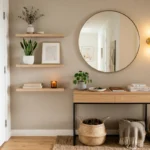
[…] panels or wallpaper achieve a surprisingly convincing effect. For more inspiration, check out our bathroom accent wall ideas — many of those textures work beautifully in living rooms […]