Physical Address
304 North Cardinal St.
Dorchester Center, MA 02124
Physical Address
304 North Cardinal St.
Dorchester Center, MA 02124

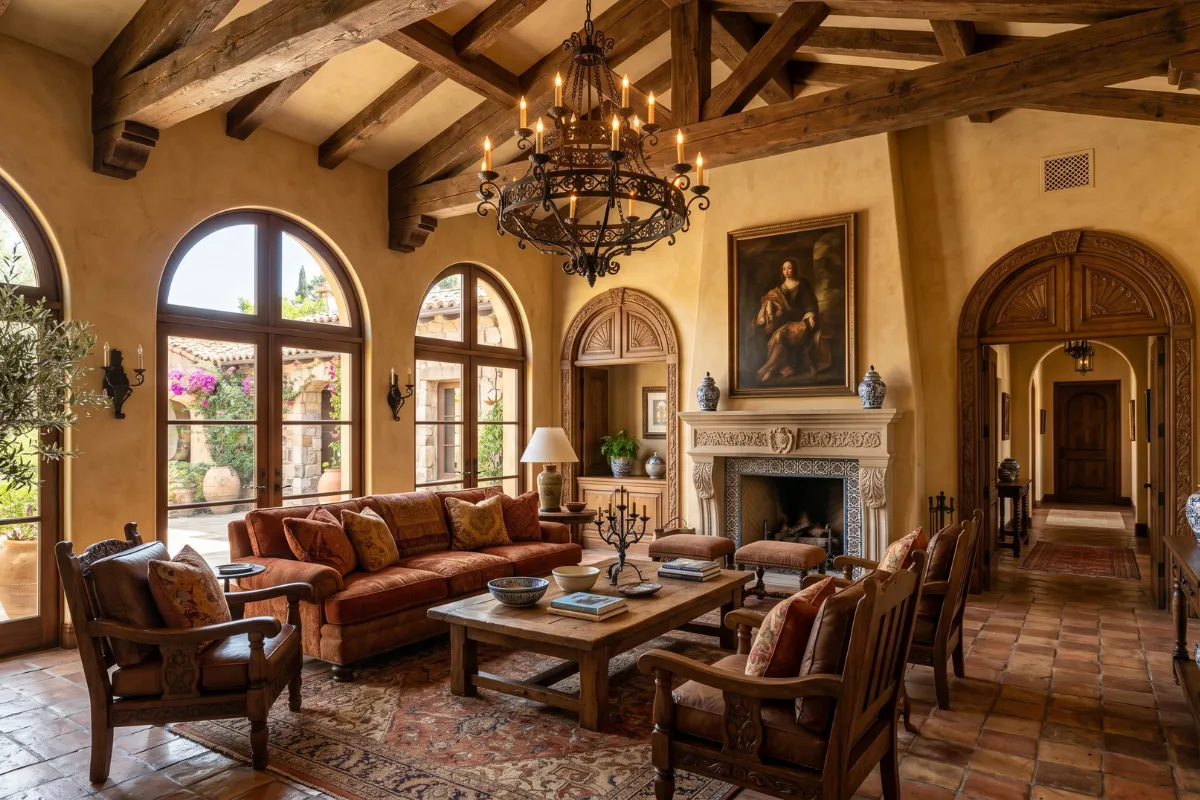
Spanish style interior design combines elegance, comfort, and authenticity. Inspired by traditional homes in Spain, this decorating approach focuses on natural materials, handcrafted details, and welcoming spaces. The result is an interior that feels warm throughout the year while maintaining timeless appeal.
Many homeowners choose this style because it balances beauty and functionality. From terracotta flooring to exposed wooden beams, every element contributes to a relaxed atmosphere. As a result, rooms feel comfortable without sacrificing sophistication. If you enjoy rustic charm and Mediterranean influences, this design style offers countless ways to create a home that feels both inviting and distinctive.
Spanish style interior design reflects centuries of architectural tradition. It blends influences from Spain, the Mediterranean region, and historic European craftsmanship. Unlike modern minimalist interiors, this style celebrates texture, character, and natural beauty. Homes designed in this style often feature stucco walls, arched doorways, decorative tiles, and handcrafted furniture. These details create a strong connection between architecture and interior decoration.
The roots of Spanish-inspired homes can be traced to traditional residences built across Spain. These homes were designed to remain comfortable in warm climates. Thick walls, shaded courtyards, and natural ventilation helped regulate temperature while adding visual appeal. Over time, these architectural elements became popular worldwide. Today, they remain some of the most recognizable features of Mediterranean interiors.
Several defining characteristics help distinguish Spanish-inspired spaces from other decorating styles. Natural materials play an important role. Wood, terracotta, stone, and ceramic surfaces appear throughout the home. At the same time, handcrafted details add personality and authenticity.
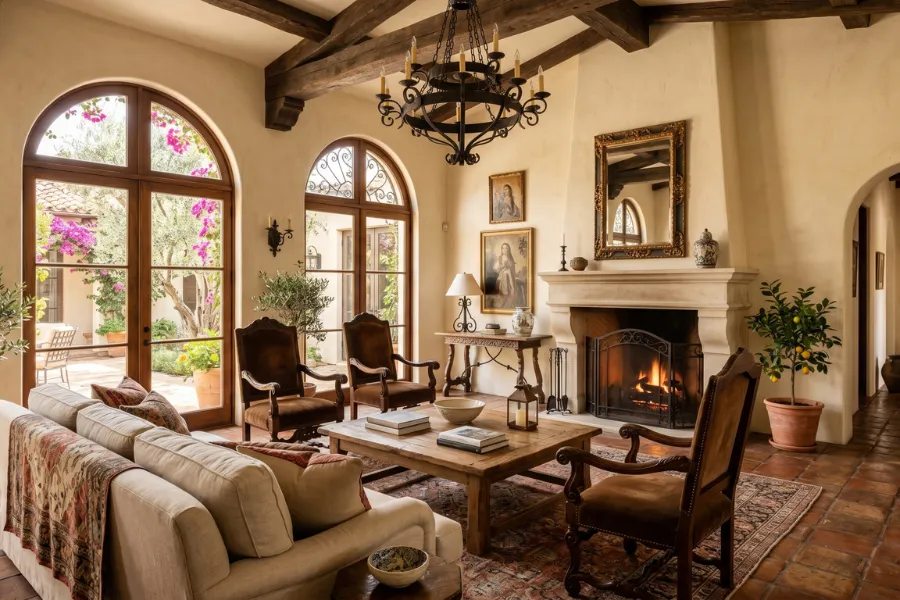
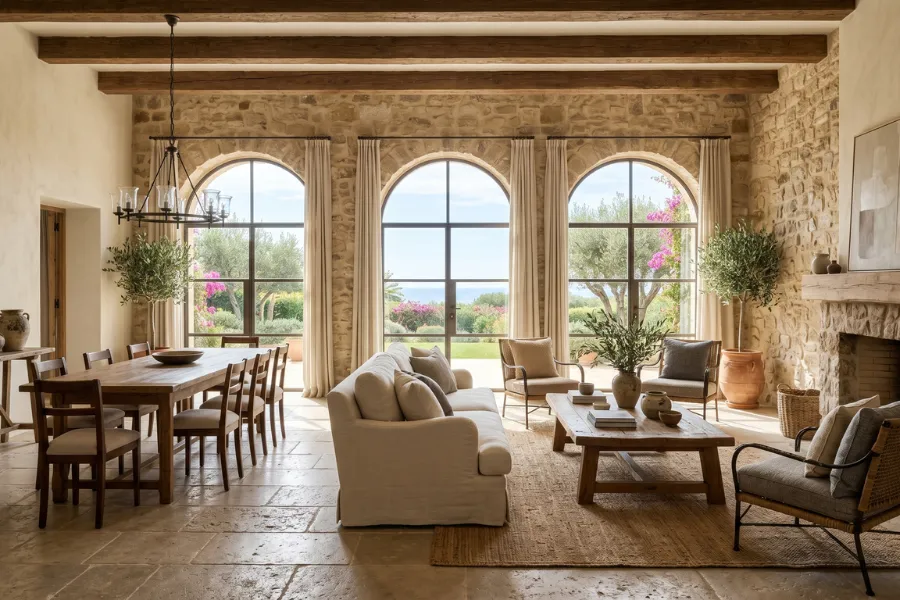
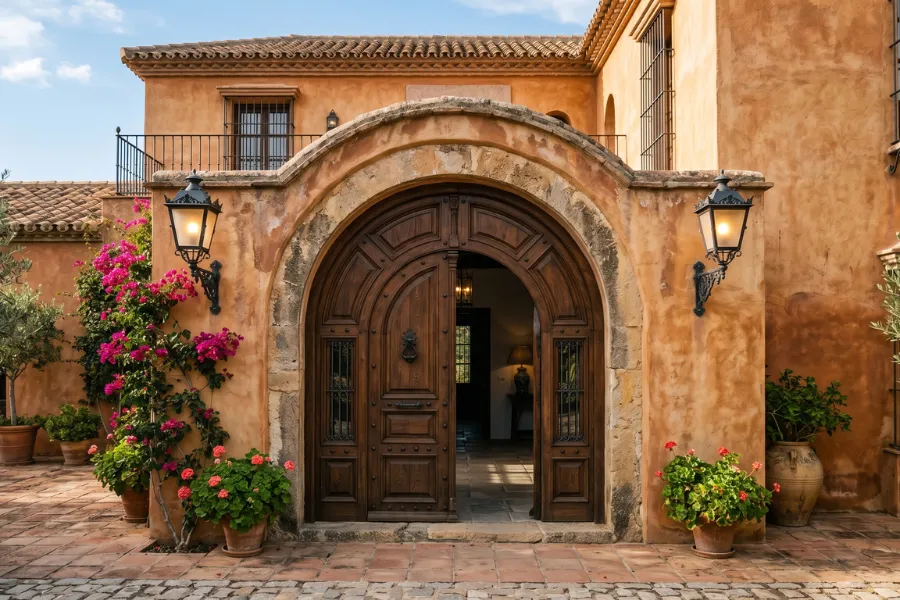
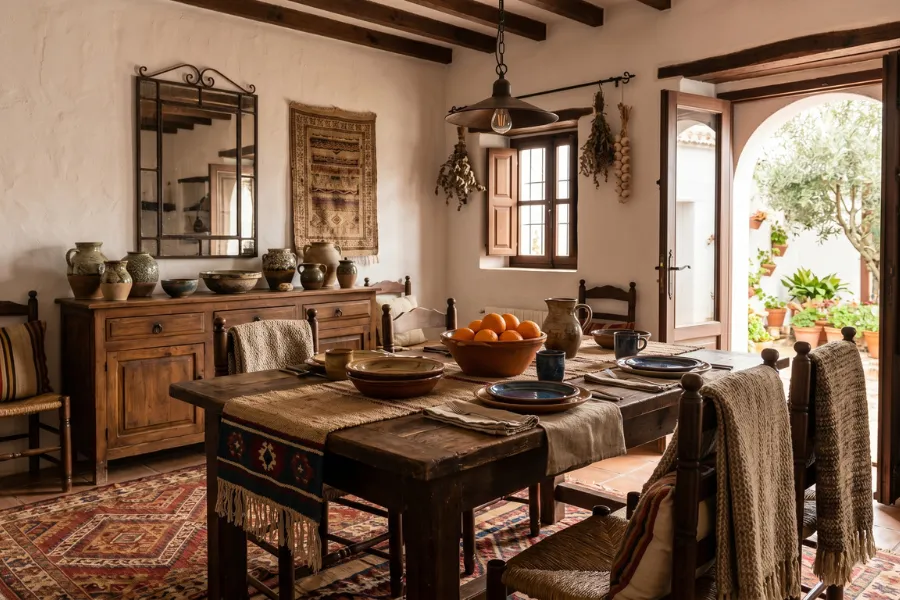
Creating an authentic Mediterranean-inspired home starts with understanding its core design principles. Every component contributes to the overall atmosphere.
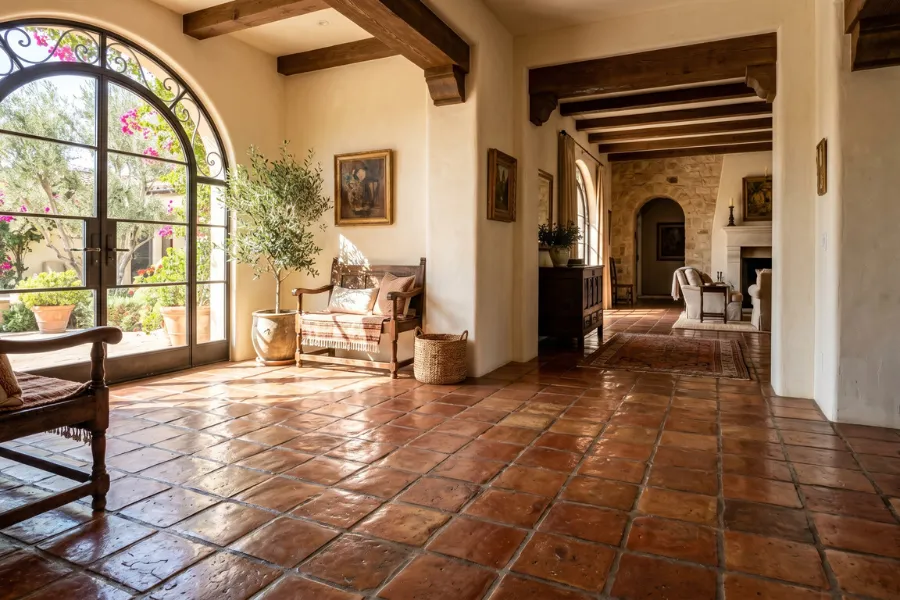
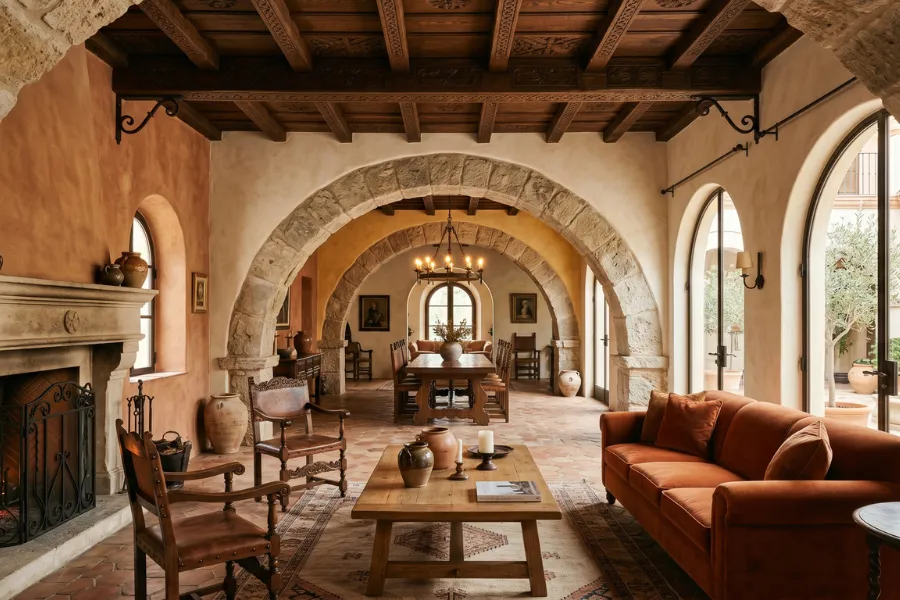
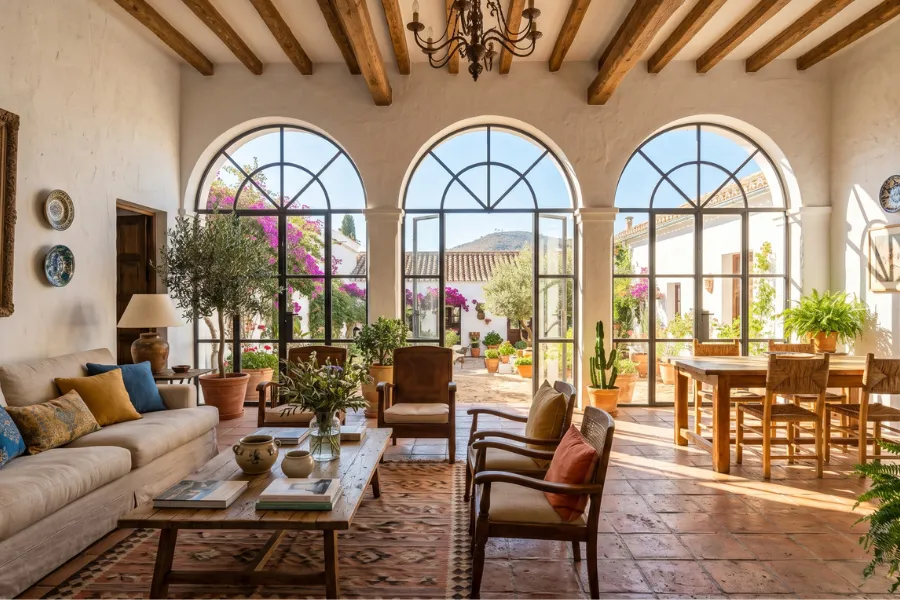
Arches are among the most recognizable features of Spanish architecture. They soften hard lines and create a sense of movement throughout the home. These architectural details often appear in hallways, entryways, windows, and built-in wall niches. Consequently, rooms feel more open and connected.
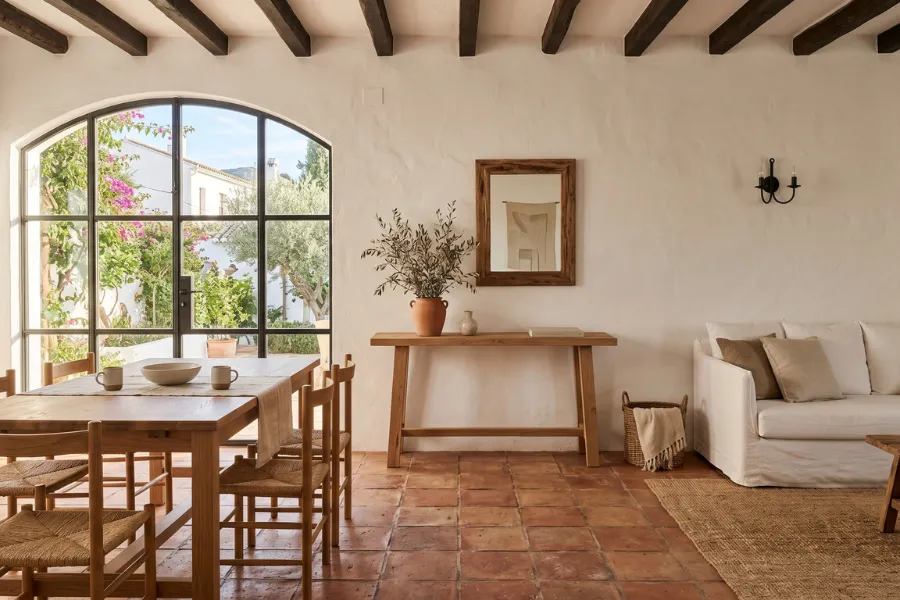
Terracotta flooring remains one of the most popular materials in Spanish interiors. Its earthy appearance adds warmth while enhancing the home’s traditional character. Natural stone, wood, and clay materials work equally well. Together, they create a balanced and inviting environment.
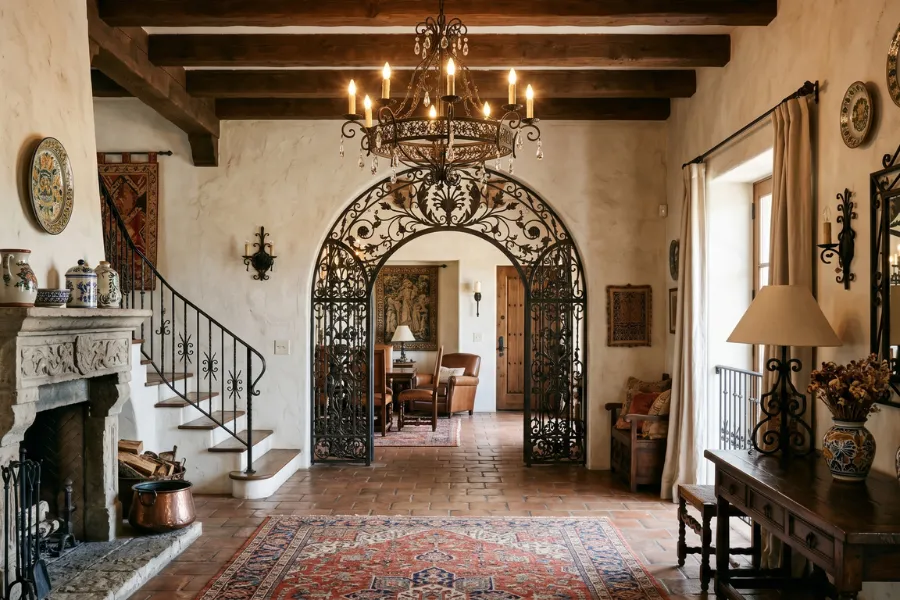
Wrought iron details add contrast and visual interest. You can often find them in lighting fixtures, stair railings, mirrors, and decorative accessories.
Because these elements are handcrafted, they reinforce the traditional craftsmanship associated with Spanish decor.
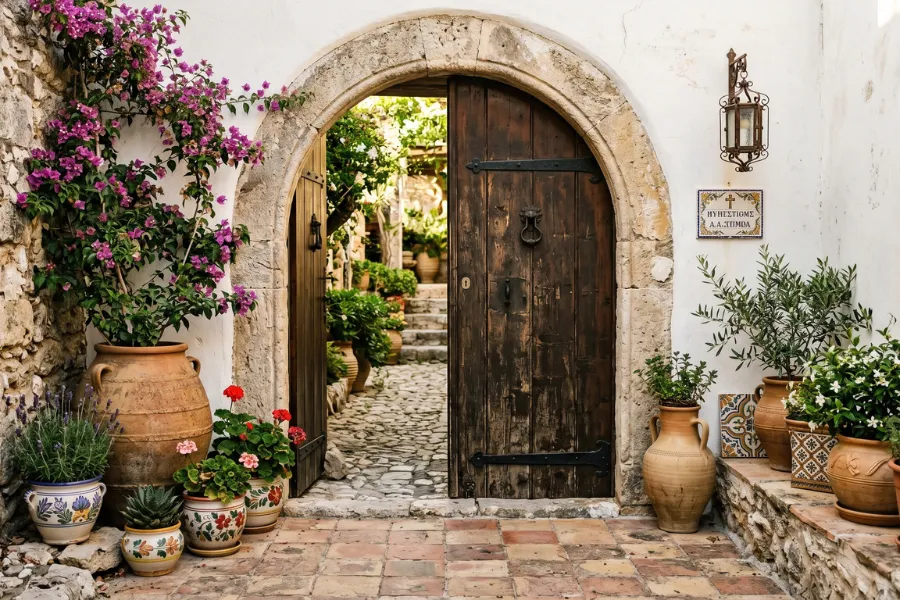
Color plays a major role in achieving Mediterranean charm. The right palette creates warmth without overwhelming the space.
Earth-inspired colors form the foundation of most Spanish interiors. Shades such as terracotta, beige, sand, rust, and clay help create a comfortable atmosphere. These colors work particularly well alongside natural materials and rustic finishes.
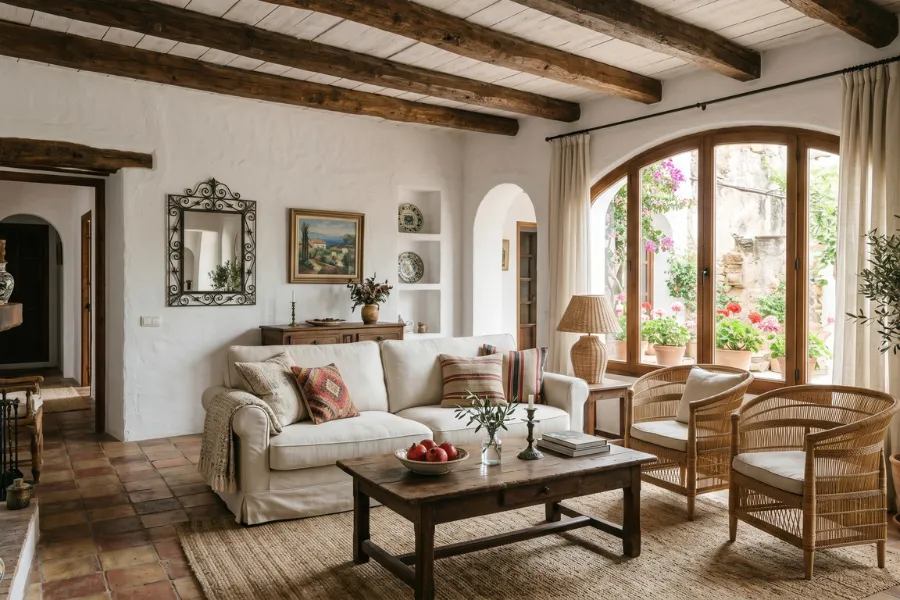
White walls remain a common feature because they reflect natural light. As a result, interiors feel brighter and more spacious. This simple backdrop also allows decorative details to stand out more effectively.
Accent colors can introduce personality while preserving balance. Deep blue, olive green, mustard yellow, and rich red often complement neutral backgrounds beautifully.
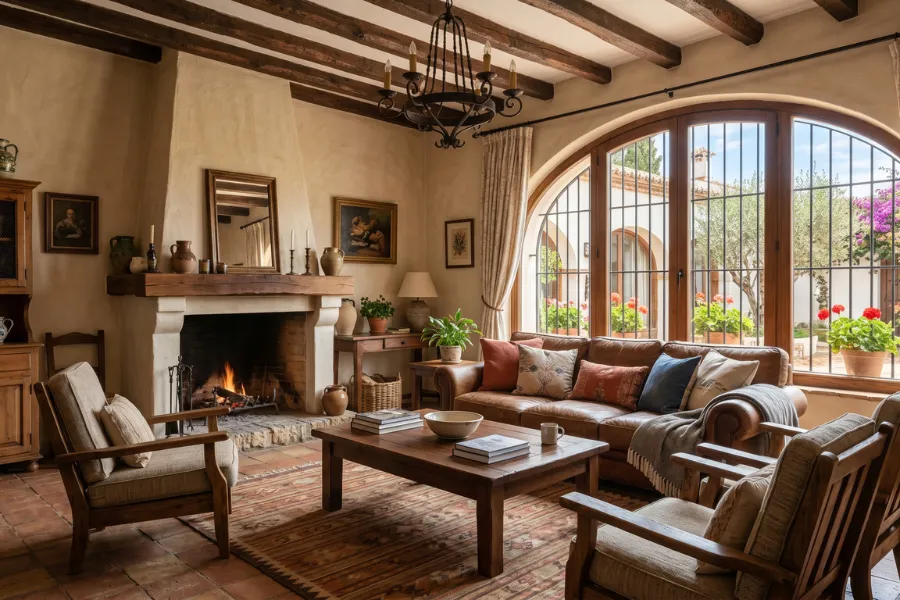
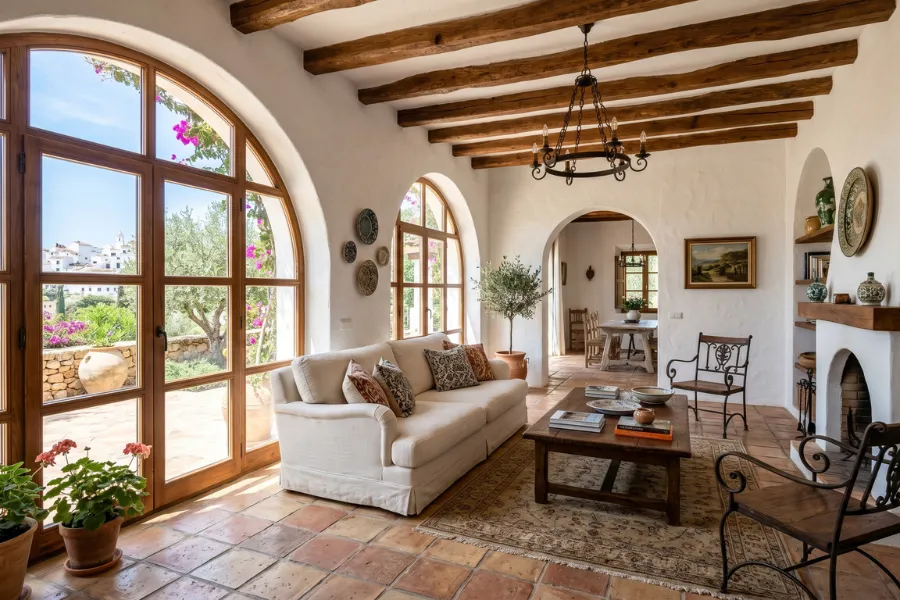
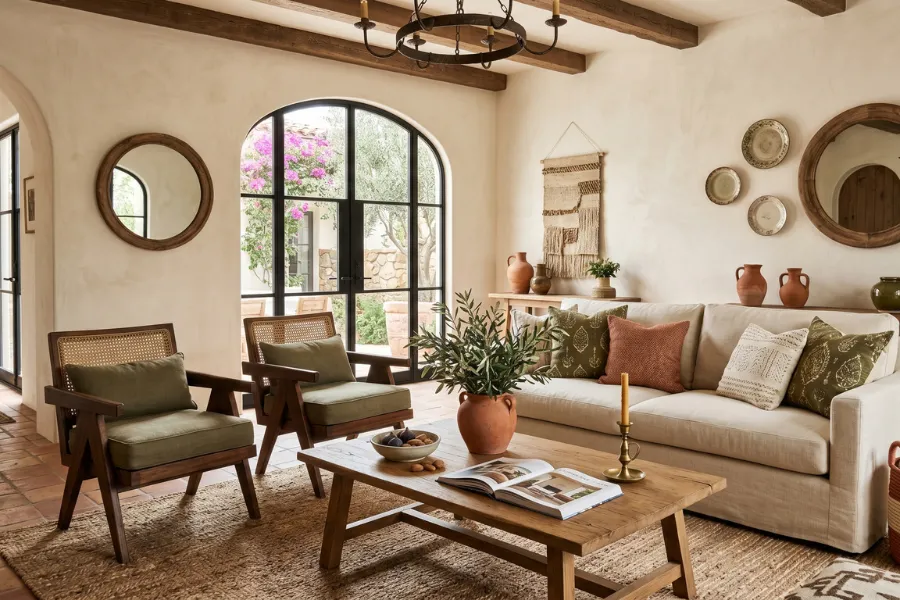
The living room often serves as the heart of the home. Therefore, comfort and warmth should guide every design decision.
Furniture should encourage relaxation while maintaining visual harmony. Upholstered sofas, wooden coffee tables, and textured fabrics contribute to a welcoming environment. Layering cushions and throws can further enhance comfort without creating clutter.
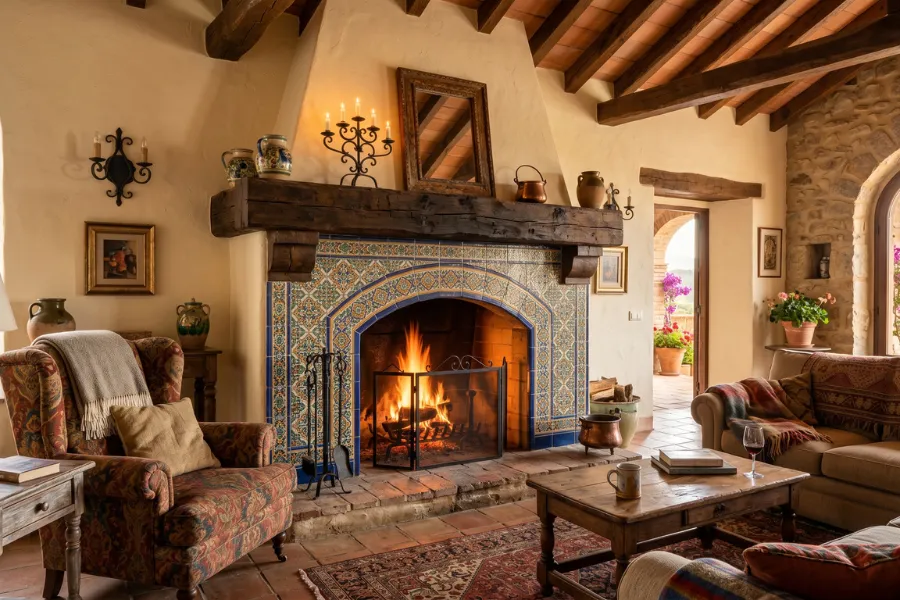
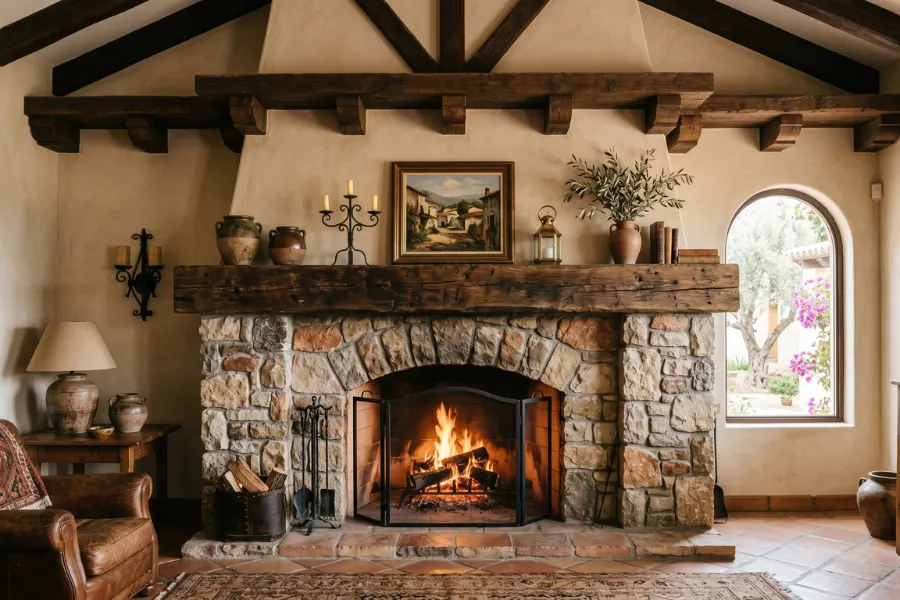
A fireplace naturally becomes a focal point within a Spanish-inspired living room. Stone surrounds, decorative tiles, and wooden mantels strengthen the room’s traditional character.
For additional living room inspiration, explore our guide on anchor text: modern farmhouse living room ideas.
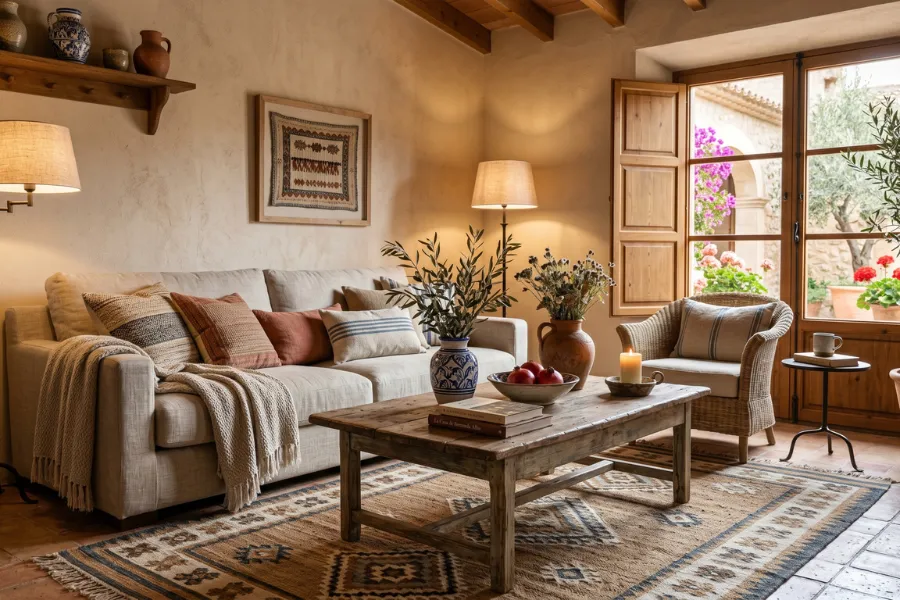
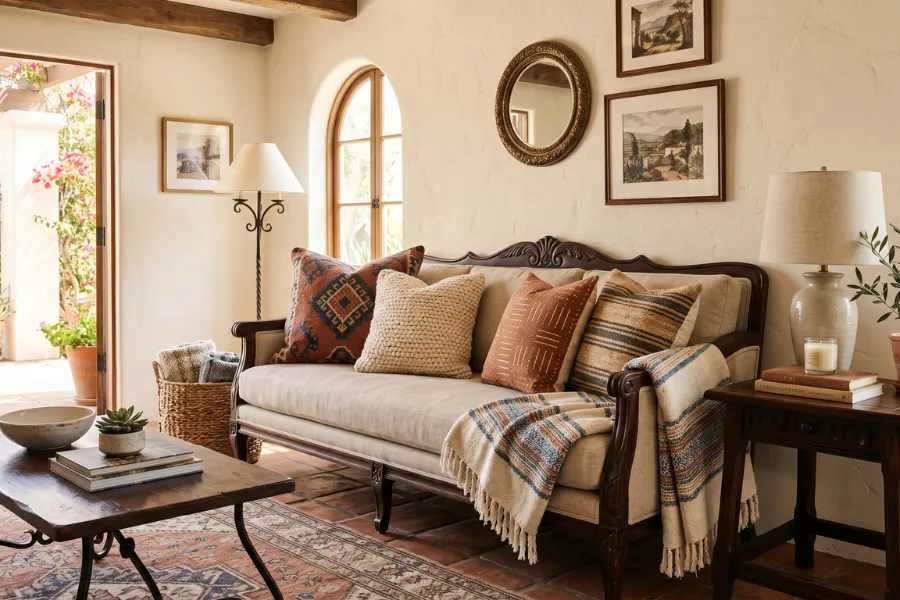
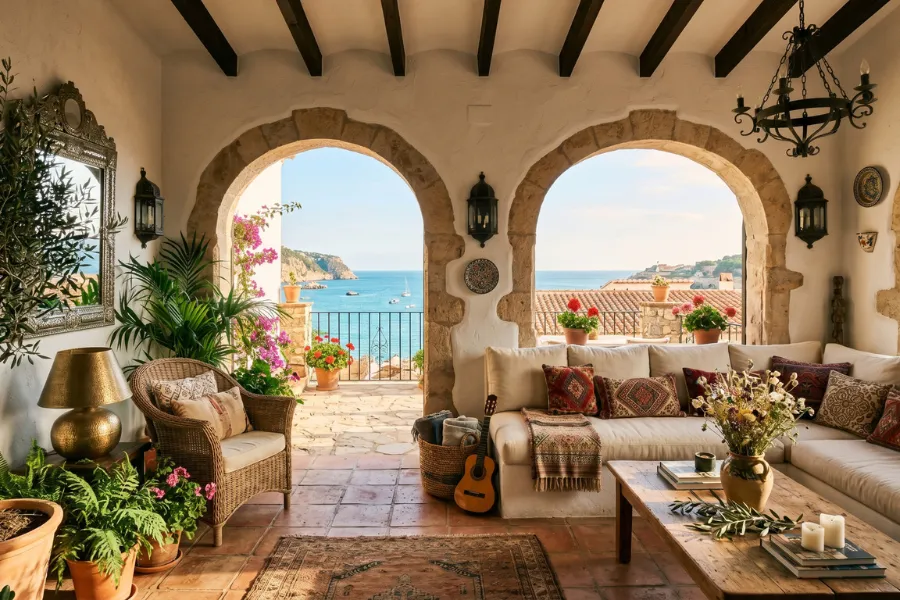
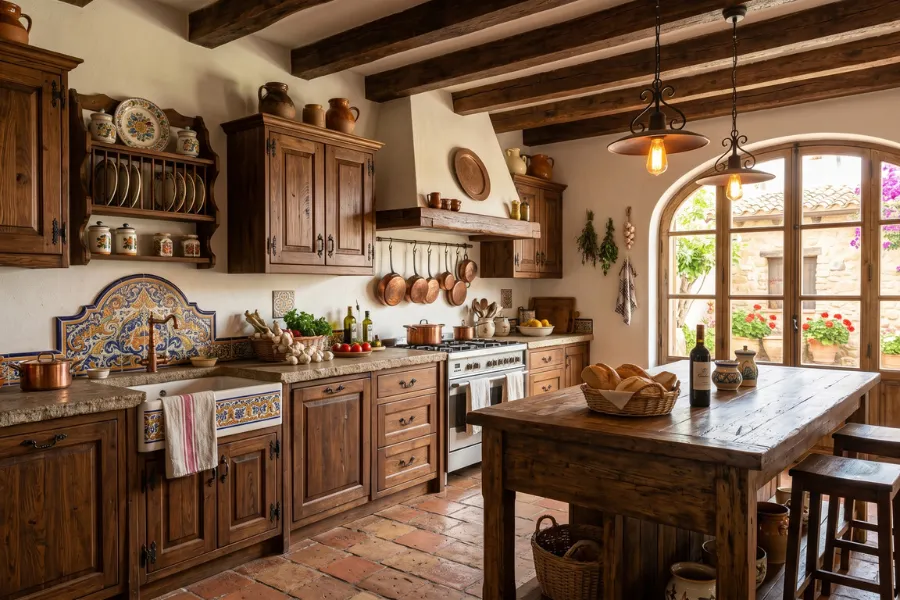
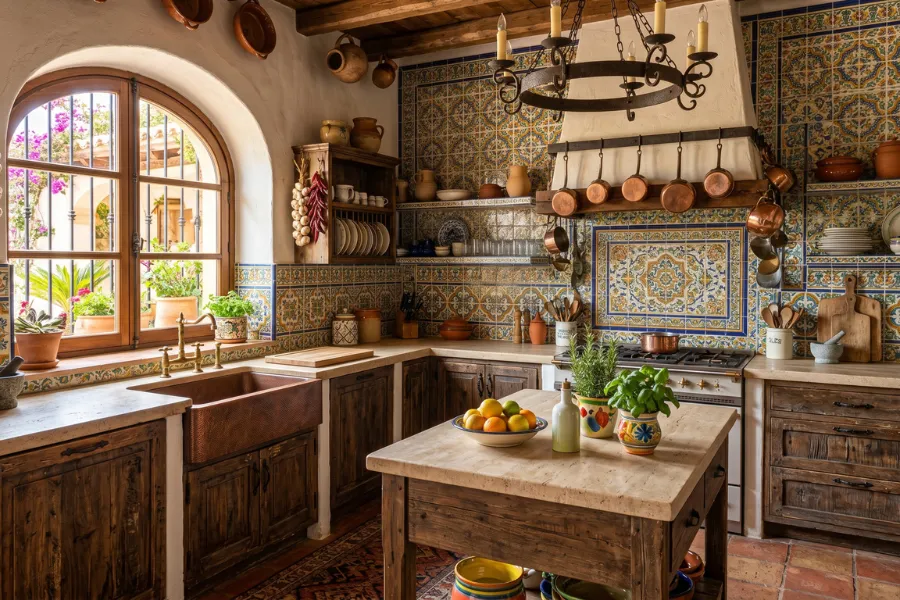
Spanish kitchens blend practicality with timeless style. Natural materials and handcrafted details help create a welcoming gathering space.
Wood cabinetry remains a popular choice because it introduces warmth and texture. Distressed finishes often enhance the authentic appearance. Simple designs usually work best because they allow natural materials to shine.
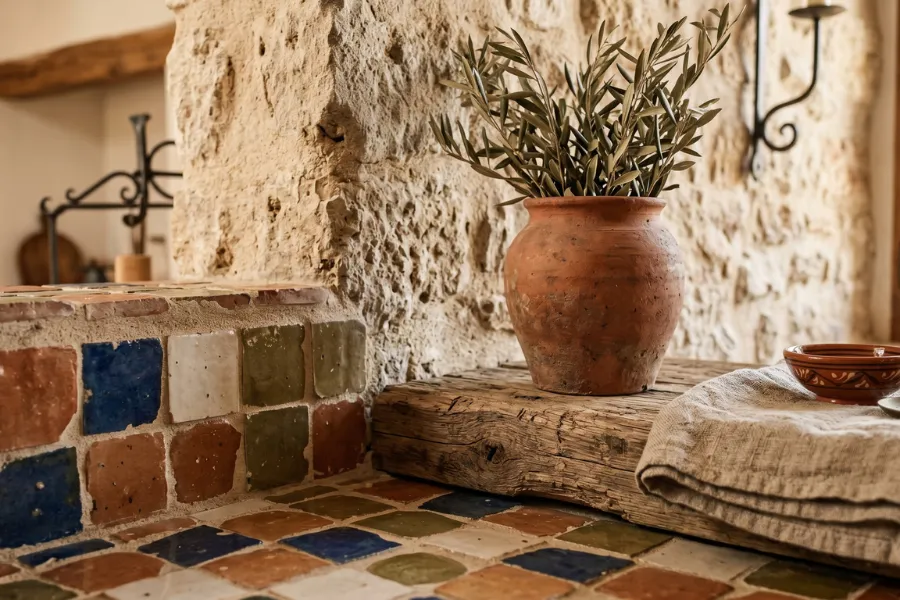
Decorative ceramic tiles add visual interest while preserving cultural authenticity. They can be used on backsplashes, countertops, or accent walls.
The combination of color and pattern creates a memorable focal point.
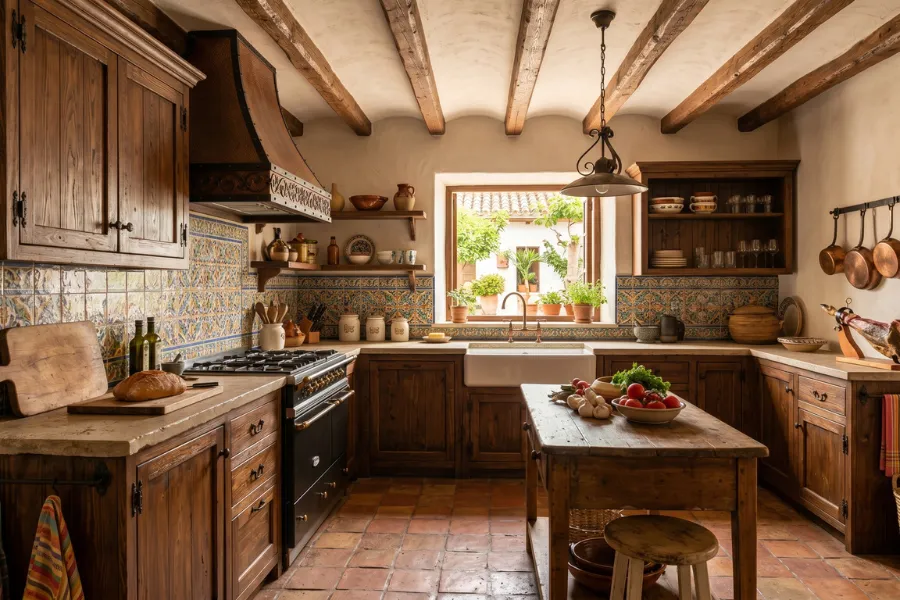
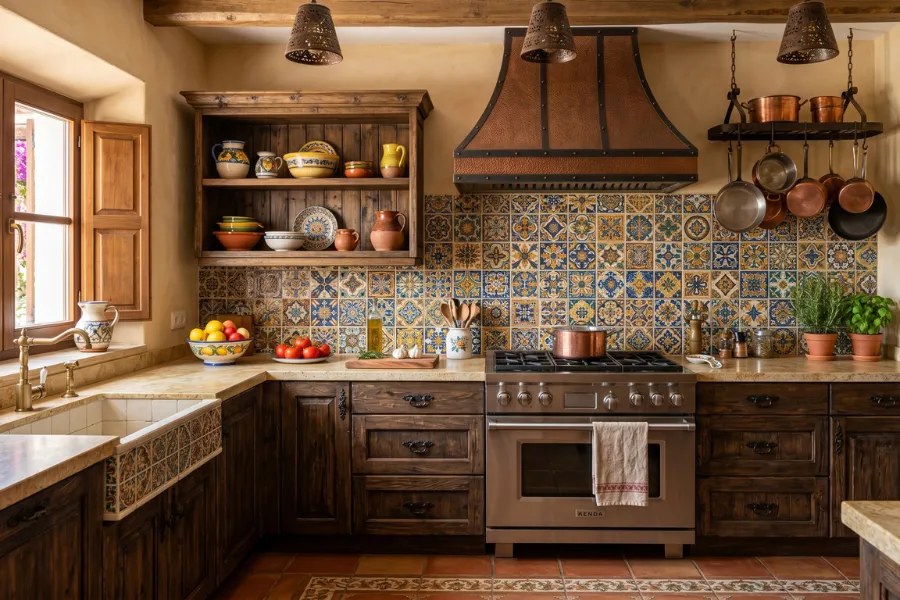
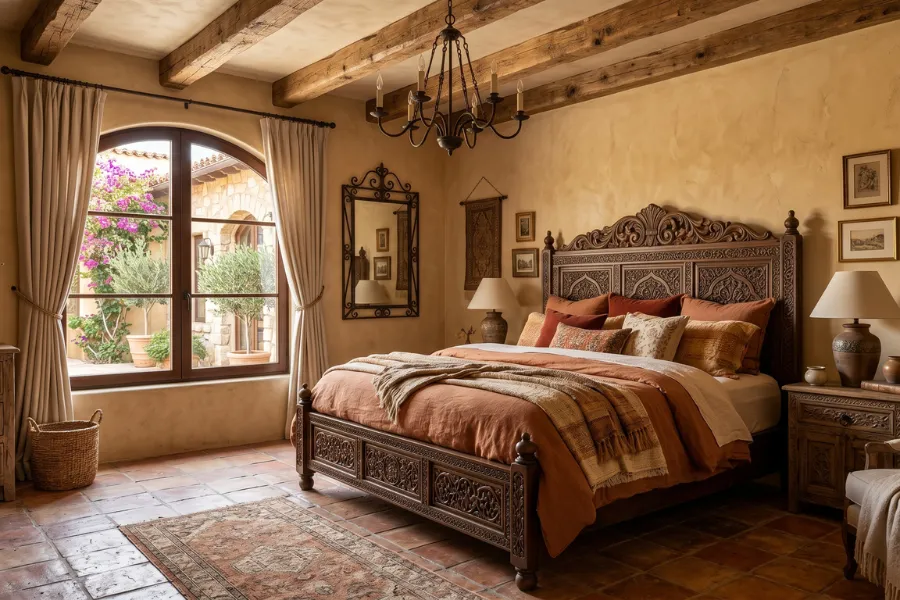
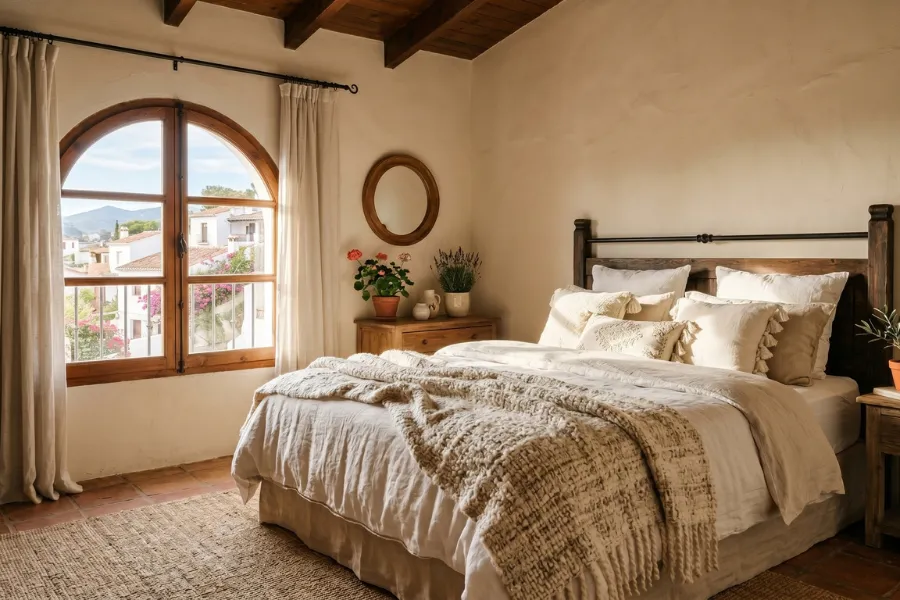
Bedrooms should feel peaceful and inviting. Fortunately, Mediterranean-inspired design naturally supports this goal.
Texture adds depth without requiring excessive decoration. Linen bedding, woven rugs, and soft throws create a comfortable environment. These materials also complement the natural aesthetic found throughout the home.
Wood furniture introduces character and durability. Bed frames, wardrobes, and nightstands often feature handcrafted details that highlight traditional craftsmanship.
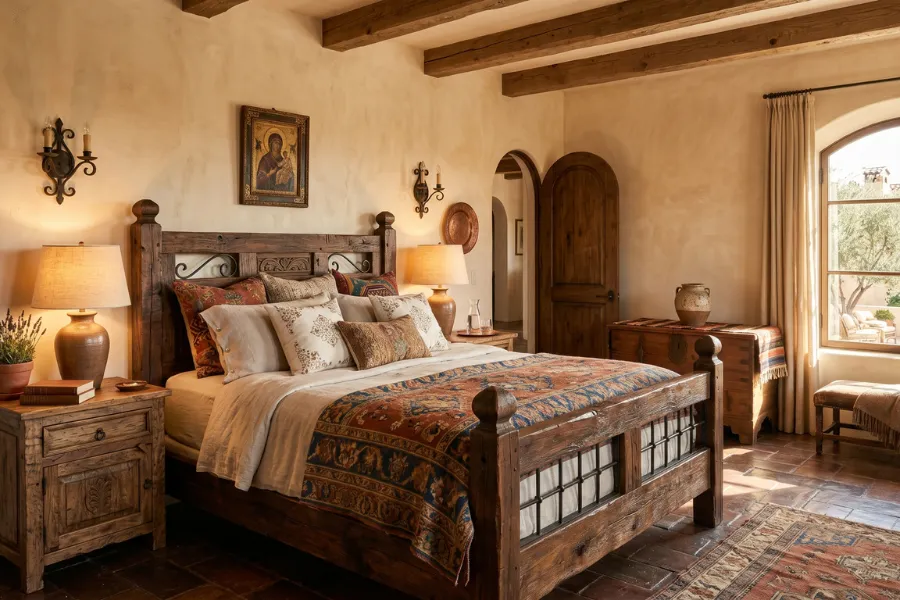
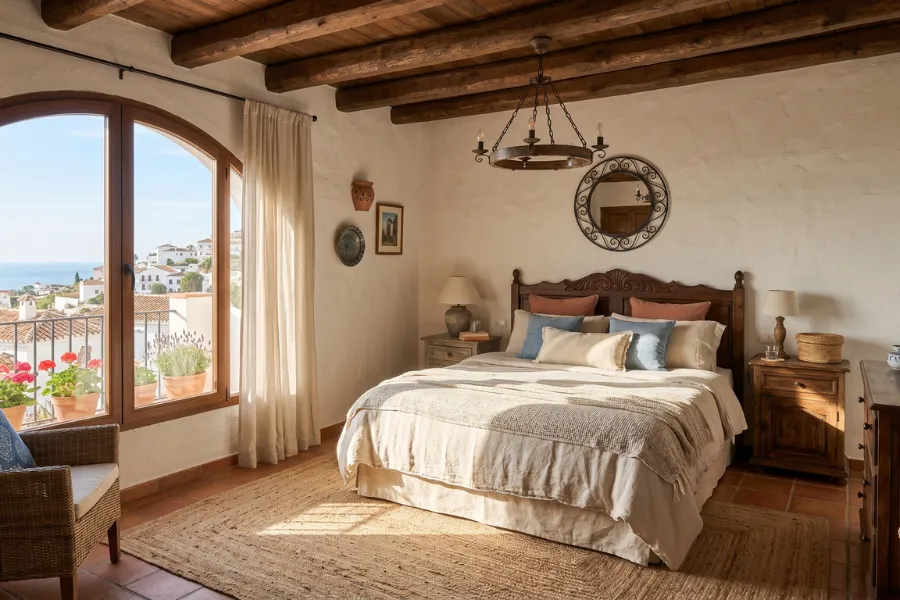
Decorative accessories complete the overall design while reinforcing the home’s personality.
Handcrafted pottery, ceramic vases, and woven baskets contribute authenticity. These items often showcase traditional artistic techniques that have remained popular for generations.
Natural fabrics help soften interior spaces. Linen, cotton, wool, and jute work especially well within Mediterranean-inspired homes.
Their texture creates visual interest while maintaining a relaxed appearance.
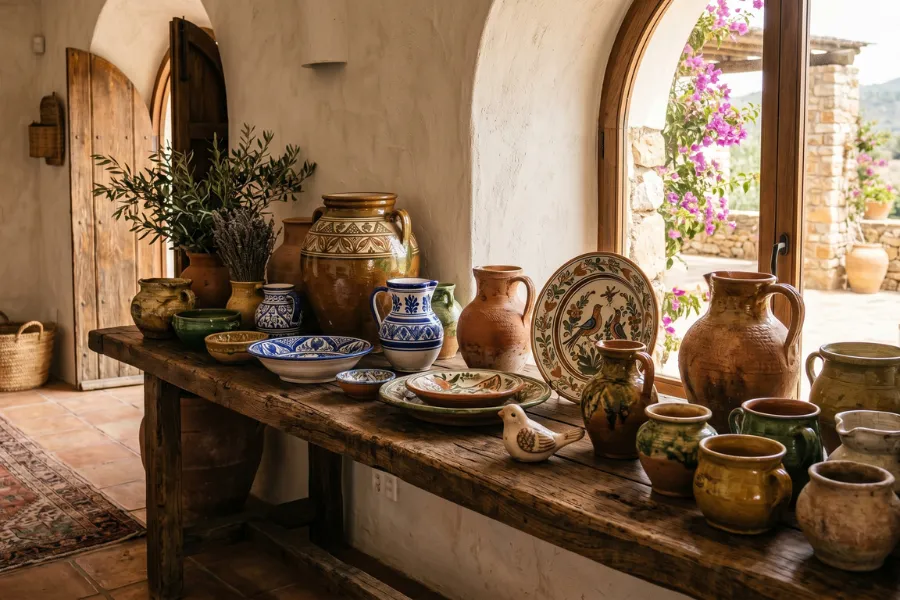
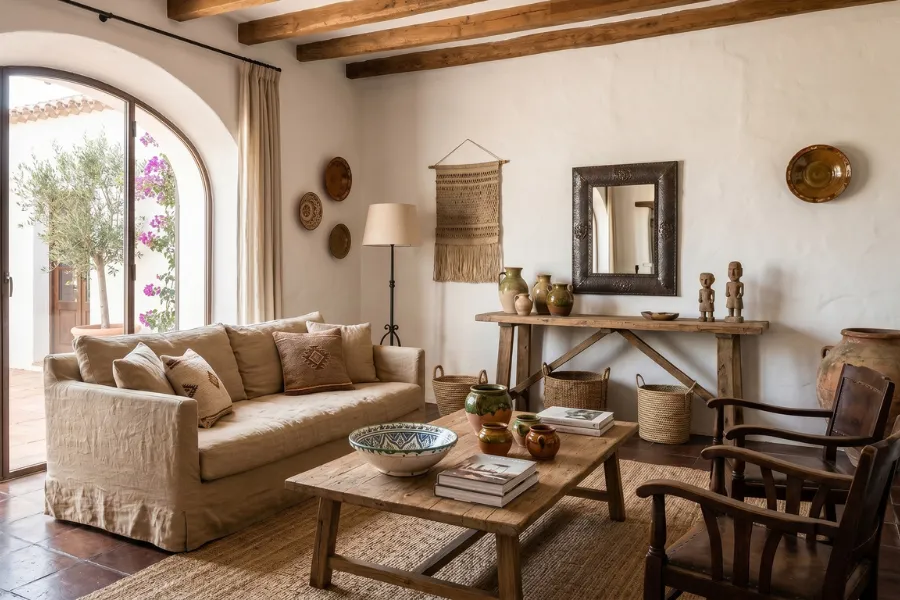
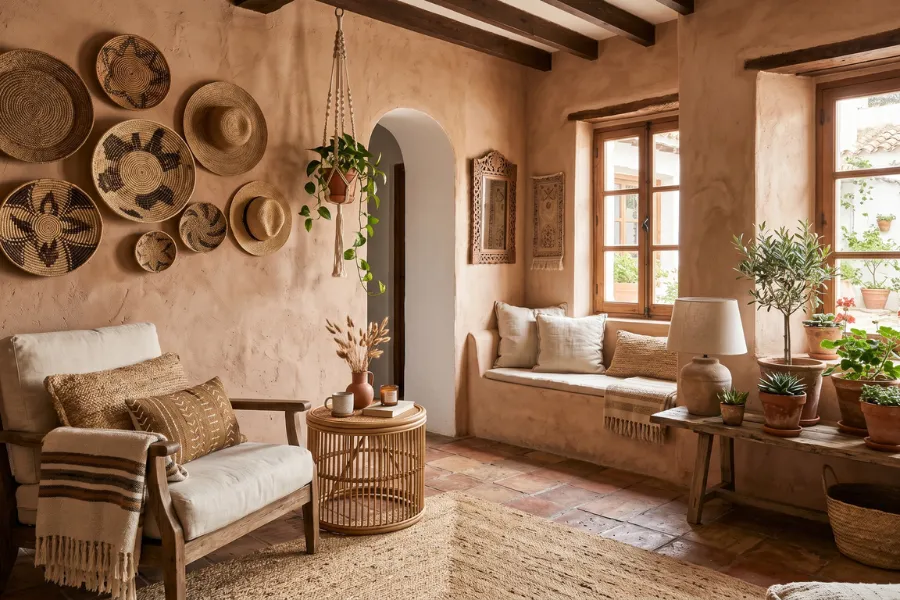
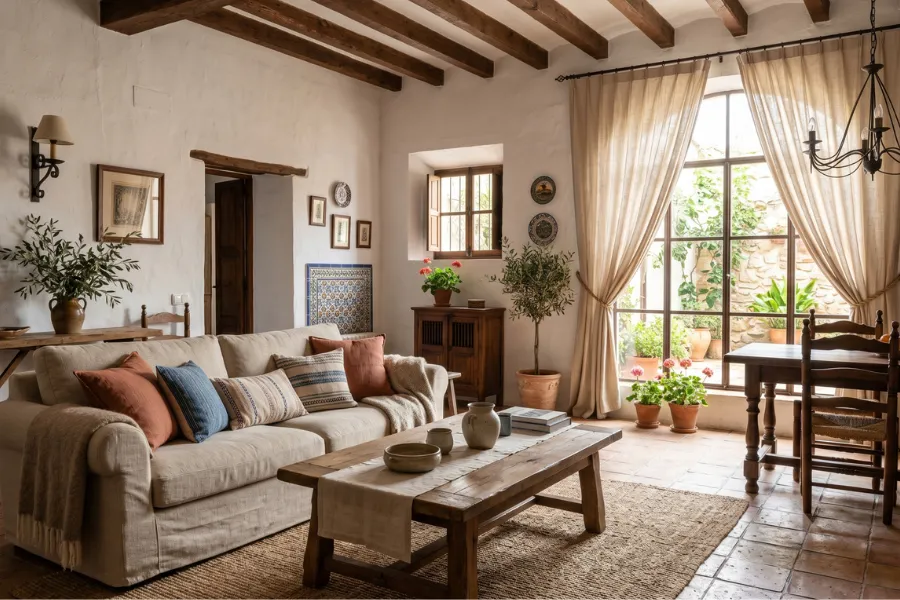
Many homeowners appreciate traditional Spanish decor while also embracing contemporary influences.
Modern interpretations often combine clean lines with rustic materials. This balance creates interiors that feel current without losing their historical character.
A minimalist approach reduces visual clutter while preserving warmth. Instead of filling rooms with accessories, focus on high-quality materials and meaningful decorative pieces.
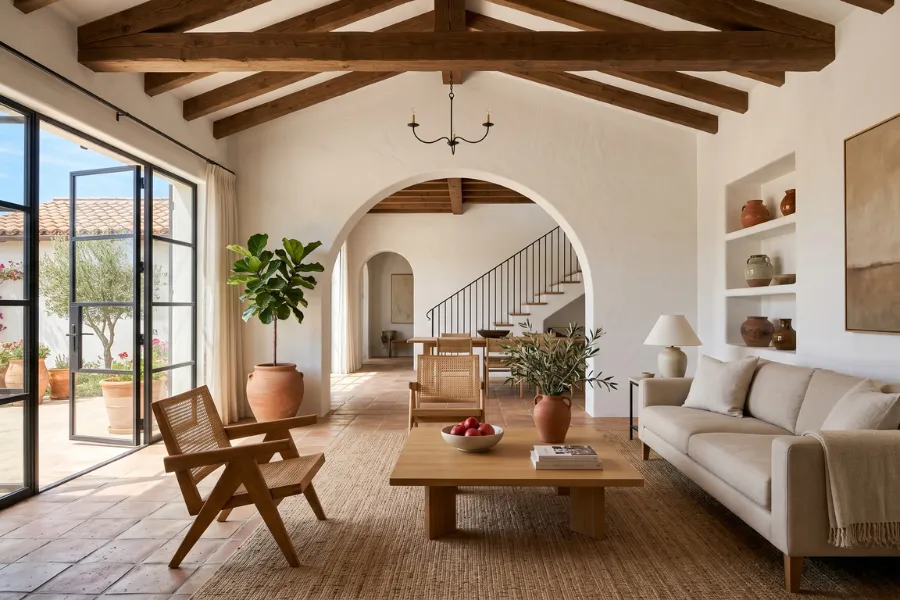
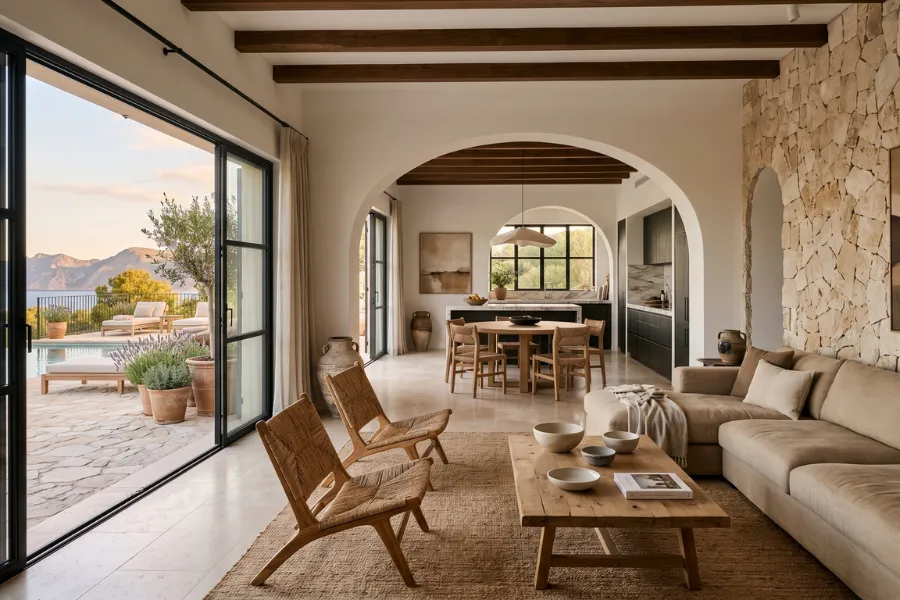
Even beautiful design styles can lose their impact when certain mistakes occur.
Too many dark colors can make rooms feel smaller and less welcoming. Instead, balance deeper tones with lighter walls and natural light.
Natural light is essential in Mediterranean interiors. Heavy window treatments may reduce brightness and limit the open feeling that defines this style.
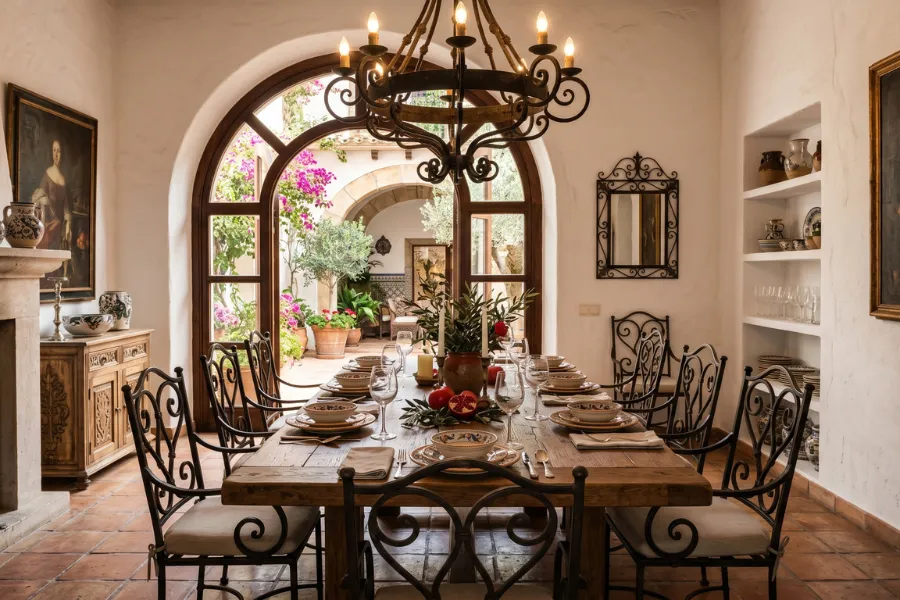
Every room can benefit from Mediterranean-inspired elements. While the core principles remain the same, each space requires a slightly different approach to achieve both beauty and functionality
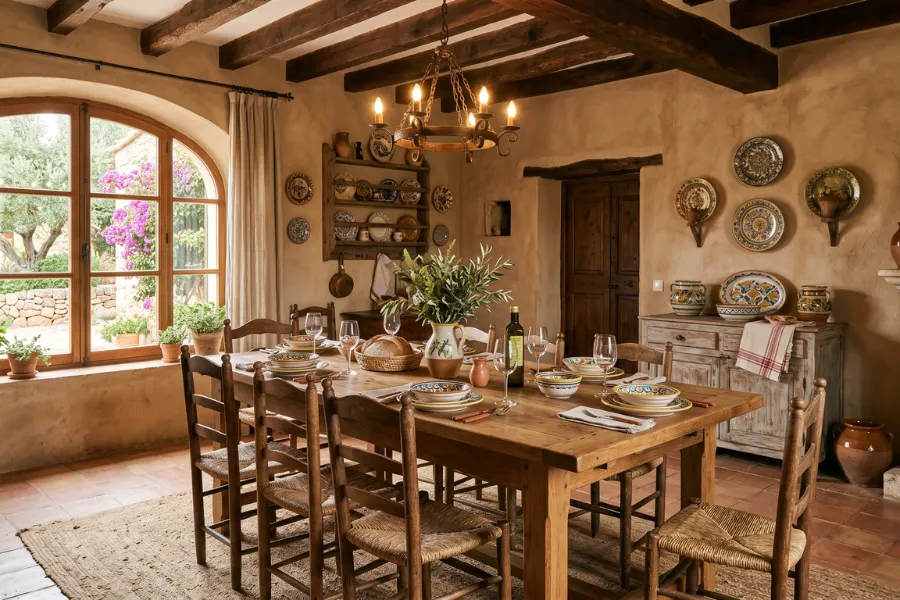
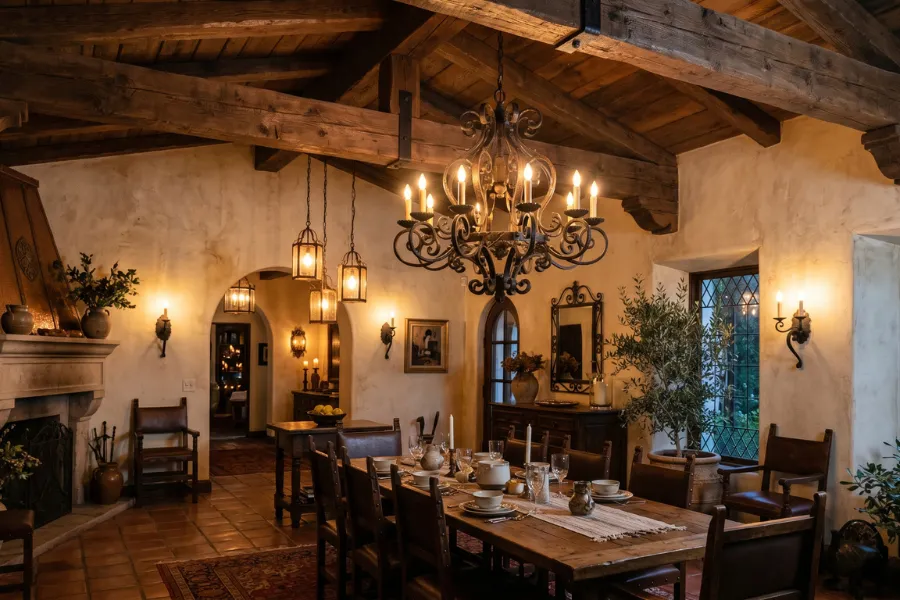
Dining rooms often serve as gathering spaces for family and guests. A large wooden dining table creates an authentic focal point while emphasizing traditional craftsmanship. Pairing it with wrought iron chandeliers and ceramic accessories helps establish a welcoming atmosphere. Textured walls and warm earth-tone colors further enhance the room’s visual appeal. Decorative wall niches displaying pottery or handcrafted artwork can also reinforce the traditional aesthetic.
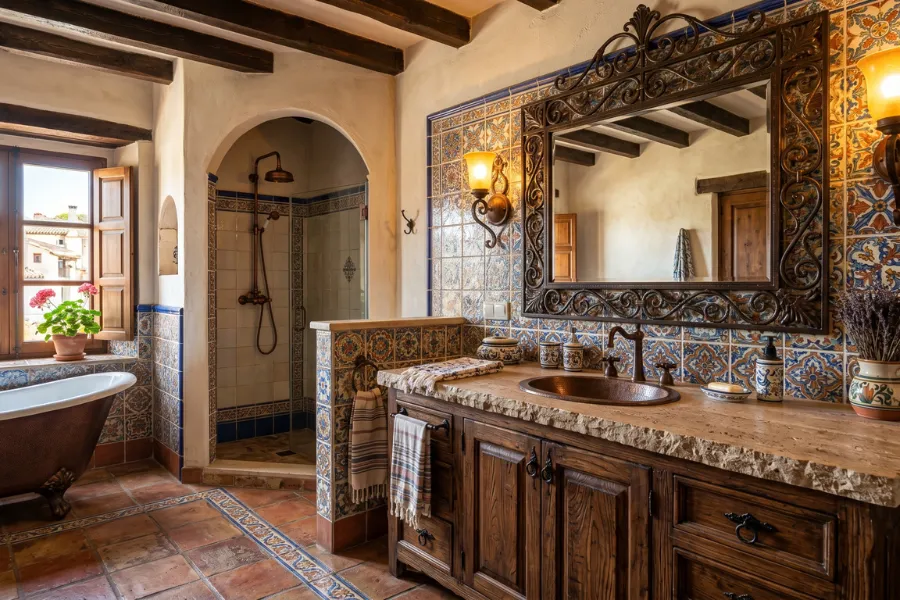
Bathrooms provide an excellent opportunity to introduce decorative tiles and natural materials. Colorful ceramic patterns around mirrors, vanities, or shower walls create visual interest while maintaining authenticity. Natural stone countertops, rustic wood cabinetry, and wrought iron fixtures help complete the look. These details transform an ordinary bathroom into a relaxing Mediterranean retreat.
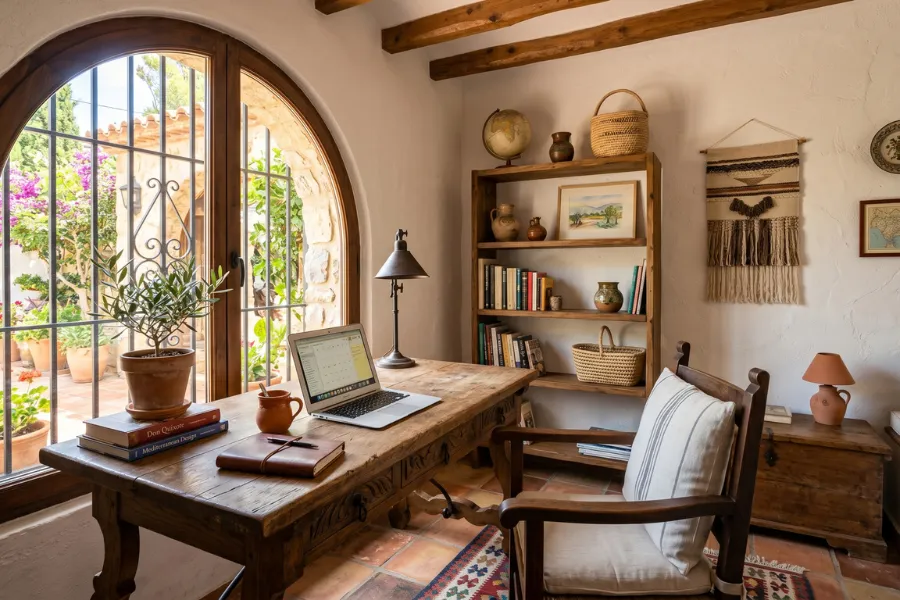
Many homeowners now require dedicated workspaces. A Spanish-inspired home office can balance productivity with comfort through natural wood furniture, warm lighting, and textured decor. Open shelving, handcrafted accessories, and neutral wall colors create a calm environment that encourages focus while preserving the style’s welcoming character.
Lighting plays an essential role in creating warmth and ambiance. Proper lighting highlights architectural details while enhancing the natural beauty of materials.
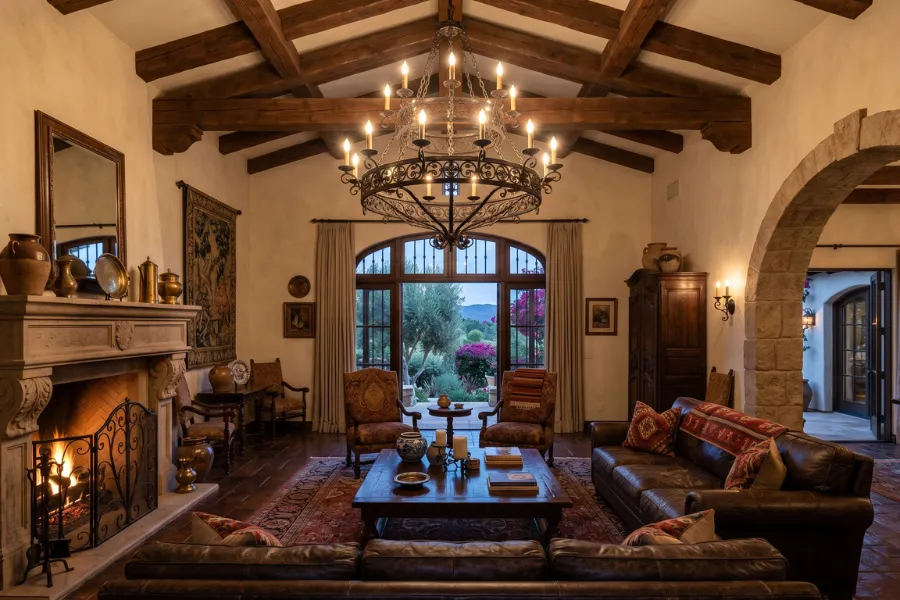
Traditional wrought iron chandeliers remain one of the most recognizable lighting features in Spanish interiors. Their handcrafted appearance adds character while complementing rustic architectural elements. Large chandeliers work especially well in living rooms, dining areas, and entryways where they can serve as decorative focal points.
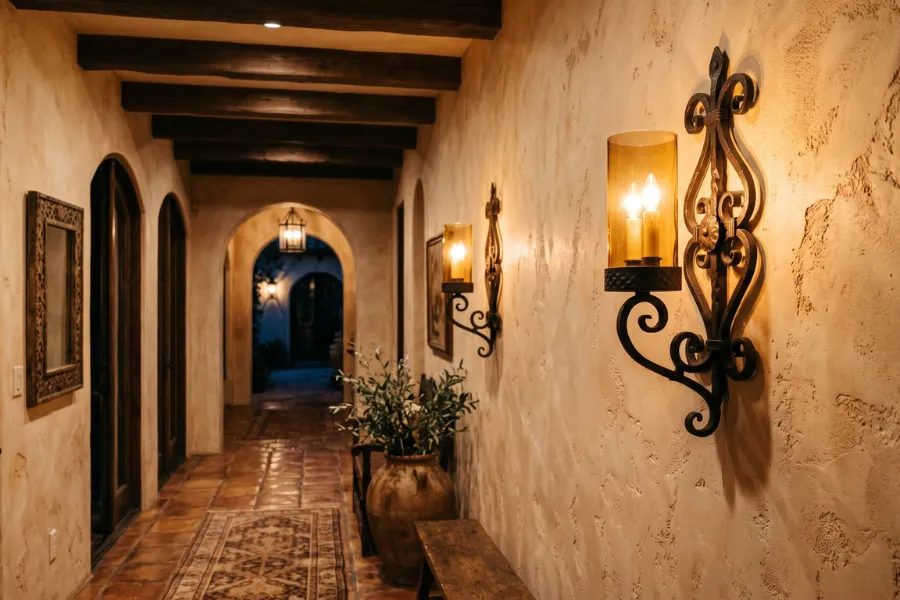
Wall sconces provide soft illumination while emphasizing textured surfaces and architectural details. They are commonly used in hallways, staircases, and bedrooms. Layering different light sources throughout the home creates a balanced atmosphere that feels comfortable both day and night.
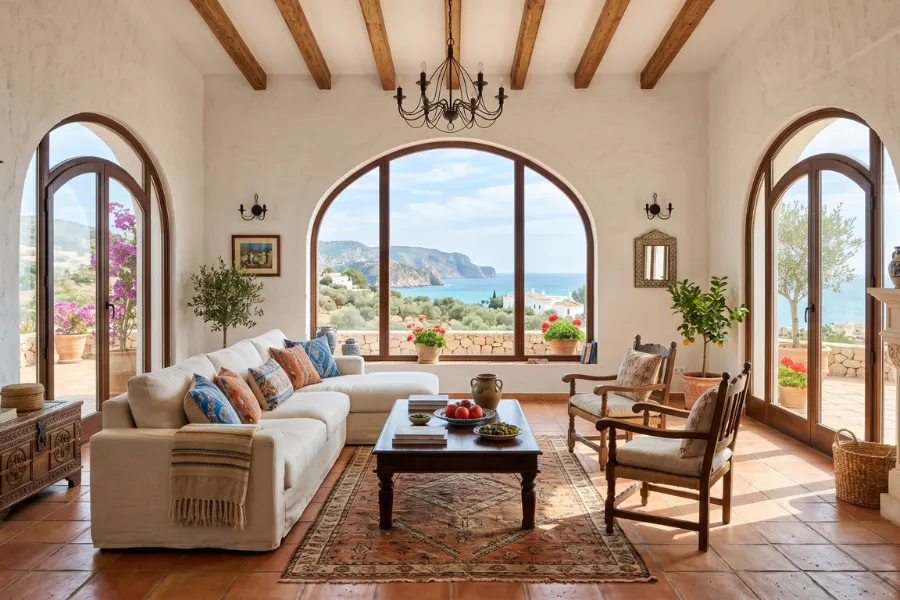
Mediterranean homes are known for bright, sunlit interiors. Large windows, reflective surfaces, and light-colored walls help maximize available daylight. Keeping window treatments simple allows sunlight to become part of the overall design while maintaining the open and airy feeling associated with Spanish-inspired spaces.
Spanish style extends beyond interior rooms. Outdoor areas often reflect the same warmth and craftsmanship found inside the home.
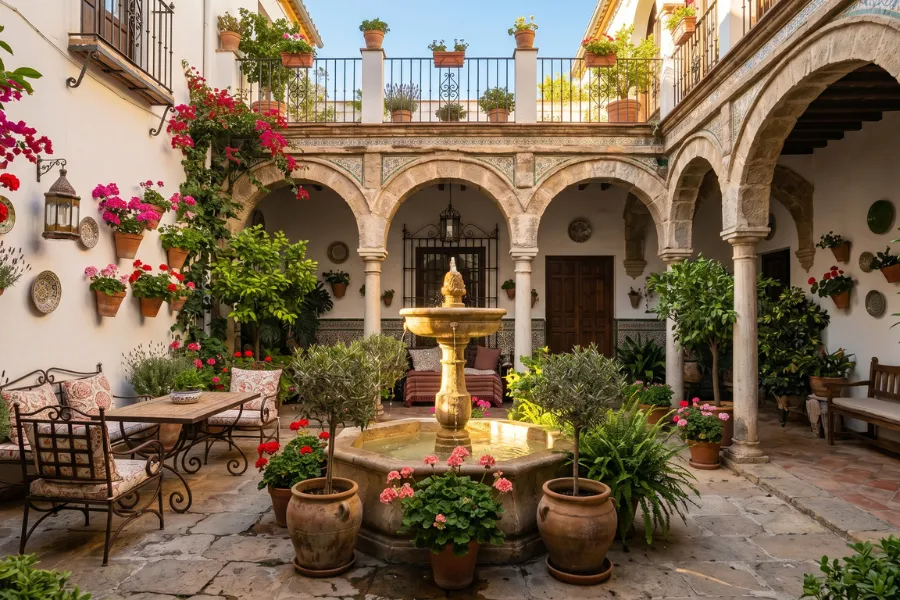
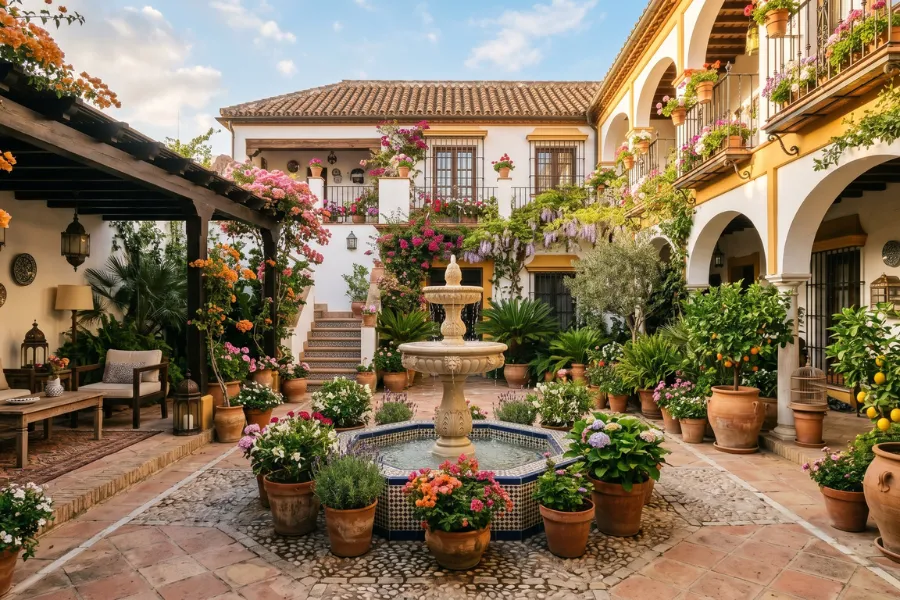
Traditional courtyards create peaceful outdoor retreats. Stone pathways, terracotta planters, and decorative fountains help establish a relaxing environment. These features encourage outdoor living while strengthening the connection between architecture and nature.
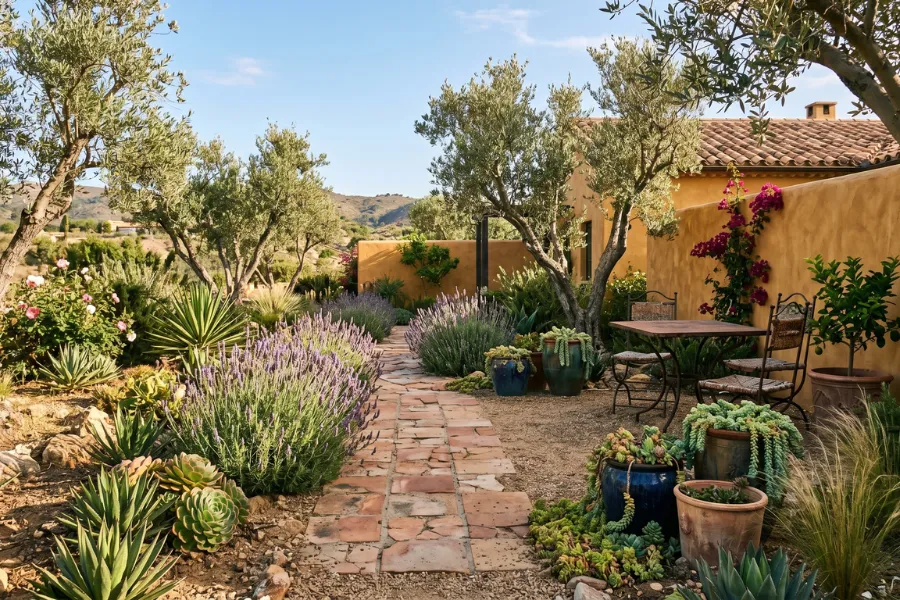
Olive trees, lavender, succulents, and drought-tolerant plants complement Spanish-inspired landscaping beautifully. Their natural textures and colors reinforce the Mediterranean atmosphere. Adding ceramic pots and rustic garden furniture further enhances authenticity.
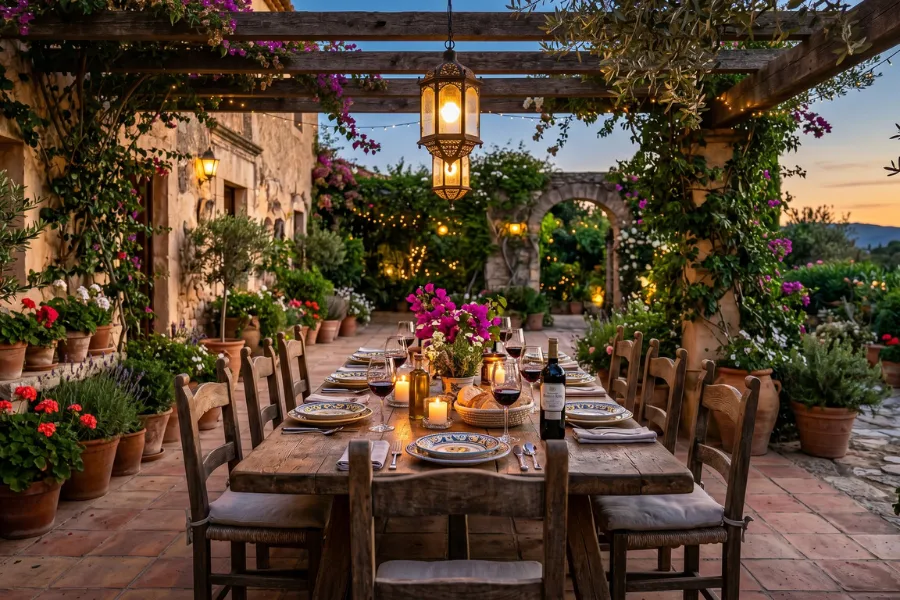
Outdoor dining spaces are particularly popular in Mediterranean design. Wooden furniture, decorative lanterns, and shaded seating areas create the perfect setting for entertaining family and friends.
Design trends constantly evolve, yet Spanish-inspired interiors continue to attract homeowners around the world. Their enduring popularity comes from a unique combination of comfort, elegance, and practicality. Unlike highly trend-driven styles, Mediterranean interiors rely on natural materials and timeless architectural details. As a result, they rarely feel outdated.
The emphasis on craftsmanship also appeals to homeowners seeking authentic, long-lasting design solutions. From handcrafted tiles to rustic wood furniture, every element contributes to a home that feels personal and inviting. Additionally, this decorating style adapts easily to modern lifestyles. Homeowners can preserve traditional character while incorporating contemporary furniture, smart technology, and minimalist layouts. This flexibility allows Spanish-inspired spaces to remain relevant across different generations and design preferences.
You do not need a large house to enjoy Mediterranean charm. Small design changes can make a noticeable difference.
Start by introducing natural materials, textured fabrics, and handcrafted accessories. These additions instantly create a warmer environment.
Apartments and compact homes can still benefit from this decorating style. Focus on color, texture, and carefully selected furniture to maximize visual impact.
For compact homes, you may also enjoy our article about anchor text: small balcony decor ideas.
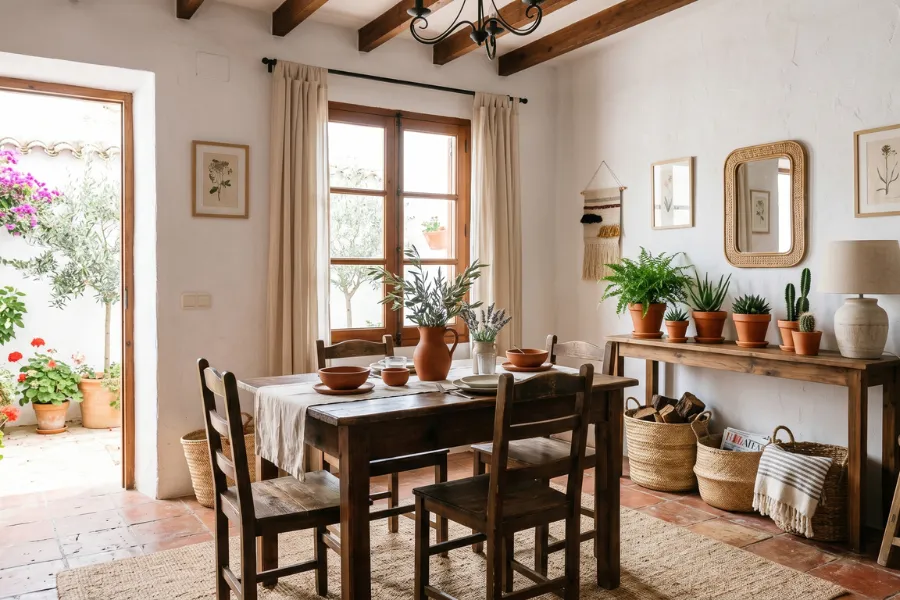
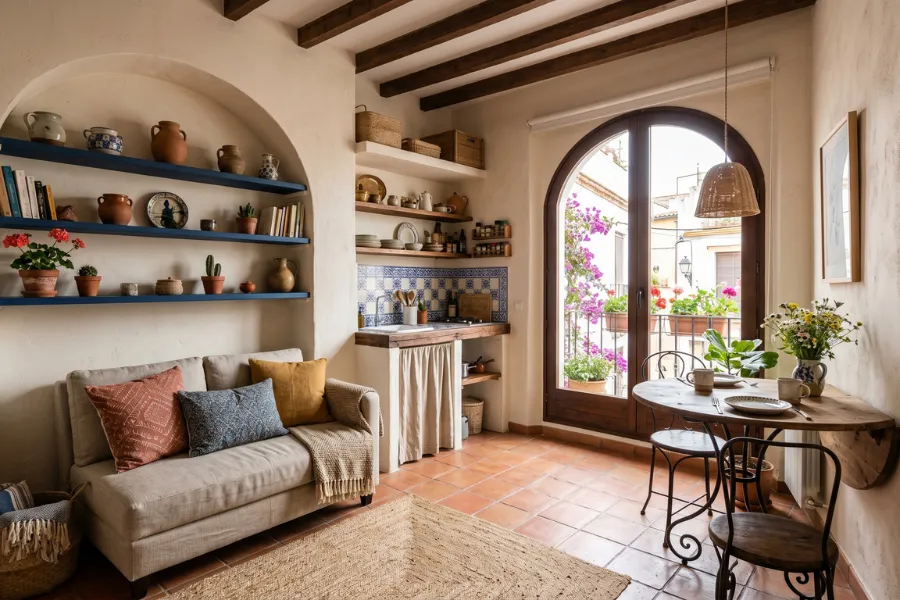
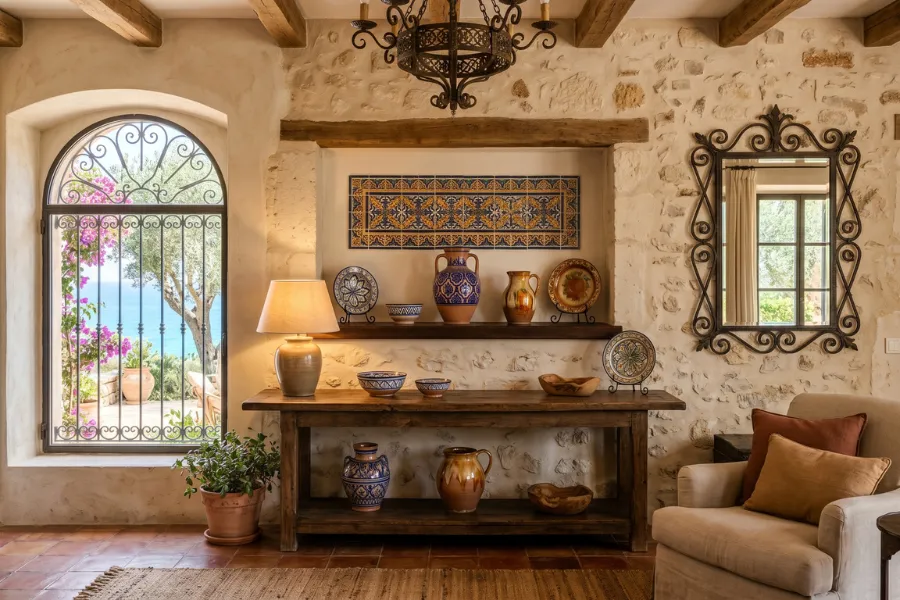
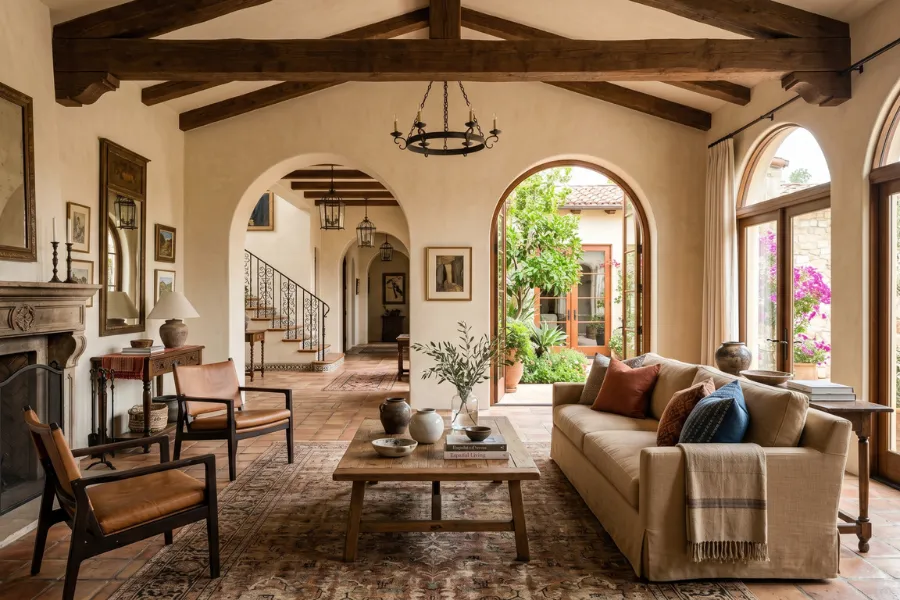
Spanish style interior design continues to attract homeowners because it combines comfort, craftsmanship, and timeless beauty. Warm colors, natural materials, and architectural details create spaces that feel welcoming throughout every season. Whether you prefer traditional influences or modern interpretations, this decorating style offers remarkable flexibility. By focusing on texture, authenticity, and Mediterranean charm, you can create a home that remains beautiful for years to come.
Most Spanish-inspired homes feature terracotta, beige, cream, rust, warm brown, and soft white tones.
The two styles share many similarities. However, Spanish interiors often include stronger rustic influences and more traditional architectural details.
Yes. Many contemporary homes successfully combine modern furniture with Mediterranean materials and decorative features.
Terracotta, wood, natural stone, ceramic tiles, wrought iron, and stucco are among the most popular materials.
Arches create visual flow while adding elegance and architectural character to interior spaces.